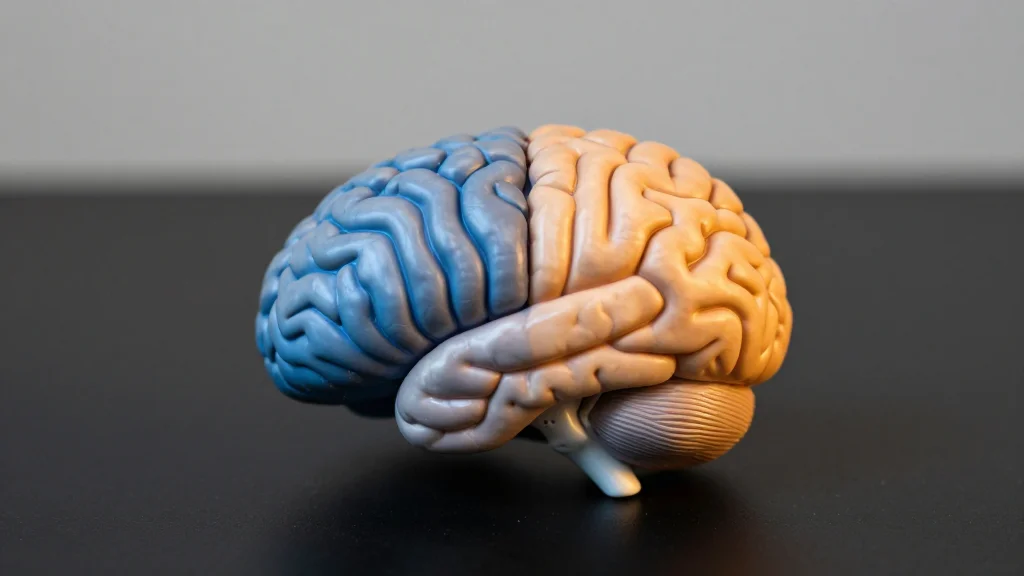
Study Finds Chronic Depression Alters Brain Network Connectivity Opposite to Short-Term Cases

Why It Matters
Understanding that depression is not a monolithic condition but can manifest in distinct neural signatures reshapes how the Human Potential field approaches mental resilience. By distinguishing chronic from short‑term forms, practitioners can design self‑regulation tools—such as adaptive meditation apps or brain‑training platforms—that respond to the specific circuitry involved. This granularity moves mental‑health care beyond one‑size‑fits‑all symptom scales toward interventions that align with an individual’s neurobiological profile, potentially accelerating recovery and enhancing overall cognitive performance. Moreover, the study highlights the importance of integrating neuroimaging biomarkers into everyday wellness practices. As wearable EEG and functional near‑infrared spectroscopy devices become more affordable, real‑time monitoring of CEN‑DMN balance could become a routine component of personal development programs, allowing users to detect early signs of maladaptive rumination and intervene with targeted exercises.
Key Takeaways
- •46 patients with major depressive disorder were scanned
- •Depression lasting >24 months defined as chronic
- •Short‑term depression showed weaker CEN‑DMN connectivity with severity
- •Chronic depression showed stronger CEN‑DMN connectivity with severity
- •Higher symptom severity linked to greater grey‑matter volume in ACC and right DLPFC
Pulse Analysis
The findings signal a shift from treating depression solely as a symptom severity issue to recognizing duration‑dependent neural pathways. Historically, clinical guidelines have prioritized rating scales like the Hamilton Depression Rating Scale, but this study suggests that two patients with identical scores may require fundamentally different therapeutic approaches. For the Human Potential market, this creates a niche for neuro‑personalized products that can assess both severity and chronicity, then deliver customized cognitive‑training regimens.
From a competitive standpoint, companies developing brain‑computer interfaces and digital therapeutics will likely leverage these insights to differentiate their platforms. By incorporating algorithms that detect CEN‑DMN coupling patterns, a startup could claim a science‑backed advantage over generic mindfulness apps. However, the modest cohort size underscores the risk of over‑promising efficacy before larger, more diverse studies validate the biomarkers.
Looking ahead, the integration of longitudinal neuroimaging data with behavioral metrics could produce predictive models that anticipate relapse or treatment resistance. Such models would empower individuals to adopt self‑regulation techniques proactively, aligning with the broader trend of preventive mental‑health care. The key challenge will be translating complex imaging findings into user‑friendly feedback loops without sacrificing scientific rigor.
Study Finds Chronic Depression Alters Brain Network Connectivity Opposite to Short-Term Cases
Comments
Want to join the conversation?
Loading comments...