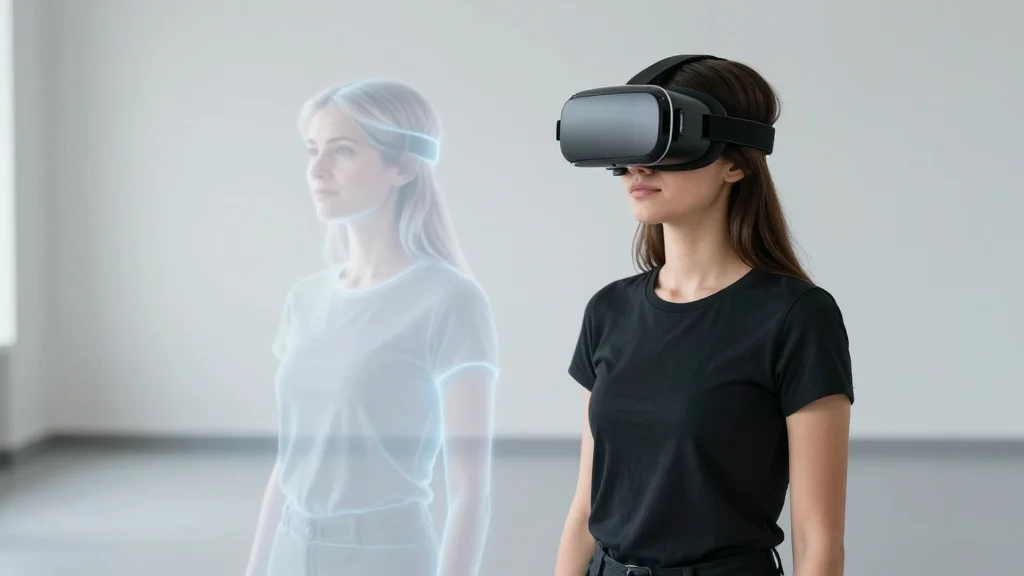
VR Future‑Self App Raises Goal Achievement by 0.88 SD in Dutch Student Trial

Why It Matters
Future‑oriented thinking is a cornerstone of personal development, influencing decisions ranging from academic performance to health behaviors. Demonstrating that a VR‑based future‑self visualization can materially improve goal attainment provides a concrete tool for educators, employers and mental‑health practitioners seeking to boost motivation without intensive coaching. Moreover, the trial’s large sample and rigorous design lend credibility to a field often populated by anecdotal claims, paving the way for evidence‑based adoption of immersive technologies in self‑improvement curricula. If the short‑term gains can be extended through repeated exposure or hybrid models that combine VR with ongoing coaching, the approach could reshape how institutions address procrastination, impulsivity and long‑term planning deficits. The scalability of a smartphone version also offers a low‑cost entry point for mass deployment, while the superior performance of VR highlights a premium segment for organizations willing to invest in hardware.
Key Takeaways
- •321 first‑year university students participated in a three‑arm RCT.
- •Immersive VR future‑self app increased weekly goal achievement by d = 0.88 versus control.
- •Both smartphone and VR apps improved future‑self vividness, valence and connectedness (d ≈ 0.35‑0.49).
- •Effects on future orientation and self‑identification faded by six‑month follow‑up.
- •No significant impact on self‑defeating behavior, impulsivity, or academic performance.
Pulse Analysis
The trial arrives at a moment when the personal development market is saturated with low‑engagement habit‑tracking apps, yet it offers a data‑driven alternative that leverages presence‑inducing technology. Historically, self‑improvement interventions have struggled to translate intention into action; the VR future‑self approach addresses this gap by externalizing the abstract concept of "future me" into a vivid, interactive avatar. This aligns with cognitive‑behavioral insights that concrete visualizations reduce temporal discounting.
From a competitive standpoint, the findings could spur a wave of niche VR products targeting universities, corporate wellness programs, and clinical settings. Companies that already own VR hardware ecosystems—such as Meta, HTC Vive and Apple—may integrate future‑self modules into their existing platforms, creating a bundled value proposition. Meanwhile, the modest effect sizes for the smartphone version suggest that pure mobile solutions will remain relevant for cost‑sensitive users, but they may need to incorporate gamified reinforcement loops to match VR's impact.
Looking ahead, the key challenge will be sustaining the motivational boost beyond the initial three‑week exposure. Adaptive designs that schedule periodic re‑engagement, perhaps triggered by life events (e.g., exam periods, health check‑ups), could preserve the heightened future‑self connection. If researchers can demonstrate that such reinforcement maintains or even amplifies the initial gains, the technology could become a staple in curricula aimed at reducing dropout rates and improving long‑term health outcomes, fulfilling the promise of scalable, evidence‑based human potential enhancement.
VR Future‑Self App Raises Goal Achievement by 0.88 SD in Dutch Student Trial
Comments
Want to join the conversation?
Loading comments...