US Workers’ Health Insurance Costs Set to Rise, Survey Finds
Why It Matters
Rising benefit costs force employers to shift expenses onto workers, tightening household budgets and reshaping the U.S. health‑benefits market. The trend signals sustained pressure on drug pricing and could accelerate adoption of high‑deductible or narrow‑network plans.
Key Takeaways
- •Two-thirds of large firms will raise employee health premiums in 2027
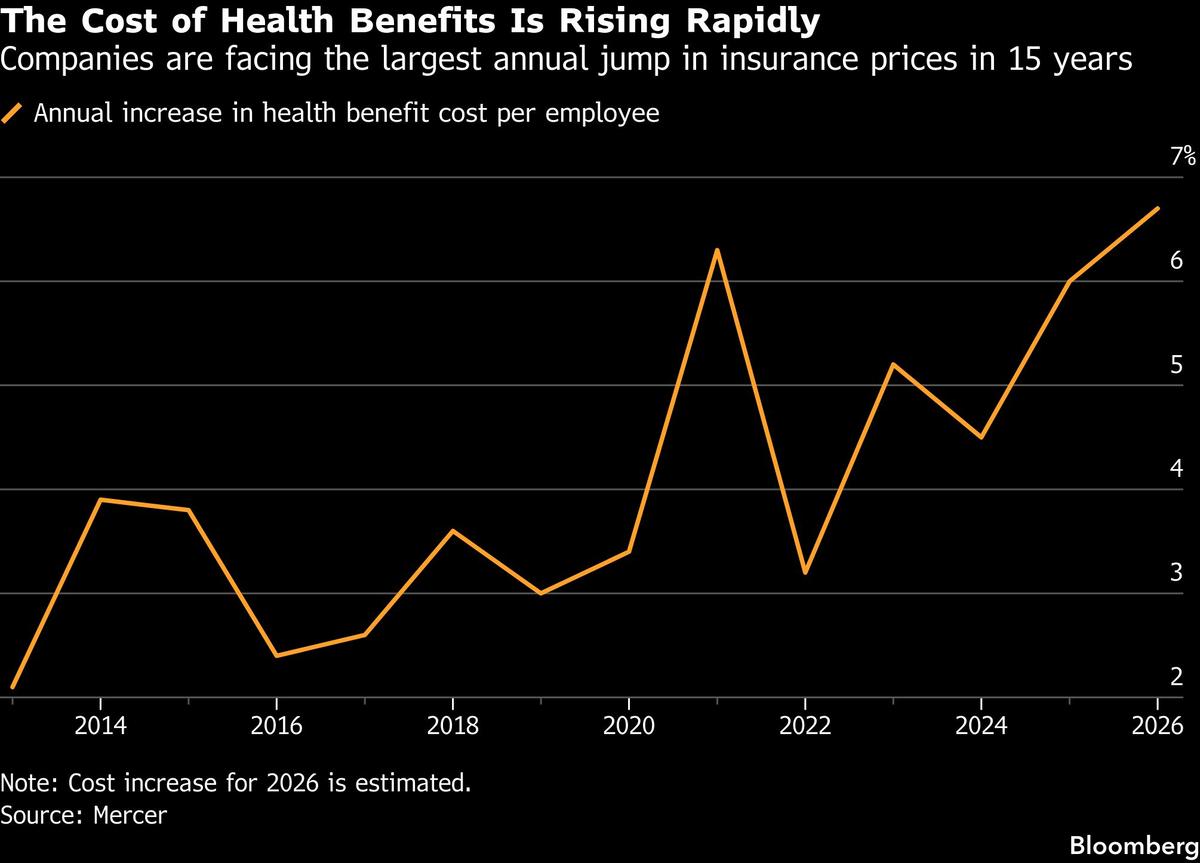
- •Group plan costs expected to climb over 6% for fourth consecutive year
- •Employers' average health‑benefit spend hits $18,500 per employee, up 6.7%
- •48% of firms plan higher deductibles and copays, increasing out‑of‑pocket costs
- •27% tighten, 5% drop coverage for GLP‑1 weight‑loss drugs
Pulse Analysis
The surge in health‑benefit costs reflects a broader inflationary wave driven by soaring prescription‑drug prices, especially for breakthrough therapies like GLP‑1 agonists. As insurers pass these expenses to employers, the traditional model of fully subsidized employee coverage is eroding. Companies now face a strategic dilemma: absorb higher premiums and risk unsustainable payroll burdens, or shift more cost to workers through higher premiums, deductibles, and copays. This shift not only squeezes disposable income but also changes employee expectations around benefit design, prompting a rise in high‑deductible health plans and health‑savings accounts as cost‑containment tools.
Employers’ willingness to tighten coverage for high‑cost drugs underscores the growing scrutiny of pharmaceutical pricing. By tightening eligibility criteria for GLP‑1 medications or dropping them entirely, firms aim to curb runaway spend while still managing employee health outcomes. However, such moves may trigger pushback from a workforce increasingly aware of the health benefits of these drugs, especially for obesity and diabetes management. The trade‑off between short‑term cost savings and long‑term health productivity will shape future negotiations with insurers and could spur demand for alternative pricing models, such as value‑based contracts.
For the broader market, the projected 6%+ annual increase in group‑plan costs marks the longest stretch of double‑digit growth in over a decade. This trajectory is likely to accelerate the adoption of narrow‑network and tiered‑benefit structures, as employers seek to steer employees toward lower‑cost providers. Financial planners and HR leaders must therefore re‑evaluate compensation packages, balancing competitive benefits with fiscal responsibility. The evolving landscape suggests that both employers and employees will need to become more financially literate about health‑care choices, as the era of fully employer‑covered health insurance recedes.
US Workers’ Health Insurance Costs Set to Rise, Survey Finds
Comments
Want to join the conversation?
Loading comments...