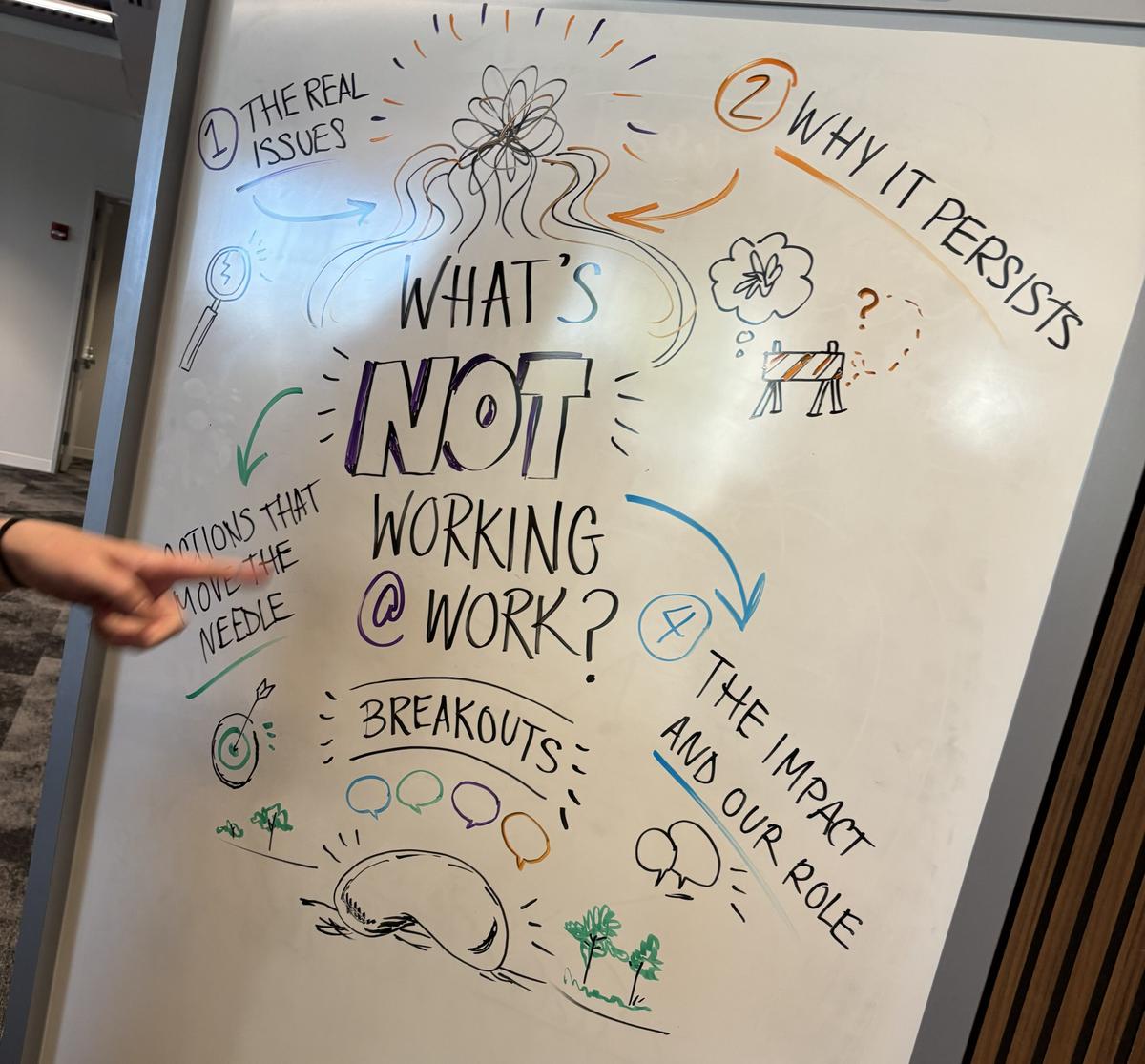
What a Room Full of CHROs and CEOs Agreed Was the Real Problem at Work
Companies Mentioned
Why It Matters
Without addressing the human side of transformation, AI investments risk low ROI and rising disengagement, threatening productivity and talent retention across industries.
Key Takeaways
- •AI projects falter when human transformation is ignored
- •Executives feel siloed, lacking clear guidance for change
- •Core capabilities: AI fluency, value literacy, critical thinking, adaptive execution
- •Gig and skills‑based work strains legacy policies and support systems
- •Workflow redesign needed beyond incremental productivity tools for AI ROI
Pulse Analysis
The recent "What’s Not Working @ Work" summit highlighted a growing disconnect between technology rollouts and the human dynamics that actually drive performance. While AI acceleration promises efficiency, leaders across the board admitted that most initiatives stumble because they treat technology as an end rather than a catalyst for deeper cultural change. This misalignment fuels change fatigue, disengagement, and fragmented system integration, especially as organizations grapple with unprecedented complexity—from shifting workforce expectations to the rise of gig and fractional employment models.
Panelists underscored a "low tide" reality: when economic pressures surface, hidden flaws in legacy structures and outdated leadership models become visible. Executives reported feeling isolated in silos, lacking clear roadmaps for translating strategic intent into day‑to‑day execution. The consensus pointed to four essential capabilities—AI fluency, value literacy, critical thinking, and adaptive execution—as the foundation for a human‑centric transformation. Building these skills equips managers to interpret AI outputs, understand how value is created across teams, solve problems creatively, and implement change swiftly, thereby reducing the paralysis caused by fear and uncertainty.
For organizations, the takeaway is clear: incremental productivity tools are insufficient. Companies must redesign workflows, align talent strategies with skills‑based models, and invest in leadership development that prioritizes human connection over mechanistic fixes. By embedding the identified capabilities into culture and processes, firms can unlock the true ROI of AI, foster resilient workforces, and stay competitive in an era where the pace of change is dictated from the supervisory level upward.
What a room full of CHROs and CEOs agreed was the real problem at work
Comments
Want to join the conversation?
Loading comments...