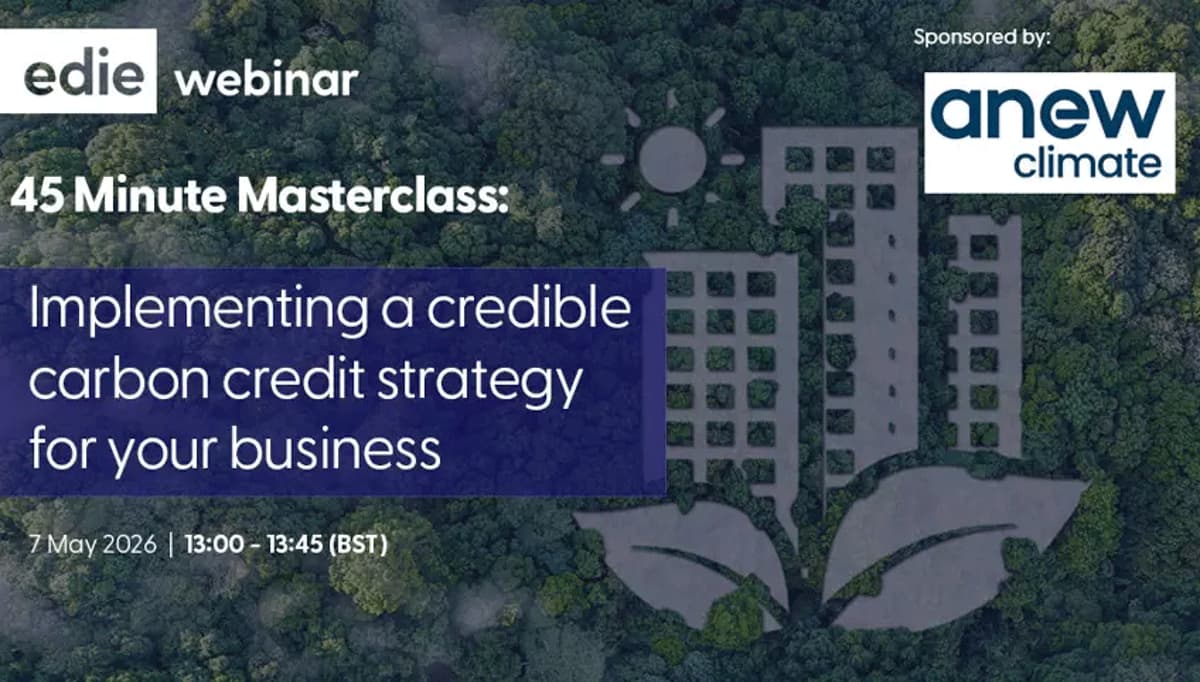
New FREE Webinar: How Can Your Business Implement a Credible Carbon Credit Strategy?
Why It Matters
Credible carbon‑credit use is becoming a litmus test for corporate climate credibility, influencing investor and stakeholder trust. Providing practical guidance helps firms avoid green‑washing pitfalls and align offsetting with long‑term net‑zero goals.
Key Takeaways
- •Webinar on May 7 offers practical steps for credible carbon credit use.
- •Focus on integrating credits with decarbonisation without compromising core reductions.
- •Emphasizes governance, transparency, and long‑term value over price alone.
- •Hosted by edie and Anew Climate, free registration and on‑demand recording.
Pulse Analysis
The carbon‑credit market has exploded in the past few years, but heightened scrutiny from investors, regulators, and NGOs means that merely purchasing offsets is no longer sufficient. Companies are now expected to demonstrate that each credit is sourced from projects with verified emissions reductions, robust additionality, and transparent accounting. This shift has created a demand for clear frameworks that can separate high‑integrity credits from speculative offerings, especially as corporate net‑zero pledges become binding in many jurisdictions.
The upcoming edie‑Anew Climate masterclass tackles that demand head‑on. By positioning carbon credits as a complementary tool rather than a substitute for direct emissions cuts, the webinar outlines how firms can embed offsets within a holistic decarbonisation roadmap. Participants will learn to set internal guardrails, establish governance structures, and communicate offset strategies to stakeholders, ensuring that any purchased credit adds genuine climate value and does not erode credibility. Real‑world case studies and a step‑by‑step procurement checklist aim to translate theory into actionable plans.
For businesses, mastering a credible carbon‑credit strategy can unlock several competitive advantages. It reduces exposure to reputational risk, satisfies increasingly stringent ESG reporting standards, and can even create new revenue streams through participation in high‑quality offset projects. As the industry coalesces around standards like the Science Based Targets initiative and the Voluntary Carbon Market Integrity Initiative, early adopters who internalize best practices will be better positioned to meet future regulatory requirements and investor expectations. Registering for the free session offers a timely opportunity to stay ahead of the curve and embed climate resilience into core business strategy.
New FREE webinar: How can your business implement a credible carbon credit strategy?
Comments
Want to join the conversation?
Loading comments...