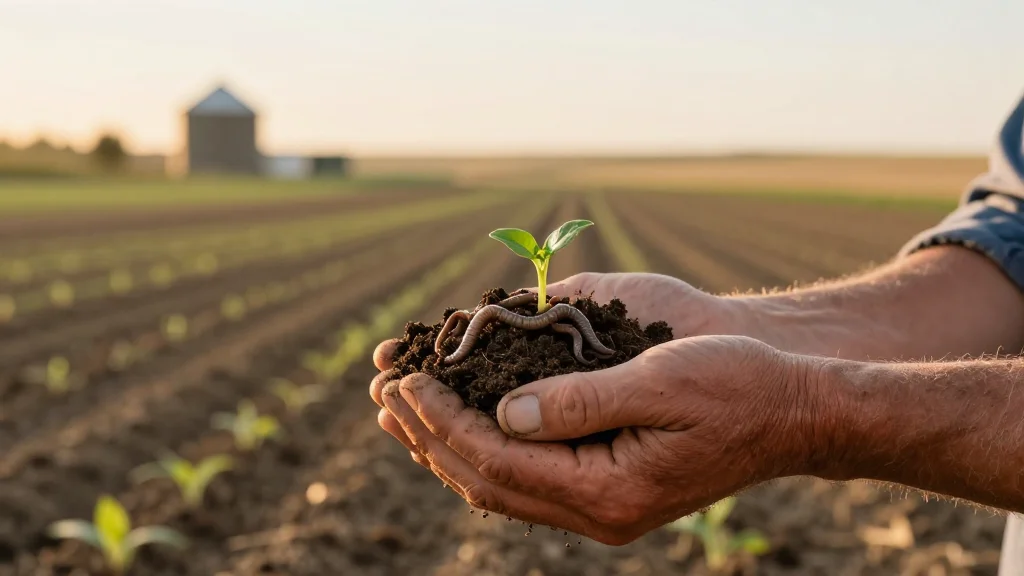
Soil Wealth: Investing in Regenerative Agriculture
Why It Matters
Mobilizing capital toward regenerative agriculture can curb $12 billion annual soil‑loss costs, protect food security, and generate new revenue streams for under‑capitalized farmers, reshaping the U.S. agri‑business landscape.
Key Takeaways
- •U.S. farms lost $100 B in 2025‑26 cycle, per‑acre deficits up to $210.
- •Soil erosion costs $12 B annually, eroding 2 B tons of soil.
- •Only 1% USDA Organic, under 5% with cover crops.
- •Croatan Institute launched FARMWISE Hub offering free financial training to underserved farmers.
- •LAND Fund targets 1 M acres South via lease‑to‑own for regenerative stewardship.
Pulse Analysis
Regenerative agriculture is emerging as a strategic response to a multi‑decade farm crisis marked by soaring input costs, climate‑driven weather extremes, and dwindling profitability. While traditional row‑crop systems generate per‑acre losses that can exceed $200, the broader economic toll includes $12 billion in annual soil‑erosion damages and the loss of 18 million acres of farmland to development. Investors are increasingly recognizing that restoring soil health delivers tangible returns: improved yields, carbon sequestration credits, and reduced reliance on synthetic inputs, all of which align with ESG mandates and long‑term risk mitigation.
The Croatan Institute’s “soil wealth” framework operationalizes this opportunity by mapping a full‑portfolio approach to impact finance. It blends equity stakes in regenerative farmland funds, debt to rural CDFIs, and public‑market exposure to sustainability‑focused food companies. Central to the model are place‑based financing districts—Soil Wealth Areas—that simplify access to federal programs and private capital for small‑scale producers. The FARMWISE Hub, launched in 2025, provides free financial literacy, business planning, and technical assistance, directly addressing the knowledge gap that has historically barred underserved farmers from capital markets.
Scaling these mechanisms could unlock billions of dollars for climate‑smart agriculture, while simultaneously curbing the $12 billion erosion loss and preserving critical ecosystem services such as water quality and pollinator habitats. The Resilient Southern LAND Fund exemplifies how joint‑venture structures can acquire and transition distressed land into regenerative stewardship, creating a replicable template for other regions. As policy incentives tighten and consumer demand for sustainably sourced food rises, capital directed toward soil wealth is poised to become a cornerstone of the next wave of agribusiness investment.
Soil Wealth: Investing in Regenerative Agriculture
Comments
Want to join the conversation?
Loading comments...