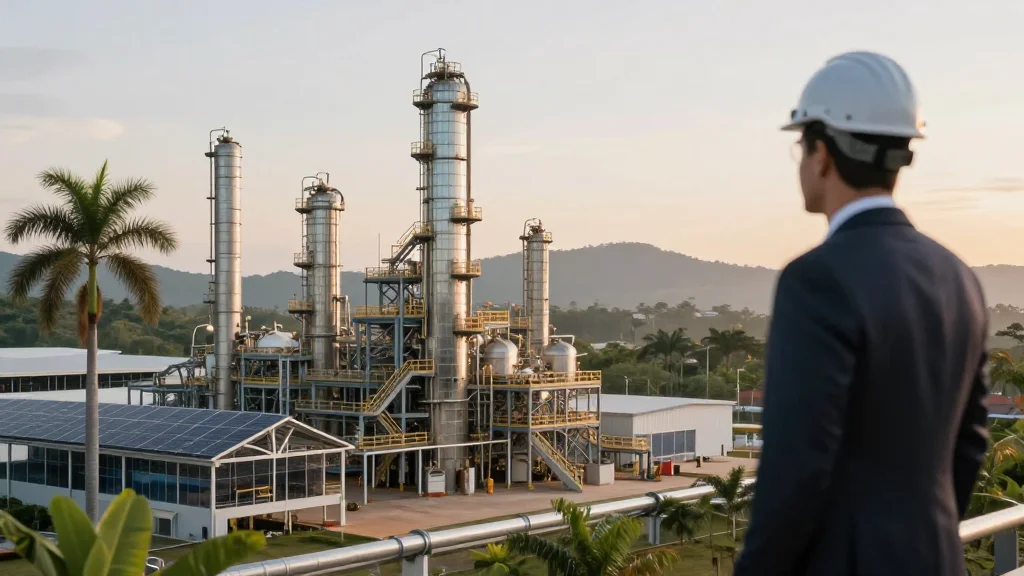
HSBC and IFC Lead $1.5 B Bank Consortium for Brazil SAF Biorefinery

Companies Mentioned

Why It Matters
The financing of Acelen’s Bahia biorefinery illustrates how investment banks are integrating climate objectives into core lending activities, moving beyond green bonds to structured project finance for tangible low‑carbon assets. By de‑risking a first‑of‑its‑kind SAF facility at scale, the consortium not only unlocks a new revenue stream for Brazil’s agribusiness sector but also creates a replicable model for financing renewable‑fuel infrastructure in other emerging economies. For the broader investment‑banking industry, the transaction underscores the shift from advisory‑only roles to full‑stack financing of sustainability projects. As airlines worldwide pledge net‑zero targets, the demand for bank‑backed SAF supply will likely surge, prompting banks to develop deeper expertise in feedstock logistics, technology risk, and ESG compliance—areas traditionally outside conventional banking.
Key Takeaways
- •Acelen Renewables secured $1.5 billion financing from a ten‑bank consortium led by HSBC and IFC.
- •The Bahia biorefinery will produce 1 billion liters per year of SAF and renewable diesel using HEFA technology.
- •Approximately 90% of the plant’s SAF and HVO volumes are already contracted with buyers such as Trafigura and Bunge.
- •The project integrates 144,000 hectares of degraded land, reserving 20% for family farmers, linking rural development with low‑carbon fuel production.
- •Total project investment exceeds $3 billion, marking one of Latin America’s largest sustainable‑fuel financing deals.
Pulse Analysis
Acelen’s financing marks a watershed for structured project finance in the renewable‑fuel space. Historically, SAF projects have struggled to attract debt due to technology risk and uncertain off‑take markets. By securing near‑full commercial contracts before construction, Acelen mitigated those concerns, allowing banks to price the debt on a more conventional risk‑adjusted basis. This approach mirrors the evolution seen in offshore wind financing, where long‑term power purchase agreements unlocked massive capital flows. The involvement of sovereign‑linked lenders such as FAB, ADCB and BNDES adds a layer of political backing that further lowers perceived country risk.
From an investment‑banking perspective, the deal expands the toolkit for climate‑aligned financing. Banks can now bundle SAF projects into larger sustainability portfolios, offering investors diversified exposure to low‑carbon transport fuels. Moreover, the success of this consortium could accelerate the creation of secondary markets for SAF project debt, enhancing liquidity and attracting a broader investor base, including pension funds seeking ESG‑compliant returns. As regulatory pressure on aviation intensifies, the financing model demonstrated in Brazil may become the blueprint for a new wave of SAF plants across the globe.
Looking ahead, the real test will be the plant’s ability to meet its 2029 operational target and deliver on the contracted volumes. If successful, the financing structure will likely be replicated, prompting banks to compete for similar deals and potentially driving down financing costs for future projects. Conversely, any delays or performance shortfalls could temper enthusiasm, reminding lenders that even well‑structured green projects remain subject to execution risk. The market will be watching closely as Acelen moves from financing to construction, setting the tone for the next decade of sustainable aviation fuel investment.
HSBC and IFC Lead $1.5 B Bank Consortium for Brazil SAF Biorefinery
Comments
Want to join the conversation?
Loading comments...