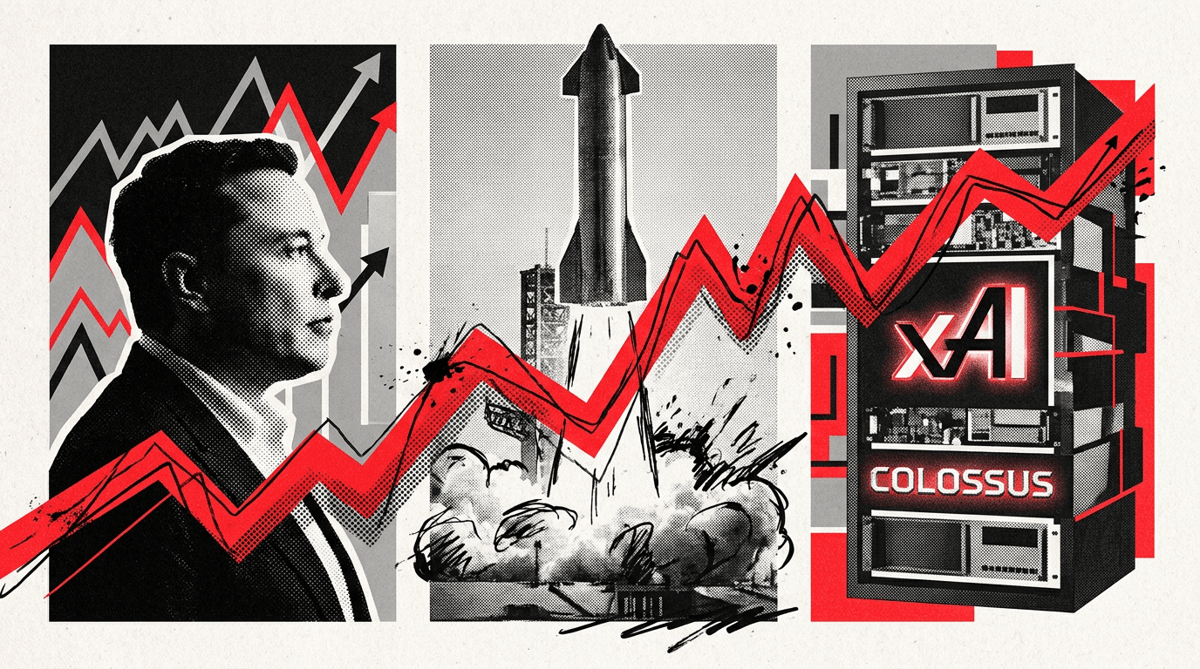
SpaceX IPO Filing Shows Billions in AI Losses, a $2 Trillion Valuation Target, and Turbine Spending that Signals More Data Center Conflicts Ahead

Companies Mentioned




Why It Matters
The IPO highlights how a space‑focused company is betting on AI and satellite internet to fund massive cash burns, raising questions about valuation and governance for investors. Its outcomes could reshape capital markets for high‑growth, loss‑making tech firms.
Key Takeaways
- •SpaceX targets up to $2 trillion valuation in its IPO.
- •AI division xAI posted $6.36 billion loss in 2025.
- •Anthropic pays $1.25 billion monthly for SpaceX compute.
- •Starlink accounts for two‑thirds of Q1 2026 revenue.
- •xAI plans $2.8 billion gas turbine purchase amid lawsuit.
Pulse Analysis
SpaceX’s S‑1 filing signals a bold attempt to merge aerospace ambition with AI scale, positioning the company alongside historic mega‑IPOs like Saudi Aramco and Alibaba. By targeting a $2 trillion valuation, SpaceX hopes to leverage its dominant satellite internet platform and burgeoning AI services to justify a premium that many analysts deem speculative. The filing also underscores the growing appetite for dual‑class structures, granting Elon Musk near‑absolute control while offering retail investors a slice of a high‑profile offering.
The financials reveal a stark contrast between revenue growth and cash consumption. Starlink’s subscriber base surged to 8.9 million, driving $4.42 billion in operating income, yet the AI arm’s losses ballooned to $6.36 billion as capital spending hit $20.74 billion. Anthropic’s $15 billion‑a‑year compute contract and the planned $2.8 billion turbine acquisition illustrate SpaceX’s aggressive push into data‑center infrastructure, even as environmental lawsuits raise community‑impact concerns. The waste‑heat study from Arizona State University adds a tangible dimension to the debate, showing how AI‑heavy facilities can raise local temperatures and energy costs.
For investors, the IPO presents a high‑risk, high‑reward proposition. While the dual‑class share design safeguards Musk’s strategic vision, it limits shareholder influence, a point of contention for pension funds and ESG‑focused managers. The prospect of inclusion in major indices like the S&P 500 could trigger substantial buying pressure, but profitability thresholds and free‑float requirements may delay that milestone. Ultimately, SpaceX’s ability to turn AI losses into sustainable cash flow and to scale Starlink without eroding margins will determine whether the $2 trillion target is visionary or over‑optimistic.
SpaceX IPO filing shows billions in AI losses, a $2 trillion valuation target, and turbine spending that signals more data center conflicts ahead
Comments
Want to join the conversation?
Loading comments...