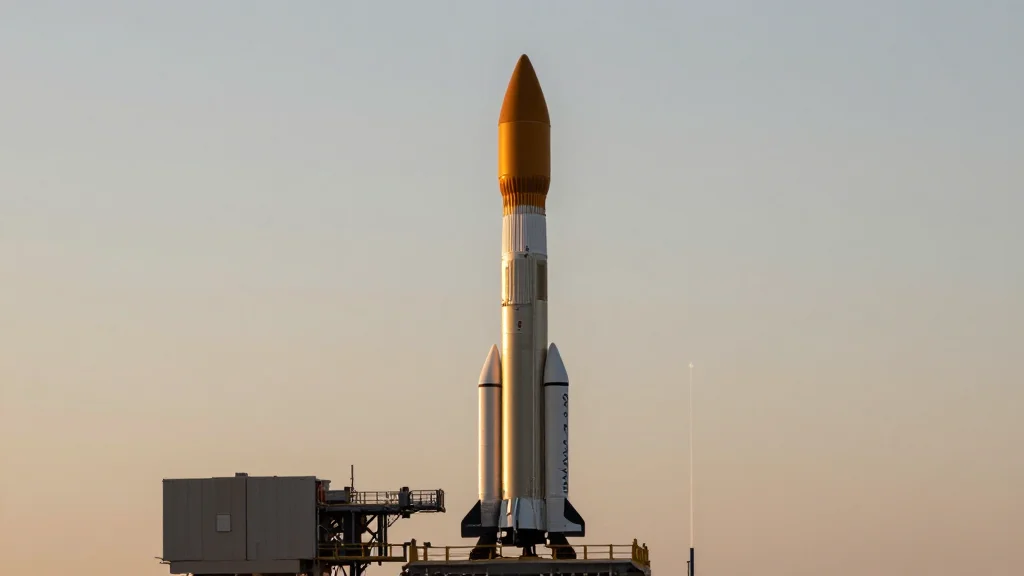
SpaceX Files S‑1 for $1.8 Trillion IPO, Targeting June 12 Listing

Companies Mentioned
Why It Matters
SpaceX’s potential entry into the mega‑cap arena could redefine how investors gain exposure to the aerospace and satellite‑internet sectors, traditionally accessed through niche ETFs or private‑equity vehicles. A successful debut would cement the tech‑heavy tilt of the S&P 500, pushing the index further into growth territory and possibly prompting a re‑evaluation of valuation benchmarks for future high‑profile IPOs. Moreover, the filing highlights the tension between visionary capital‑intensive businesses and market‑based pricing discipline. If investors accept a 96‑times sales multiple, it may set a precedent for other deep‑tech firms seeking public capital, reshaping the risk‑return calculus for large‑cap investors and index fund managers alike.
Key Takeaways
- •SpaceX filed its S‑1 on May 20, targeting a June 12 Nasdaq debut under ticker SPCX.
- •The filing projects a $1.8 trillion market cap, making SpaceX the eighth‑largest U.S. company by market cap.
- •2025 revenue hit $18.7 billion, with Starlink contributing $11.4 billion and $4.4 billion in operating income.
- •Price‑to‑sales multiple exceeds 96×, far above Tesla’s 15.7×, sparking valuation skepticism.
- •New S&P Dow Jones rules could allow SpaceX to join the S&P 500 within weeks, reshaping index weightings.
Pulse Analysis
SpaceX’s IPO is less a pure equity raise than a strategic signal to the market that capital‑intensive, long‑horizon ventures can now command mega‑cap valuations. Historically, the U.S. market has rewarded scale and profitability; SpaceX flips that script by leveraging its monopoly in launch services and a rapidly growing satellite broadband business to justify a valuation that dwarfs its earnings. The key question is whether investors are buying the narrative of interplanetary expansion or the near‑term cash flows from Starlink and launch contracts.
If the offering is priced near the $1.8 trillion mark, it will likely trigger a wave of index rebalancing, inflating the weight of high‑growth tech in the S&P 500 and Nasdaq‑100. Passive fund managers will be forced to allocate sizable capital to a non‑dividend‑paying, loss‑making entity, potentially increasing volatility in those benchmarks. Conversely, a more modest pricing could set a new ceiling for future deep‑tech IPOs, tempering the hype that surrounded recent listings like Anthropic and OpenAI.
In the longer view, SpaceX’s public debut could accelerate the integration of aerospace assets into mainstream portfolios, inviting a new class of institutional investors to a sector previously dominated by government contracts and private equity. The success—or failure—of this mega‑cap IPO will likely become a reference point for how the market values visionary, capital‑heavy enterprises in an era where growth expectations are increasingly decoupled from near‑term profitability.
SpaceX Files S‑1 for $1.8 Trillion IPO, Targeting June 12 Listing
Comments
Want to join the conversation?
Loading comments...