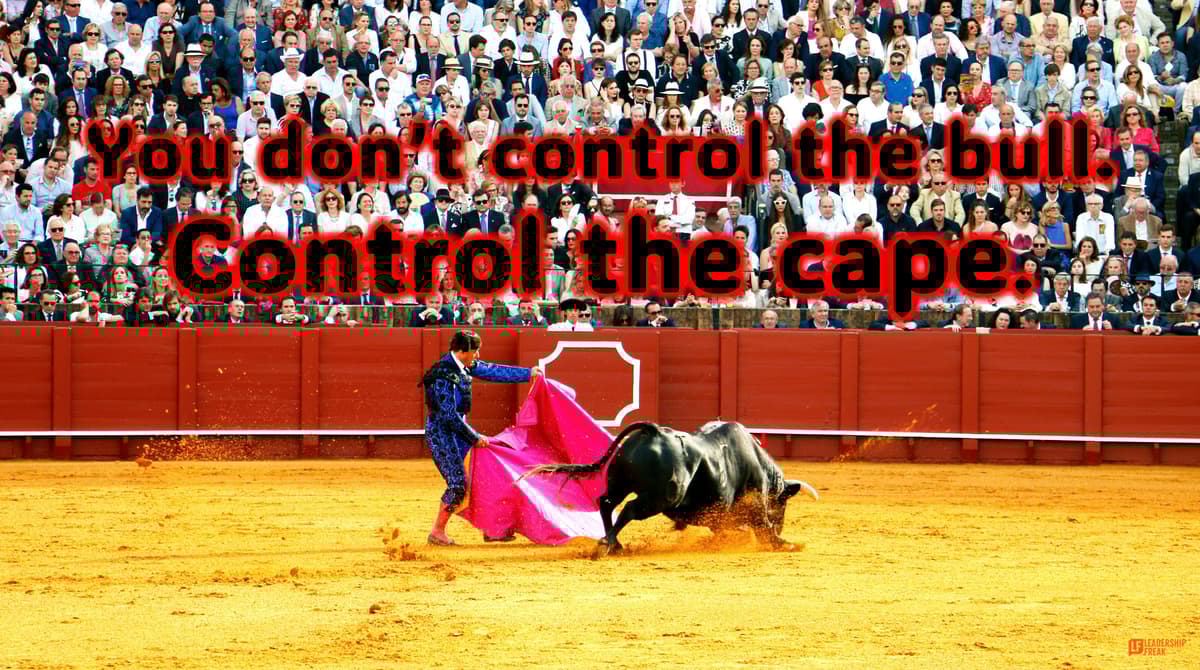
Key Takeaways
- •Control your response, not external circumstances
- •Influence decisions by shaping processes, not forcing outcomes
- •Morning routines set tone for daily effectiveness
- •Consistent actions build reputation despite lack of control
- •Embrace limits to focus energy on impact
Summary
The "Control the Cape" article uses a bullfighting metaphor to argue that leaders cannot command external forces such as politics, markets, or people, but they can master their own responses. It stresses shifting focus from futile control attempts to intentional reactions, thereby reducing stress and fostering adaptability. The piece also differentiates influence from control, showing how shaping processes and daily habits can steer outcomes. Practical tips include a purposeful morning routine, journaling, and consistent micro‑decisions to build reputation and strategic advantage.
Pulse Analysis
Leadership literature often uses vivid metaphors to illustrate the limits of authority. The recent "Control the Cape" piece likens leading to bullfighting, reminding executives that the bull—politics, market forces, human behavior—remains outside direct command. What leaders can master, however, is the cape: the deliberate response to each charge. By shifting energy from futile attempts at domination to intentional reaction, managers reduce stress, improve decision speed, and create a culture that values adaptability over rigidity. This mindset also aligns with modern agile frameworks that prioritize responsiveness over rigid planning.
Influence, not control, becomes the operative lever for senior managers. By shaping the decision‑making process—providing data, framing options, and aligning incentives—leaders can steer outcomes without imposing authority. This subtle approach respects higher‑up autonomy while still guiding strategic direction. Research shows teams that feel their input matters exhibit higher engagement and faster execution, reinforcing the business case for influence‑centric leadership. Such influence tactics also mitigate risk by fostering cross‑functional buy‑in before major initiatives launch. Practically, managers should ask open‑ended questions, model desired behaviors, and celebrate incremental wins to embed influence into everyday interactions.
The article’s most actionable insight lies in daily rituals that cement the cape mindset. Planning a purposeful morning—rising early, defining a primary objective, and journaling intentions—creates a psychological anchor that guides subsequent choices. Even when interruptions arise, a pre‑set routine limits their duration and impact. Over time, consistent micro‑decisions build a reputation for reliability, a valuable asset that leaders cannot directly control but can nurture through habit. Companies that institutionalize these habits report higher employee retention and stronger brand perception. Embracing these limits transforms uncertainty into a strategic advantage, allowing executives to allocate energy where it truly moves the needle.
Comments
Want to join the conversation?