🎯 Today's Leadership Pulse
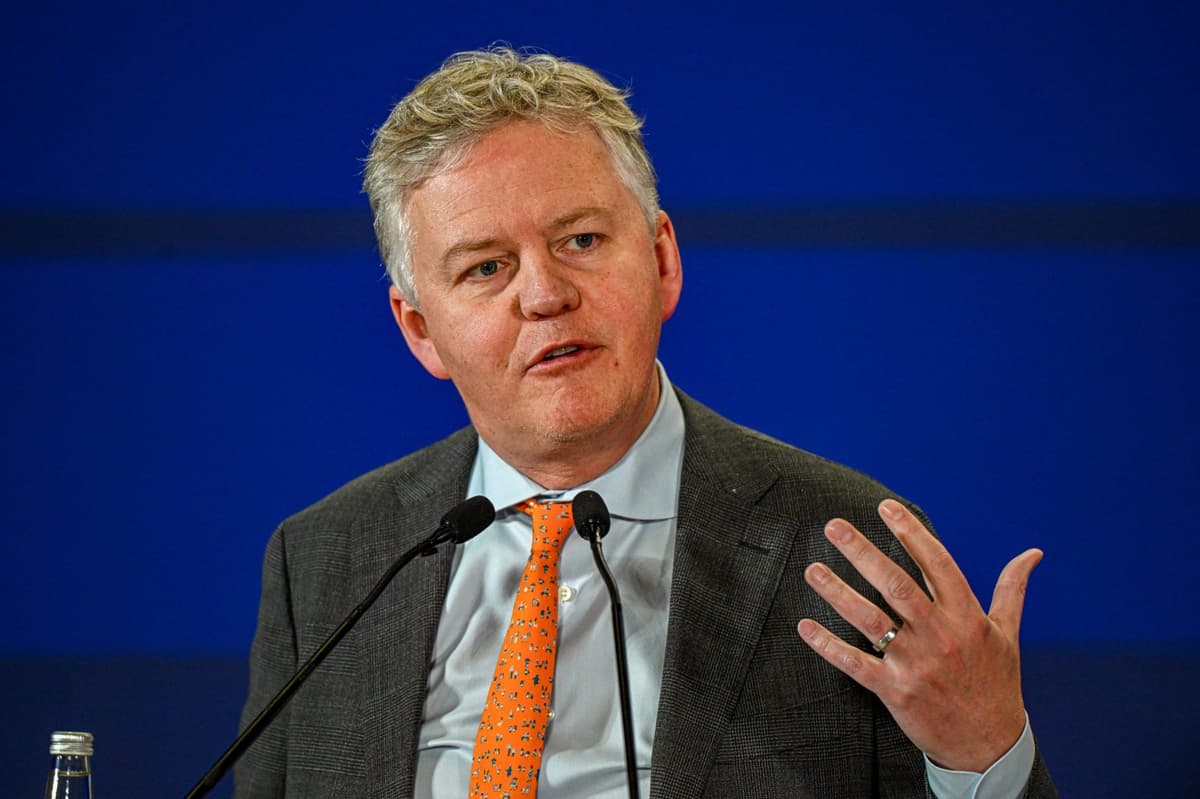
Cloudflare slashes 20% of staff as AI renders measurement roles obsolete
Cloudflare reported record revenue growth while eliminating 20% of its workforce, targeting middle‑management, finance, legal and internal audit positions dubbed “measurers.” CEO Matthew Prince said advanced AI can perform measurement tasks more accurately than humans, making those roles redundant. The cuts spare engineers and sales staff.
🚀 Top Leadership Headlines

5 Tips From Whataburger CEO on How Restaurant Chains Can Create a Family-Like Culture
Whataburger calls its 50,000-plus employees “family members”; here’s how CEO Debbie Stroud leans into that mentality to grow the business
Nation’s Restaurant News (NRN)

AI Might Be Fueling a New Leadership Crisis
In the movie The Perfect Storm, three large weather events converge, creating a storm bigger than the sum of its parts. As overused as the metaphor might be, it’s a good one for what’s happening to leaders globally right now. This storm involves the widespread integration of mainstream AI tools like ChatGPT, Gemini, and Claude into organizational workflows, and three large, interacting, non-obvious effects of this trend on leaders at all levels. Unchecked, research suggests, artificial intelligence could bring a toxic force to bear on how leaders build and reinforce their cultures. Trend one: Leaders are already overwhelmed and thinking poorly The first trend involves the mental state of leaders themselves, many of whom were overwhelmed before these tools came into play. AI hasn’t pared down our workloads as much as it’s added a layer of new work for all of us, ironically leading people who are the best at using AI to experience some of the strongest “brain fry” in the office. Separate from the issue of being overwhelmed, leaders are working in domains in which they have no experience, that feel completely unpredictable. Before AI tools were widely used, nearly three-quarters of leaders had imposter syndrome. When leaders feel uncertain or out of control, many revert to defensive behaviors, such as being overly controlling or overly goal focused at the expense of considering people. Or, at the far end of things, becoming bullies. The cognitive science take on this is that leaders are experiencing strong threat responses, which reduces their capacity for a skill that’s critical for healthy AI adoption: deep thinking. In particular, metacognition, a specific type of deep thinking, which I have argued is the central skill that differentiates poor from great users of AI tools. Trend two: Leaders are being given the ultimate ‘yes man’ The second trend involves the way mainstream AI agents are designed to be deeply sycophantic. The business model for mainstream AI is the same as for social media: Companies make money by keeping people engaged. To do this, social media worked out how to hack attention. AI tools are trying to hack something much deeper and much more insidious: attachment. A big part of how they do this is by agreeing with you, even when your ideas are potentially harmful to yourself or others. One MIT study showed that delusional spirals are common even in people who are otherwise considered highly logical. From a cognitive perspective, the brain is wired to orient toward things that are innately rewarding, like receiving praise, and orient away from things that create a threat response in any way, like being challenged. Weave challenge into an AI tool, and science suggests a lot of people will just switch to an alternative that makes them feel better. Giving leaders who already aren’t thinking well the perfect “yes-man” in their corner—always on, overly agreeable—is problematic. Their decisions affect an organization’s survival. A leader who incorrectly believes they created a highly valuable new product could put 100,000 people out of work in a quarter if it turns out to be a flop. Trend three: Widely using sycophantic AI for interpersonal issues The third trend may prove to be the most dangerous. It involves what happens when leaders use these tools for interpersonal challenges. It’s widely known that as leaders get more senior, the need for technical skills decreases and the need for human skills increases. Here’s the problem: Leaders are turning to these sycophantic AI agents for very human issues, things like trying to motivate others, deal with poor performers, or resolve interpersonal conflict. An important new study in Science found that using these tools for interpersonal issues made people less prosocial. Are other people frustrating you? Forget about checking in to see what role you might play in that. Your AI will reassure you, “Don’t let them mess with your peace.” A team isn’t performing well? Your AI will confirm that “it can’t have anything to do with you; they must not be a great fit for their role.” You don’t like how your boss spoke to you? Forget about reflecting on your own performance; your AI will suggest “maybe it’s time to explore a role in a place that respects your talents.” You can see how problematic this can quickly become. When today’s mainstream AI tools agree with you, they are innately avoiding making you uncomfortable. This means they won’t challenge you, they won’t help you see other perspectives, and they won’t make you be more reflective. Rather, they do the opposite. They make you more likely to blame others for, well, everything. When leaders are already overwhelmed as outlined above, it becomes all too easy to take this kind of approach. Recently, the executive coach Silvia Christmann shared a harrowing story of two leaders in conflict, both of whom had become unwilling to meet face to face. It turned out that both were using AI to develop comprehensive explanations of how wrong the other person was and why, rapidly escalating their dislike of one another. Instead of “rupture and repair,” which is a normal part of healthy human interactions, it was rupture, exacerbated into more rupture, with an ever deepening cycle of discontent. This was a small issue, likely to now turn into a job-ending situation for at least one of them. “AI chatbots are my new invisible colleagues,” Silvia told me. During a session on leadership effectiveness, Silvia says a client flatly rejected her feedback about their communication style. “Despite evidence that their communication style was stalling team progress, the client remained defensive, claiming that an AI had already affirmed their position,” she said. It’s not too late to avoid the storm When I discuss this coming leadership crisis with organizations, they are concerned that they have already invested heavily in these tools, and their big focus is getting people to use them. This is a worthy focus; however, using mainstream AI tools for interpersonal issues needs to be thought through. Leaders are being given a sounding board that looks like a mirror, likely to make them more toxic, more self-absorbed, and readier to blame everyone but themselves for any challenges. Leaders who are already toxic will likely become more so. But even good leaders may accidentally slip into toxic mode just by following the advice of these supposedly brilliant tools. There are solutions. One of them directly involves training leaders to be more metacognitive. To challenge what they get from an AI tool like a chatbot. A healthy pathway to this lies in learning more about the brain, increasing what my team at the NeuroLeadership Institute calls “neuro intelligence.” Among other things, this involves an understanding of our brains’ tendency to make mistakes, to have biases, to avoid deep thinking. The more tangibly we understand our own brain’s limitations, the better we can partner with these tools in healthy ways. A second solution is more systemic. It involves requiring that leaders use better tools when it comes to addressing human challenges. Tools trained to challenge a leader, to flag poor diagnoses, to consider other people’s perspectives. These are purpose-designed tools for leaders. Lawyers don’t use mainstream AI platforms for critical legal issues; they use specialized AI tools. Perhaps leaders should be using specialized tools for critical leadership issues too. Imagine what can happen as all three trends interact. Leaders having fewer cognitive resources and less capacity to reflect. Add an AI that agrees with the leader’s point of view on everything. Now add in leaders making every social issue another person’s problem, and imagine these three issues amplifying each other. The downstream effects of the storm may not just be more toxic leaders, but more toxic cultures. The good news is there’s probably still time to steer around this one, but relying solely on hope might not be the best idea. The waves, when they come, could be big ones.
Fast Company

CASE STUDY: Resort Leadership Breakdown & Revenue Decline - By Rick Blackburn
Rick Blackburn's case study scrutinizes the correlation between a resort's revenue decline and a breakdown in its leadership, offering insights into the challenges faced by the hospitality industry.
Hotel News Resource

Air India CEO Says Successor Will Have Hands Full
AIR-INDIA-CEO:Air India CEO says successor will have 'hands full'
Mint (LiveMint) – Companies

ClickUp Cuts 22 per Cent of Staff and Introduces $1 Million Salary Bands for Those Who Remain
ClickUp, the $4 billion productivity platform, has cut 22 per cent of its workforce. CEO Zeb Evans announced the layoffs in a post on X, framing them not as a cost-cutting exercise but as a structural bet on AI. The savings, he said, will flow back to the employees who stay in the form of […] This story continues at The Next Web
The Next Web (TNW)
💬 Top Leadership Social Posts

Thread by @Askdrbrown
The pressure to hire fast comes from real places — investor expectations, customer demand, team burnout. But a bad hire doesn't just cost salary. They consume the attention of your best people, slow down teams that were moving well, and create friction that outlasts their tenure. One exceptional hire outperforms three mediocre ones. @AskDrBrown

In 2026, the Founders Who Reach $10M ARR Fastest Are Not the Ones with the Best Product. They Are the Ones with the Most Disciplined GTM System. That Is Why so Many Strong AI and SaaS Founders Hit… | TK Kader
In 2026, the Founders who reach $10M ARR fastest are not the ones with the best product. They are the ones with the most disciplined GTM system. That is why so many strong AI and SaaS Founders hit real traction, then quietly stall, because product momentum can hide GTM sloppiness right until pipeline thins, sales cycles stretch, and growth gets painfully fragile. 1. No Clear Market Focus I watched smart Founders chase every promising segment once revenue started coming in. It looked like momentum from the outside. Inside, it created messy delivery, weak referrals, and no repeatable wins. 2. Weak Message Discipline Great products still lose when the story is fuzzy. Prospects do not buy technical brilliance they cannot quickly understand. Confused messaging turns good demos into polite ghosting. 3. Founder Led Chaos Instead of Process We learned this the hard way. Founder heroics can close early deals, but they do not scale. Once the calendar gets packed, follow up slips, forecasting breaks, and revenue starts feeling random. 4. Inconsistent Pipeline Creation Classic growth trap. A few strong months make it easy to believe demand will keep showing up. Then marketing goes quiet, pipeline shrinks, and the team starts discounting to force deals through. 5. No Operating Cadence Around GTM I have seen teams with talent, budget, and product still underperform because nobody inspected the machine weekly. Without cadence, small leaks become brutal quarter killing problems. I have served enough AI and SaaS Founders to know this pain is not about effort. It is about trying to scale on instinct after the stage where instinct stops being enough. A disciplined GTM system changes everything. It turns scattered activity into compounding traction and gives growth a foundation strong enough to reach $10M ARR and beyond. If you're an AI and SaaS Founder and you'd like to build a scalable Go To Market machine, then grab a complimentary copy of my 5-Point AI/SaaS Growth Strategy Guide (so you can accelerate your path to $10M+ ARR and beyond). Grab your complimentary copy 👇 https://lnkd.in/gqB8NB3p

Tweet by @Joemckendrick
AI is accelerating a decades-long push toward flatter organizations, larger managerial spans and fewer middle-management roles — with new risks for future leadership pipelines. (My latest in @forbes) https://t.co/HkU50GSWvt