Leadership Blogs and Articles
  • All Technology
  • AI
  • Autonomy
  • B2B Growth
  • Big Data
  • BioTech
  • ClimateTech
  • Consumer Tech
  • Crypto
  • Cybersecurity
  • DevOps
  • Digital Marketing
  • Ecommerce
  • EdTech
  • Enterprise
  • FinTech
  • GovTech
  • Hardware
  • HealthTech
  • HRTech
  • LegalTech
  • Nanotech
  • PropTech
  • Quantum
  • Robotics
  • SaaS
  • SpaceTech
AllNewsDealsSocialBlogsVideosPodcastsDigests

Leadership Pulse

EMAIL DIGESTS

Daily

Every morning

Weekly

Sunday recap

NewsDealsSocialBlogsVideosPodcasts
LeadershipBlogsFive Essential Principles For Sustaining Growth Through Innovation
Five Essential Principles For Sustaining Growth Through Innovation
LeadershipHuman ResourcesManagement Consulting

Five Essential Principles For Sustaining Growth Through Innovation

•February 17, 2026
0
Eric Jacobson on Management & Leadership
Eric Jacobson on Management & Leadership•Feb 17, 2026

Why It Matters

Organizations that master the 5 Cs can turn innovation into a predictable growth engine, reducing the cost of failure while staying competitive in fast‑changing markets.

Key Takeaways

  • •5 Cs framework drives systematic innovation
  • •Cultural audit identifies hidden fear barriers
  • •Safe‑to‑fail environment boosts employee creativity
  • •70‑20‑10 rule balances risk and reward
  • •AI insights guide future‑proof strategies

Pulse Analysis

Innovation is no longer a luxury; it is a survival imperative for enterprises facing rapid digital disruption. Marchand’s 5 Cs framework reframes innovation as a disciplined, organization‑wide capability rather than a sporadic spark. By placing the customer at the core, aligning culture with risk‑tolerant policies, and fostering cross‑functional collaboration, firms can create a self‑reinforcing loop that continuously generates market‑relevant ideas. This systematic approach demystifies the innovation process, making it measurable and repeatable across business units.

The book’s practical toolkit—starting with a cultural audit and extending to the 70‑20‑10 investment model—offers leaders concrete levers to reduce the hidden costs of fear. Encouraging safe experimentation, rewarding creative thinking, and providing clear pathways for change transform employee mindsets from defensive to proactive. These steps not only accelerate product development cycles but also improve talent retention, as teams feel empowered to experiment without punitive repercussions.

Looking ahead, Marchand highlights artificial intelligence as both a catalyst and a challenge for innovation. AI can surface hidden customer insights, automate routine tasks, and enable rapid prototyping, but it also raises ethical and operational questions. Companies that integrate AI thoughtfully within the 5 Cs—especially under the ‘Chance’ pillar—can de‑risk new ventures while unlocking new revenue streams. In sum, the book equips executives with a roadmap to embed innovation into the DNA of their organizations, turning fear into a strategic advantage.

Five Essential Principles For Sustaining Growth Through Innovation

Even though many companies strive for innovation, most struggle to achieve meaningful change. The largest reason for this disconnect? Playing it safe. Leaders and organizations want to implement new ideas, but too often they are held back by the fear of failure, even though setbacks are intrinsic to the innovation process.

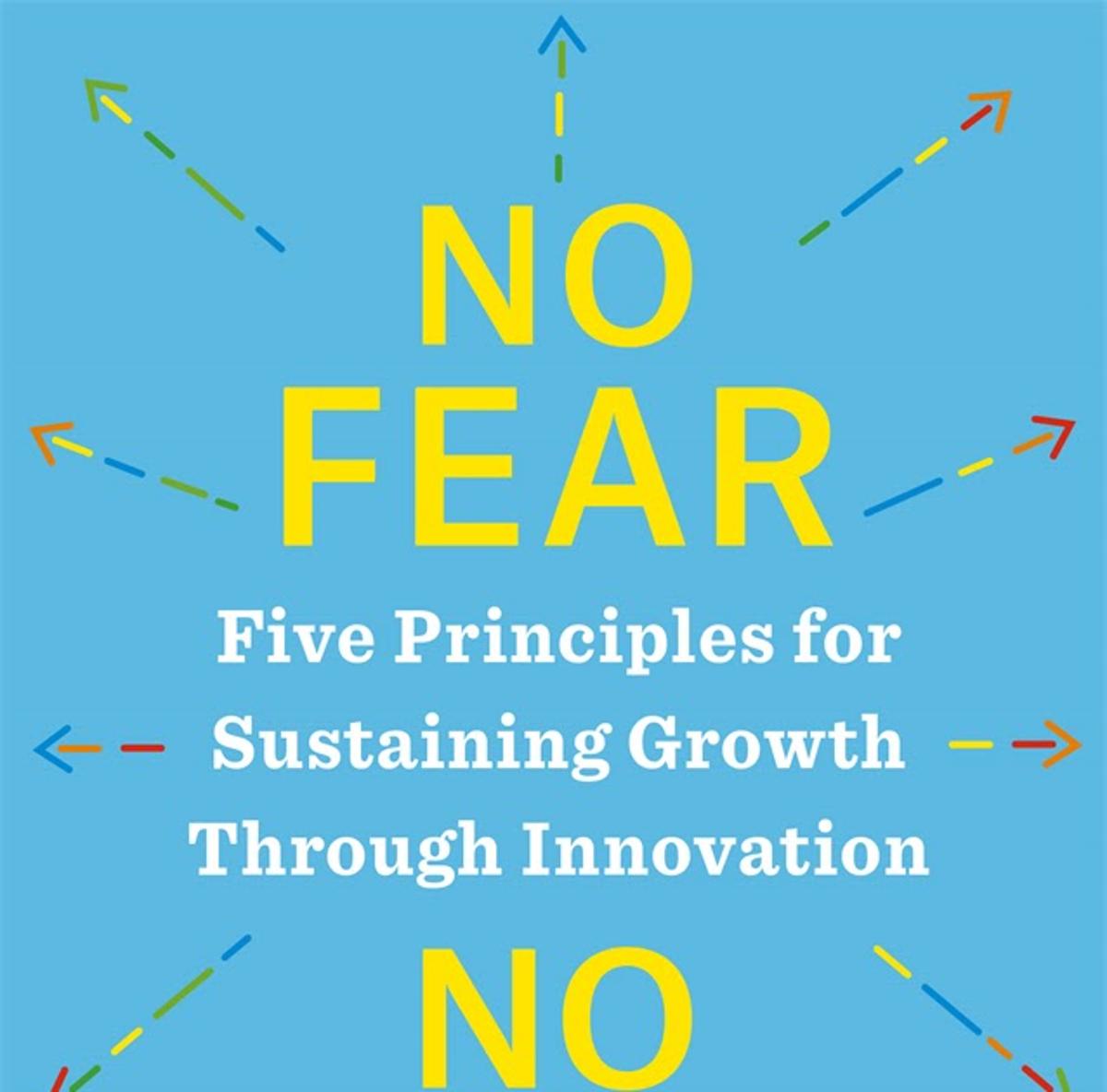
In the new book, No Fear, No Failure, by Lorraine H. Marchand (with John Hanc), readers will learn how to overcome the status quo that stifles creative thinking and how to create a culture that encourages innovation. Marchand provides a framework for sustained growth built on the “5 Cs”: 

  1. Customer First

  2. Culture

  3. Collaboration

  4. Change

  5. Chance 

She draws on more than 120 interviews with leaders across industries, real-world case studies, and her firsthand experience and shares step-by-step, field-tested strategies, tactics, and tools that practitioners can use to embed creativity within organizational cultures.

Marchand is a former Big Tech and Big Pharma executive, as well as a professor of innovation and management at some of our country’s finest business schools.

“I’m going to arm you with a road map for change—change that can help you innovate within your organization, no matter how large, no matter how hidebound it is,” says Marchand.

“I will empower you to rise above the workplace fears that stifle our most creative thinking and keep us from saying, ‘here’s a better way to do this',” she adds. “In the book, we address the deference to sacred cows that trips companies up, and we will lay out a playbook for creating the kind of innovation road map that drives strategic growth over the long haul.”

Digging deeper into the 5C’s Marchand explains that although there is some overlap among the 5C’s, these are, by and large, distinct from the Laws of Innovation she posited in her first book, The Innovation Mindset. Those laws were designed as steps to help an individual bring their great idea from inception to market. The 5C’s are principles that can help spark and nurture the flames of innovation on the organizational level.

Lorraine H. Marchand

 Marchand shares the following additional details about the 5C’s and what you’ll discover about them as you read No Fear, No Failure:

Customer First: Innovators need to learn how to think in new ways about their customers and to understand the emotions guiding their decision making. There are six killer questions you should be asking every customer as you launch new products and measure adoption.

Culture: How do you create a sustainable culture of innovation? It starts with fundamental objectives: Do your employees feel safe failing in your organization? Does leadership consider innovation a core value? What systems and processes are in place to integrate innovation into the way the company works?

Collaboration: Smart collaboration means applying a strategic approach to integrating business lines, services, and products to meet more of your customers’ needs and to meet them better, exponentially increasing revenue.

Change: The ability to embrace and navigate change is like a muscle—it’s the fourth C, and it’s got to be developed and used to strengthen the adaptability of your organization and make embracing change a way of life.

Chance: Learn the 70-20-10 rule for investing in innovation and how to derisk any new product during the commercialization process. Companies that do this well include Google and Johnson & Johnson.

Some of my favorite takeaways from the book include these learnings:

Six steps to help you define and develop a culture of innovation in your organization.


Step 1: Conduct a “Cultural Audit.”

Step 2: Welcome Diverse Perspectives and Encourage Employees to Step out of Their Box and into Someone Else's.

Step 3: Make It Safe to Experiment and Fail.

Step 4: Reward Innovative Thinking.

Step 5: Dream BIG and Give People Room to Create.

Step 6: Make Innovation the Culture of All—From HR to the C-Suite.


It turns out change can be painful, and it’s the leader’s job to make it less so. How do you do that? First, recognize that organizational change invokes six questions in people’s minds: 

  1. What does this change mean to me?

  2. Why is it happening?

  3. What will it look like when it’s done?

  4. What is my role?

  5. How will my job and compensation change?

  6. Will I be better off? 

Second, show employees what the future state looks like and how they fit in.

Third, it’s as important as it is to communicate what is changing, it’s also important to say what isn’t changing.

Fourth, especially when people work in a large organization and undergo large-scale change, employees can feel powerless, as if they have no say in the change. Give people as many choices as you can. By doing so, you can reduce fear and discomfort and increase the chances of engagement and buy-in. Marchand says this means giving them room to express their concerns, fears, and doubts. Don’t label it as resistance. Instead, recognize that it’s normal and healthy to question, even to be skeptical. Do we really want them to “get on board” with something they don’t understand? That doesn’t make good business sense, does it? If you give people support without being dismissive and condescending but instead by being open and reassuring, you will have a greater likelihood of influencing them.


Fifth, communication (more than you normally would), even if you don’t have all the answers.

Sixth, especially during times of change, when you can be feeling doubt, the need to spend time rewarding and recognizing the team is more critical than ever.

And then acknowledge that innovation is all about the pivot—adjusting the plan, but not the vision, when the current strategy isn’t working. It’s important to recognize these shifts, call them out, and create a culture of continuous learnings.

Finally, be sure to check out Marchand’s take on the impact of AI (Artificial Intelligence) on business and the future of business in the book’s section titled, “AI: Doom or Deliverance?”

 ___


Marchand is a consultant, author, and educator on innovation with experience in new product development. She has co-founded several start-ups; held leadership positions at companies including Bristol-Myers Squibb, Covance/LabCorp, and IBM; and served as advisor to Johnson & Johnson and Hewlett Packard.

Marchand is the author, with John Hanc, of The Innovation Mindset: Eight Essential Steps to Transform Any Industry. She serves on the boards of several privately held companies and the Healthcare and Pharmaceutical Advisory Board at Columbia Business School, and she teaches at the Wharton School of Business and Yeshiva University.


Thank you to the book’s publisher for sending me an advance copy of the book.

Read Original Article
0

Comments

Want to join the conversation?

Loading comments...