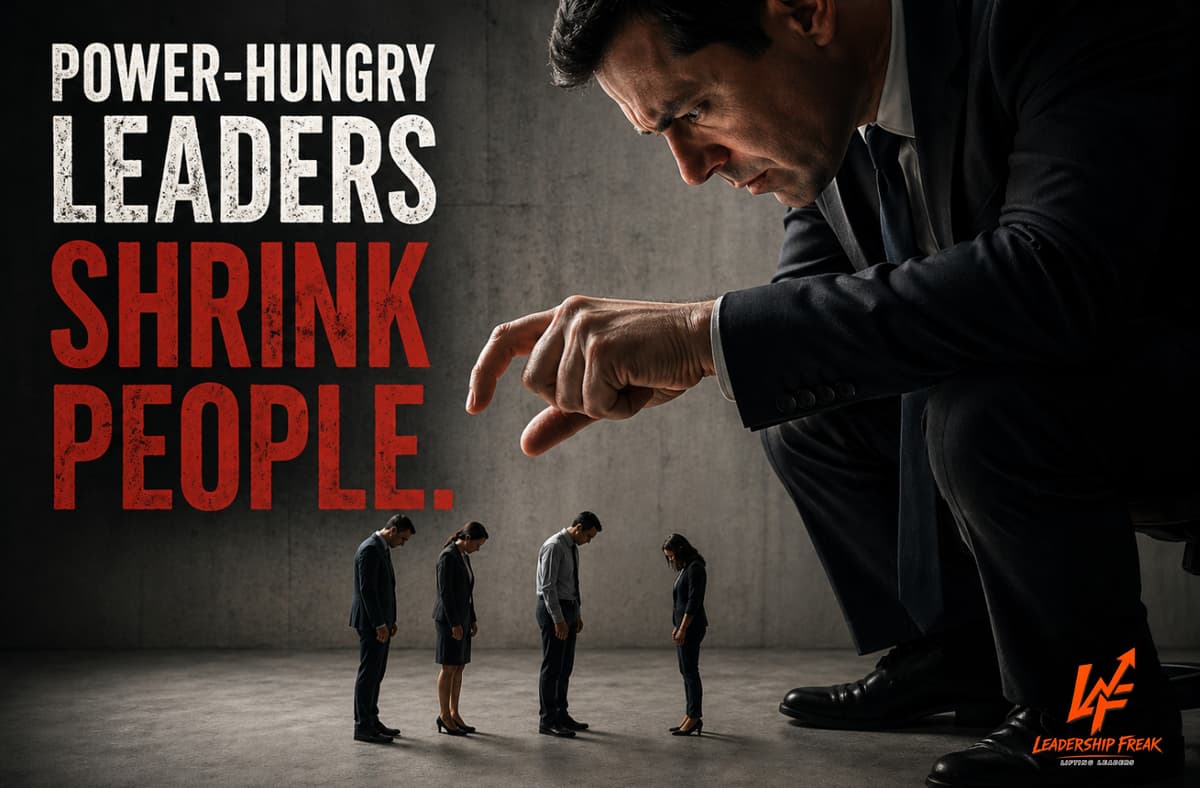
How Leaders Shrink People
Key Takeaways
- •Gratitude signals employee value, preventing disengagement
- •Leaders who praise expand team initiative and ownership
- •Positive feedback multiplies individual strengths and confidence
- •Criticism without appreciation erodes motivation and innovation
- •Building people drives higher retention and business outcomes
Pulse Analysis
Research consistently shows that gratitude is a high‑impact leadership behavior. When managers acknowledge contributions, employees perceive their work as meaningful, which lifts intrinsic motivation and reduces turnover. This psychological boost translates into measurable gains: higher sales conversion rates, faster project delivery, and stronger collaboration across functions. Companies that embed gratitude into performance reviews and daily interactions see a ripple effect, as empowered staff become advocates for the brand and mentors for peers.
Conversely, leaders who rely on criticism or micromanagement create a culture of fear. Nit‑picking and public put‑downs signal that effort is invisible, leading staff to withhold ideas and disengage from problem‑solving. The resulting loss of initiative hampers innovation pipelines and inflates hiring costs as talent seeks more supportive environments. By recognizing the cost of shrinking behavior, executives can redesign feedback loops to prioritize constructive, appreciative communication.
Practical steps for leaders include setting a daily gratitude habit, publicly celebrating small wins, and linking praise to specific behaviors. Training programs that teach managers to phrase feedback positively—focusing on strengths before addressing gaps—help embed this mindset. Over time, a gratitude‑rich culture not only elevates individual performance but also builds organizational resilience, positioning firms to navigate market volatility with a motivated, high‑performing workforce.
How Leaders Shrink People
Comments
Want to join the conversation?