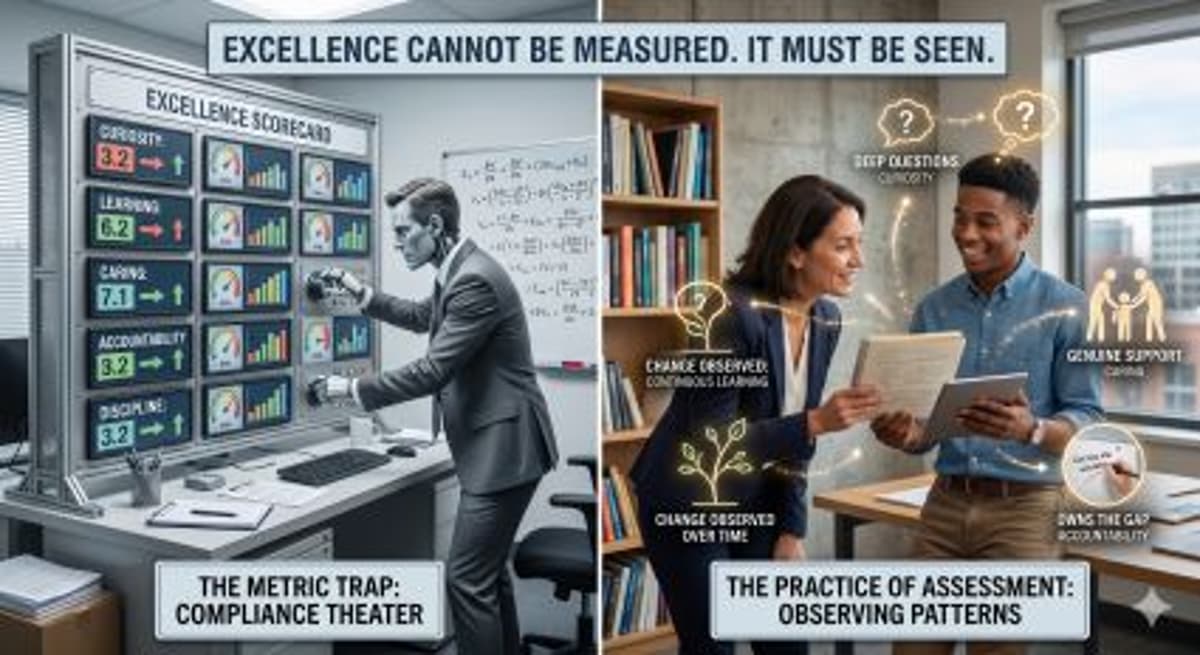
What You Can’t Count, You Have To See
Key Takeaways
- •Metrics turn nuanced behaviors into compliance theater
- •Observable patterns reveal true curiosity and accountability
- •Trustful managers can assess without scorecards
- •Behavioral assessment fuels sustainable leadership growth
Pulse Analysis
Leadership development experts increasingly debate the limits of traditional performance metrics. While dashboards excel at tracking sales pipelines and revenue targets, they fall short when evaluating intangible qualities such as curiosity or purpose. Over‑reliance on numeric scores creates an "activity‑metric trap" where employees prioritize hitting the metric rather than embodying the underlying behavior. This misalignment can inflate short‑term compliance but erodes long‑term innovation and customer loyalty, especially in industries where adaptability and empathy drive competitive advantage.
A more effective approach centers on direct observation and trusted assessment. Managers who model curiosity—asking probing questions, encouraging experimentation—are better positioned to recognize those traits in their teams. Likewise, demonstrating accountability through transparent post‑mortems builds a culture where ownership is visible, not merely reported. By shifting focus from abstract scorecards to concrete, observable actions, organizations can nurture continuous learning, discipline, and purpose without sacrificing the authenticity of employee behavior.
Implementing this observation‑first mindset requires structural changes: regular one‑on‑ones that prioritize narrative feedback, peer‑review sessions that surface real‑world examples, and leadership training that reinforces the importance of modeling desired traits. Companies that embed trust into their management systems see higher engagement scores and stronger customer centricity, as employees feel their contributions are genuinely seen and valued. In a market where talent retention and customer experience are paramount, moving beyond metrics to visible behavior assessment is not just a philosophical shift—it’s a strategic imperative.
What You Can’t Count, You Have To See
Comments
Want to join the conversation?