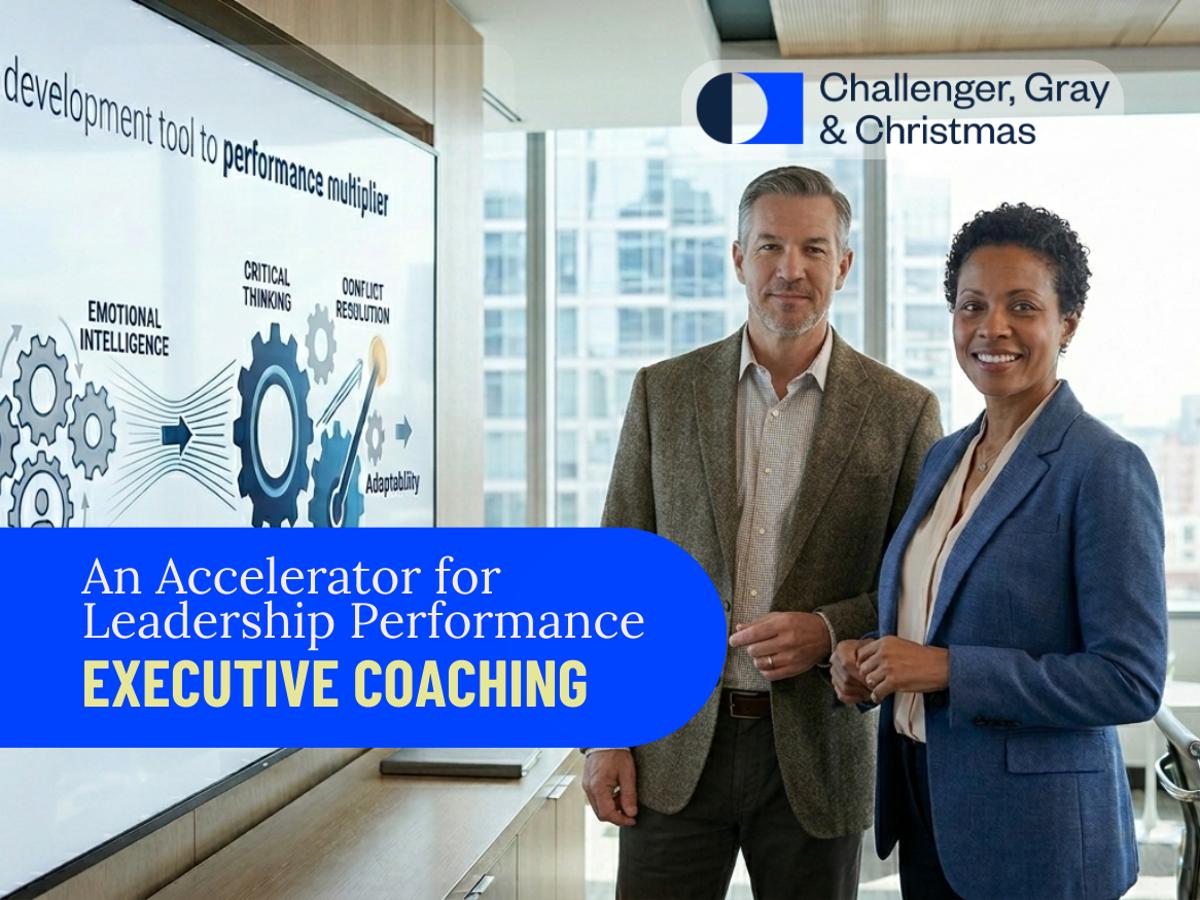
An Accelerator for Leadership Performance: Executive Coaching
Why It Matters
The practice translates directly into measurable business outcomes—faster impact, higher productivity, and reduced turnover—making it a critical lever for competitive advantage.
Key Takeaways
- •Executive coaching delivers average 5.7x ROI on investment
- •Structured coaching cuts new leader ramp‑up time, boosting early performance
- •Coaching plus training raises team productivity up to 88%
- •Early coaching reduces leadership failures within first 18 months
- •Improved leader capability lifts talent retention and engagement
Pulse Analysis
Today’s executives face constant transformation, diverse teams, and rapid decision‑making pressures. As a result, leading firms have moved executive coaching from a corrective measure to a proactive growth engine. Independent studies, including the Manchester Review, confirm a 5.7‑times ROI, while Challenger, Gray & Christmas report 99% of participants see marked performance improvements. This data has spurred CHROs to embed coaching into talent development roadmaps, treating it as a core investment rather than an after‑thought.
The business impact is tangible. Structured coaching accelerates onboarding, shrinking the time‑to‑impact for newly promoted or hired leaders and delivering early wins that protect against costly missteps. A Public Personnel Management study found productivity jumps from 22% with training alone to 88% when paired with one‑on‑one coaching—a near‑fourfold increase. Early‑stage leadership failures, which often stem from misaligned communication and cultural blind spots, decline sharply when coaches provide real‑time feedback. Moreover, leaders who coach effectively retain high‑potential talent, as 80% of coached executives report higher confidence and 70% cite better performance and relationships, directly influencing employee engagement.
Realizing these gains requires intentional program design. Coaches must be selected for alignment with business objectives, clear outcome metrics, and stakeholder buy‑in from HR and senior leadership. When coaching is woven into succession planning, cultural initiatives, and change‑management efforts, it becomes strategic infrastructure that multiplies leadership capacity across the organization. Companies that treat coaching as a systematic, measured investment reap higher productivity, stronger retention, and a competitive edge in an increasingly volatile market.
An Accelerator for Leadership Performance: Executive Coaching
Comments
Want to join the conversation?
Loading comments...