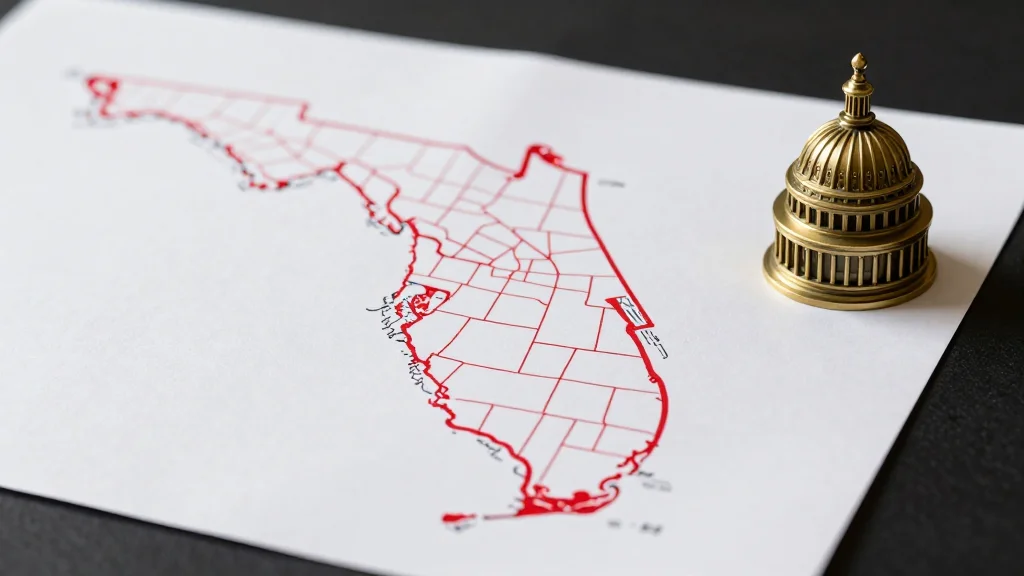
DeSantis Unveils New Congressional Map, Adding Four GOP Seats Ahead of 2026 Election

Companies Mentioned
Why It Matters
The redistricting effort highlights how state executives can leverage institutional tools to advance personal political ambitions, blurring the line between governance and campaign strategy. By attempting to lock in a Republican supermajority in Florida’s congressional delegation, DeSantis not only strengthens his party’s federal foothold but also creates a platform to showcase leadership credentials on a national stage. If the map is upheld, it could embolden other governors to pursue aggressive redistricting ahead of pending Supreme Court rulings, accelerating partisan entrenchment across the country. Conversely, legal challenges could reinforce the importance of independent redistricting commissions and judicial oversight, shaping the future of electoral fairness. The episode also underscores the growing role of media timing in policy announcements. By releasing the map to Fox News first, DeSantis ensured a sympathetic narrative reached the public before opponents could frame the story, a tactic that may become more common among political leaders seeking to control the narrative around contentious reforms.
Key Takeaways
- •DeSantis released a congressional map adding four GOP‑leaning seats, raising Republican representation from 20 to 24 of Florida's 28 seats.
- •The map was first sent to Fox News before the state legislature, reflecting a media‑first strategy.
- •Governor’s legal team argues the current map violates the Fair District Amendments by considering race, while Democrats call the move partisan gerrymandering.
- •DeSantis cites a Census Bureau survey indicating Florida was undercounted by 760,000 people, costing the state an extra House seat.
- •The plan’s fate depends on pending Supreme Court decisions on the Voting Rights Act and Florida’s anti‑gerrymandering laws.
Pulse Analysis
DeSantis' redistricting push is a textbook case of a state leader using institutional authority to build a national profile. By framing the map as a corrective measure against alleged census errors, he taps into a populist narrative of defending Floridians against federal oversight—a theme that resonates with the GOP base and aligns with his broader presidential ambitions. The timing, just ahead of the 2026 midterms, maximizes political capital: a successful map would deliver a tangible victory that can be touted in campaign ads, donor pitches, and national debates.
However, the strategy carries significant risk. Legal challenges could stall or overturn the map, turning a potential triumph into a liability. Moreover, the aggressive partisan tilt may alienate moderate voters in a state that, while leaning red, still houses competitive swing districts. If the Supreme Court ultimately upholds Section 2 of the Voting Rights Act, DeSantis could be forced to redraw the map again, eroding any short‑term gains. The episode also signals a broader trend: governors and other state executives are increasingly treating policy moves as campaign moves, leveraging media timing and legal arguments to shape public perception before legislative or judicial scrutiny.
Looking ahead, the outcome of Florida’s redistricting battle will likely influence how other states approach the redistricting cycle. A successful defense of the map could inspire similar pre‑emptive redistricting efforts in states with pending legal questions, potentially reshaping the partisan composition of the House for the next decade. Conversely, a judicial rebuke could reinforce the push for independent commissions and stricter anti‑gerrymandering statutes, altering the strategic calculus for political leaders nationwide.
DeSantis Unveils New Congressional Map, Adding Four GOP Seats Ahead of 2026 Election
Comments
Want to join the conversation?
Loading comments...