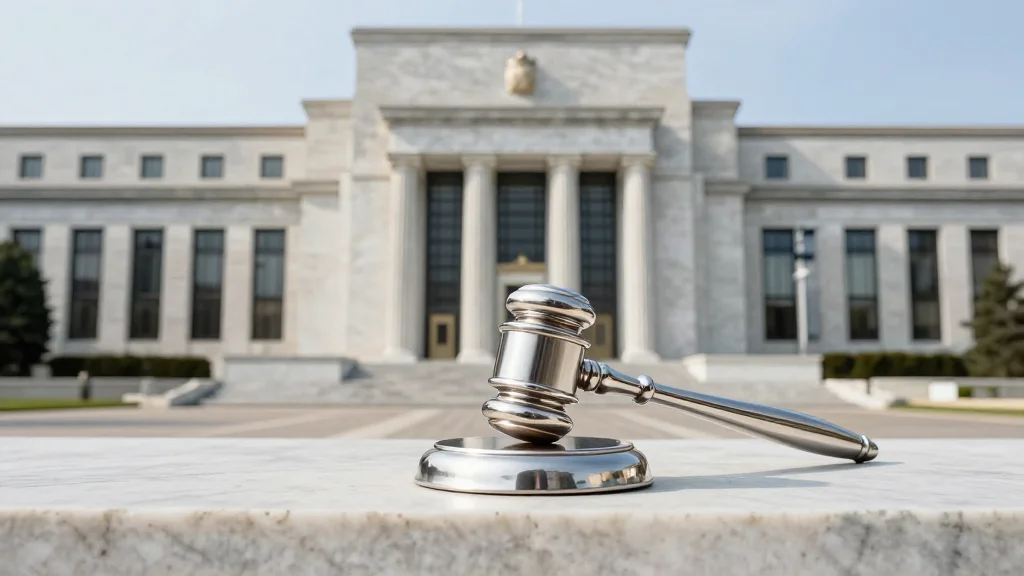
DOJ Drops Fed Probe, Raising Questions Over Jerome Powell’s Future

Why It Matters
The leadership of the Federal Reserve directly influences global financial stability, interest‑rate policy, and inflation expectations. A change at the top could shift the Fed’s stance on rate hikes, affecting borrowing costs for households and businesses worldwide. Moreover, the DOJ’s decision underscores how legal and political pressures intersect with central‑bank independence, a dynamic that could set precedents for future oversight of quasi‑governmental institutions. If Kevin Warsh replaces Powell, the Fed may adopt a more aggressive tightening trajectory, potentially accelerating the pace of rate hikes to combat lingering inflationary pressures from the Iran‑related energy shock. Conversely, retaining Powell could signal continuity and a more measured approach, which markets have been pricing into current bond yields. Either scenario will reverberate through equity markets, currency valuations, and the broader macroeconomic outlook for the United States and its trading partners.
Key Takeaways
- •DOJ ends investigation into Fed building‑renovation cost overruns, removing a legal cloud over Chairman Jerome Powell.
- •President Donald Trump’s preferred successor, former Fed governor Kevin Warsh, is now positioned for a potential nomination.
- •FOMC is expected to keep rates steady this week, but the leadership question adds uncertainty to policy outlook.
- •Treasury yields fell 3 basis points and the dollar weakened after the DOJ announcement.
- •Consumer confidence hit a record low of 47.6 in the University of Michigan survey, heightening pressure on the Fed.
Pulse Analysis
The abrupt termination of the DOJ probe is less about the merits of the renovation case and more about timing. Historically, the Fed has weathered political storms by emphasizing its independence; however, the current environment—marked by a polarized presidency and a Senate eager to assert oversight—creates a fertile ground for a leadership showdown. Powell’s tenure has been defined by navigating post‑pandemic recovery, aggressive rate hikes, and now, geopolitical energy shocks. His ability to maintain credibility hinges on delivering consistent inflation data, which the latest PCE price index is projected to show the fastest rise since 2023.
Warsh’s potential ascension would signal a shift toward a more hawkish policy framework. During his prior Fed service, Warsh advocated for pre‑emptive rate hikes to curb inflation expectations, a stance that could clash with the market’s current appetite for a “wait‑and‑see” approach. If confirmed, Warsh may push the Fed to act sooner on the energy‑price‑driven inflation spike, potentially tightening monetary conditions faster than anticipated. This could accelerate borrowing costs for corporations and consumers, dampening growth at a time when consumer confidence is already at historic lows.
On the other hand, keeping Powell would reinforce the narrative of continuity, reassuring markets that the Fed will not overreact to short‑term volatility. Yet, the lingering political pressure could limit Powell’s flexibility, forcing him to balance the need for decisive action against the risk of appearing beholden to political forces. The outcome will likely influence not only U.S. monetary policy but also set a benchmark for how future administrations interact with independent central banks. In any scenario, the leadership question adds a layer of uncertainty that investors, policymakers, and global markets will monitor closely in the weeks ahead.
DOJ Drops Fed Probe, Raising Questions Over Jerome Powell’s Future
Comments
Want to join the conversation?
Loading comments...