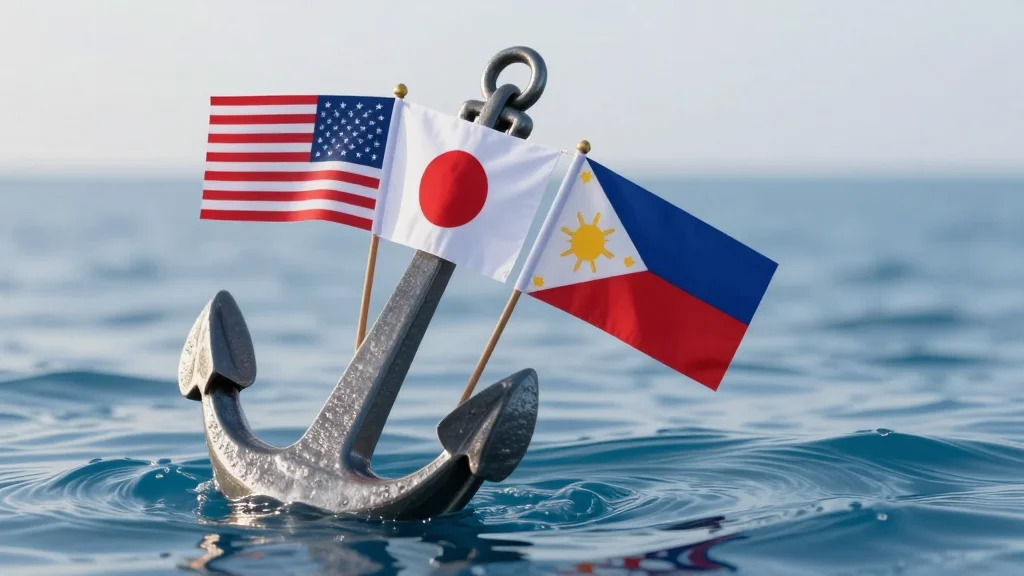
Ely Ratner Pushes for a Binding Pacific Defense Pact Among US, Japan, Australia and Philippines

Why It Matters
A binding Pacific Defense Pact would reshape the security architecture of the Indo‑Pacific, turning a loosely connected network of alliances into a single, legally enforceable coalition. Such a shift could alter Beijing’s strategic calculus, potentially deterring aggressive moves toward Taiwan and contested maritime zones. At the same time, the pact raises questions about alliance cohesion, the willingness of democratic partners to commit resources, and the risk of escalating great‑power competition. If ratified, the treaty would also set a precedent for how the United States structures multilateral defense commitments in the 21st century, moving from flexible, issue‑based arrangements to more permanent, treaty‑based frameworks. This could influence future partnership models in other regions, from the Arctic to the Middle East, as Washington seeks to lock in allies against emerging threats.
Key Takeaways
- •Ely Ratner, former senior defense official, proposes a legally binding Pacific Defense Pact.
- •The pact would link the United States, Japan, Australia and the Philippines in a single treaty.
- •Goal: create integrated command‑and‑control and mutual defense commitments to deter China.
- •Critics warn of a "commitment hazard" and potential alienation of other regional partners.
- •Negotiations expected to begin within weeks, but formal adoption could take months.
Pulse Analysis
Ratner’s proposal reflects a broader trend in U.S. foreign policy: the search for durable, institutionalized alliances that can outlast electoral cycles and shifting administrations. The shift from ad‑hoc coalitions to a treaty‑based pact signals a recognition that deterrence against a near‑peer competitor like China requires more than diplomatic statements; it demands legally enforceable obligations that survive political turnover. Historically, the U.S. has relied on NATO’s Article 5 as a model for collective defense; a Pacific counterpart would be a bold extension of that principle into a region where the U.S. has traditionally favored flexibility.
However, the Pacific context differs sharply from the transatlantic environment. The four prospective members have varying defense budgets, domestic political constraints, and strategic priorities. Japan’s pacifist constitution, the Philippines’ internal security challenges, and Australia’s recent pivot toward the Indo‑Pacific all shape how each country might interpret treaty obligations. The risk is that a rigid pact could become a liability if any member faces a crisis that forces it to prioritize national interests over collective commitments, potentially eroding the credibility the pact seeks to build.
Strategically, the pact could force Beijing to reassess its cost‑benefit analysis. A legally binding coalition would raise the stakes of any aggressive move, potentially deterring escalation. Yet history shows that heightened deterrence can also trigger a security dilemma, prompting a rising power to accelerate its own capabilities to offset perceived encirclement. The success of Ratner’s vision will hinge on diplomatic finesse, transparent burden‑sharing, and the ability to integrate the pact into existing frameworks without fracturing the broader alliance network.
Ely Ratner Pushes for a Binding Pacific Defense Pact Among US, Japan, Australia and Philippines
Comments
Want to join the conversation?
Loading comments...