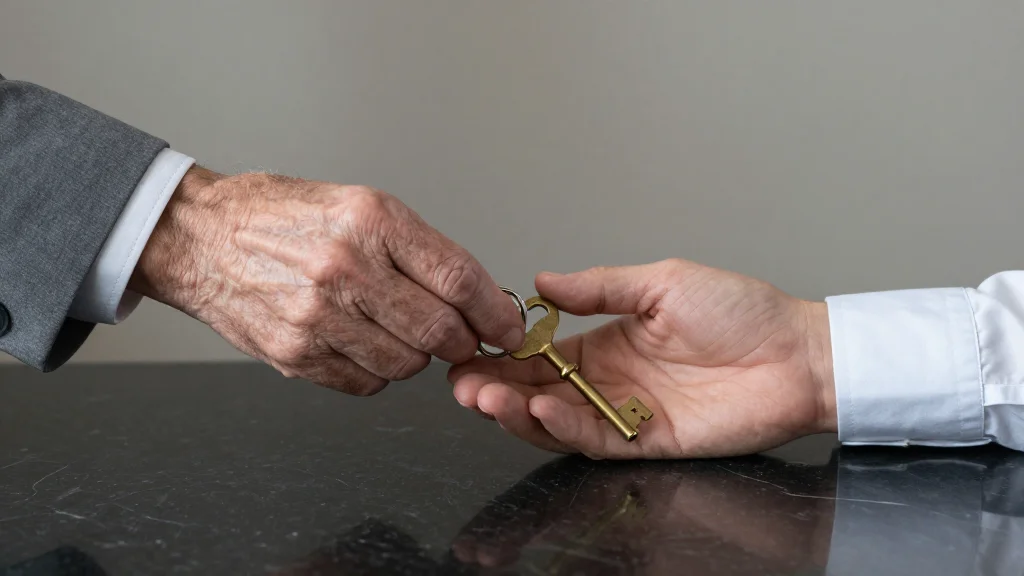
Greg Abel Becomes CEO of Berkshire Hathaway as Buffett Steps Down, $373 B Cash

Companies Mentioned
Why It Matters
The leadership transition at Berkshire Hathaway is a bellwether for succession planning at large, founder‑led conglomerates. Buffett’s retirement ends a six‑decade era of personal brand dominance, forcing the market to evaluate whether the firm’s decentralized management model can thrive under a more conventional CEO structure. The $373 billion cash reserve amplifies the stakes, as investors demand clear capital‑allocation strategies that could influence M&A activity across multiple sectors. Beyond Berkshire, Abel’s approach will inform how other legacy firms handle the twin challenges of preserving a storied culture while adapting to modern governance expectations. A successful deployment of the cash pile could trigger a wave of strategic acquisitions, while a misstep may embolden activist investors to push for more aggressive reforms. In either case, the outcome will reverberate through the leadership playbook of publicly traded conglomerates worldwide.
Key Takeaways
- •Warren Buffett retired, naming Greg Abel as Berkshire Hathaway’s new CEO.
- •Berkshire holds a record $373 billion in cash and liquid assets.
- •Shares have fallen 14% since Buffett’s May 2025 retirement announcement.
- •Analysts question how Abel will deploy the cash and whether Berkshire will buy back Buffett’s 14% stake worth $138 billion.
- •The upcoming Omaha annual meeting will be the first without Buffett at the podium.
Pulse Analysis
Greg Abel inherits a behemoth that has long relied on Buffett’s personal judgment to allocate capital. The sheer size of the cash hoard—$373 billion—creates both an opportunity and a dilemma. In a market where deal multiples are inflating, a strategic acquisition could deliver immediate scale, but it also risks overpaying and diluting Berkshire’s historically conservative return profile. Abel’s early moves, such as appointing NetJets CEO Adam Johnson as president, suggest a willingness to blend fresh operational expertise with the firm’s decentralized ethos.
However, the real test will be Abel’s ability to articulate a clear, data‑driven capital‑allocation framework that satisfies both the board and a shareholder base accustomed to Buffett’s narrative‑driven decisions. If Abel can demonstrate disciplined investment in high‑margin businesses or judicious share repurchases, he could reinforce confidence in Berkshire’s continuity. Conversely, a prolonged hold on cash without visible deployment may invite activist pressure and erode the premium that Berkshire’s stock traditionally commands.
Historically, leadership transitions at iconic firms have been inflection points that either cement legacy or precipitate decline. Abel’s tenure will be measured against Buffett’s 30‑year track record of compounding returns. The outcome will not only define Berkshire’s next decade but also set a precedent for how other legacy conglomerates navigate succession, capital stewardship, and the evolving expectations of modern investors.
Greg Abel Becomes CEO of Berkshire Hathaway as Buffett Steps Down, $373 B Cash
Comments
Want to join the conversation?
Loading comments...