Hanwha Ocean Accelerates AI Shipyard Overhaul with Starlink, Shares Jump 10%

Companies Mentioned
Why It Matters
Hanwha Ocean’s AI‑driven overhaul illustrates how legacy heavy‑industry firms can lead digital transformation without massive layoffs, instead preserving tacit knowledge through digitisation. By pairing AI analytics with reliable satellite connectivity, the shipyard can make split‑second decisions that reduce downtime, a competitive edge in a market where contract awards—such as Canada’s multibillion‑dollar submarine deal—are increasingly tied to operational efficiency and local content. The move also sets a precedent for other capital‑intensive sectors facing aging workforces and fragmented data ecosystems. If Starlink delivers the promised low‑latency, high‑availability link, it could accelerate the adoption of remote‑monitoring and autonomous‑operation technologies across the broader manufacturing and energy landscapes, reshaping leadership expectations for digital fluency in traditionally analog industries.
Key Takeaways
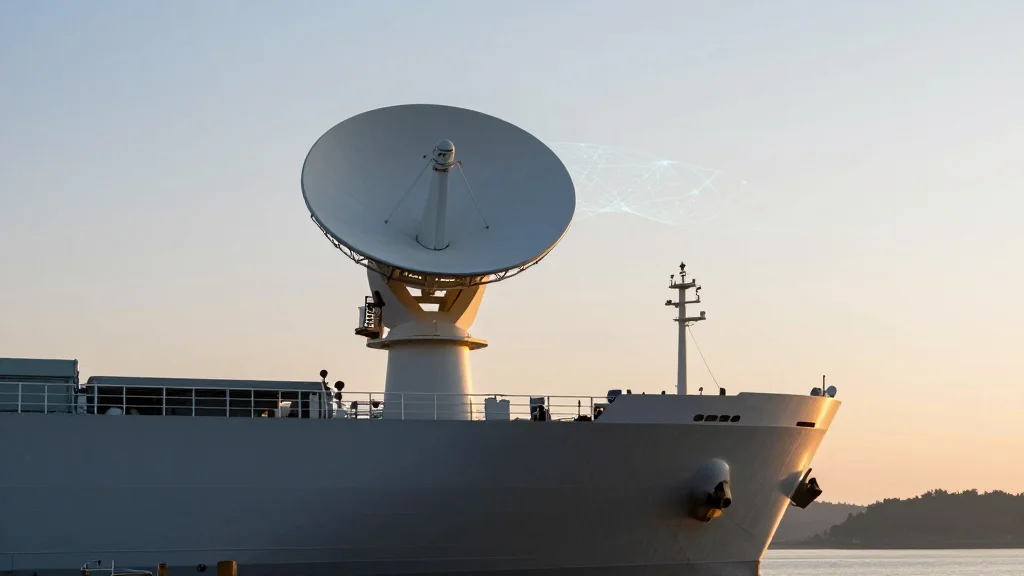
- •Hanwha Ocean will equip sea‑trial vessels with Starlink satellite internet in H2 2026.
- •AI platform monitors over 1,500 real‑time data points for LNG carriers.
- •Company’s shares rose 10.2% to 134,700 won after the announcement.
- •Smart Production Management Center uses a 3‑D digital twin and twice‑daily drone imaging.
- •Training program aims to cut post‑delivery equipment claims by improving crew readiness.
Pulse Analysis
Hanwha Ocean’s strategy reflects a broader shift from cost‑cutting automation to knowledge‑preserving digital leadership. By converting veteran engineers’ decision‑making into algorithmic rules, the firm mitigates the risk of skill loss as South Korea’s shipbuilding workforce ages. This approach contrasts with earlier automation drives that often sparked labor unrest; here, the narrative is framed as augmentation, not replacement, which may smooth internal adoption and bolster morale.
Financial markets have rewarded this narrative. The 10% share jump signals investor confidence that the AI‑Starlink combo will translate into measurable productivity gains—potentially shaving weeks off build cycles and reducing warranty costs. In a sector where profit margins are thin and contract awards hinge on delivery reliability, such efficiencies can be decisive. Moreover, the move positions Hanwha Ocean as a technology‑forward bidder in the Canadian submarine competition, where the Canadian government has emphasized local industrial development and advanced digital capabilities.
If the Starlink trial proves successful, it could trigger a cascade of satellite‑enabled AI projects across the Korean heavy‑industry cluster. Competitors like HD Hyundai Heavy are already testing similar solutions, suggesting an emerging industry standard. The next frontier will likely be integrating low‑earth‑orbit connectivity with edge‑computing hardware on the shop floor, enabling predictive maintenance without reliance on central servers. Hanwha Ocean’s early adoption may give it a first‑mover advantage, shaping not only its own operational blueprint but also the broader definition of leadership in the digital age of shipbuilding.
Hanwha Ocean Accelerates AI Shipyard Overhaul with Starlink, Shares Jump 10%
Comments
Want to join the conversation?
Loading comments...