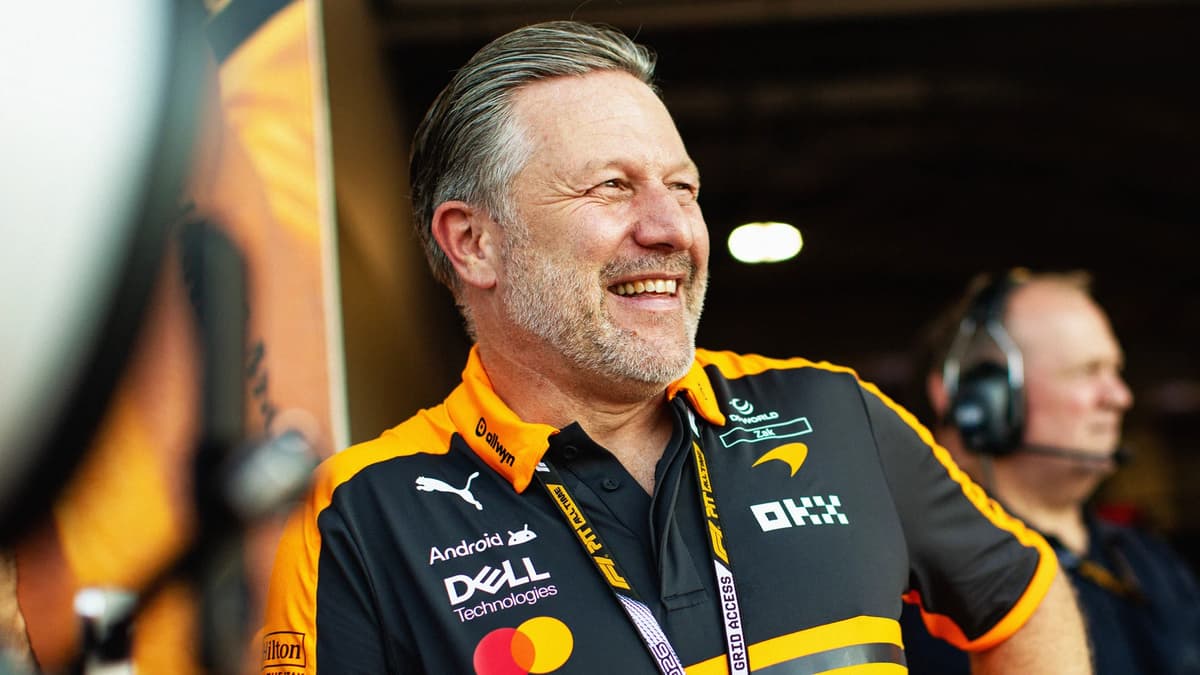
How McLaren Racing Turns Culture Into a Competitive Advantage
Companies Mentioned
Why It Matters
By delegating authority and prioritizing cultural alignment, McLaren can scale high‑performance operations across multiple racing series, setting a template for other complex businesses. The model shows that streamlined leadership can translate into sustained competitive advantage.
Key Takeaways
- •Brown stresses hiring top leaders, not micromanaging
- •McLaren focuses on alignment, not task‑by‑task control
- •Scaling across F1, IndyCar, WEC demands delegated authority
- •Culture of simplicity drives faster decision‑making
Pulse Analysis
McLaren Racing’s leadership philosophy reflects a broader shift in elite organizations: success is less about the breadth of tasks a CEO handles and more about the depth of talent they empower. Zak Brown’s interview with Inc. reveals a deliberate choice to step back from day‑to‑day operations, concentrating instead on recruiting and nurturing senior leaders who can translate strategic vision into on‑track performance. This delegation frees the CEO to maintain a clear, unified direction across three distinct racing platforms—Formula One, IndyCar, and the forthcoming World Endurance Championship—while avoiding the cognitive overload that can cripple growth.
The operational structure at McLaren illustrates how cultural simplicity can streamline decision‑making. By establishing a culture that values “doing less, better,” the team reduces internal friction and accelerates response times during critical moments, such as car development cycles and race strategy adjustments. Leaders are given autonomy, yet they operate within a tightly aligned framework that ensures consistency of brand values and performance standards. This balance of autonomy and alignment is crucial when managing the divergent technical demands and regulatory environments of multiple motorsport series.
For businesses beyond motorsport, McLaren’s model offers a blueprint for scaling high‑performance units without diluting focus. Companies can replicate the emphasis on top‑tier leadership, clear direction, and cultural discipline to navigate complex, multi‑segment operations. The result is a more agile organization capable of sustaining competitive advantage in fast‑changing markets, proving that strategic restraint and empowered teams often outperform the traditional “do‑everything” CEO approach.
How McLaren Racing Turns Culture Into a Competitive Advantage
Comments
Want to join the conversation?
Loading comments...