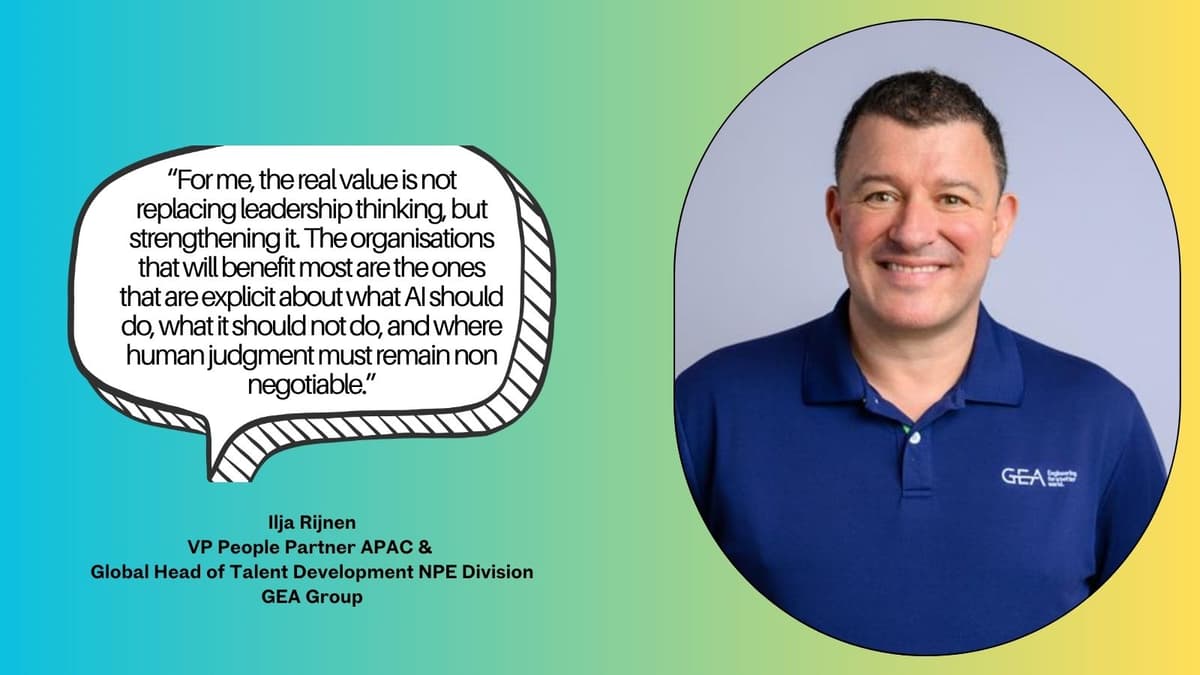
Ilja Rijnen on Why Transformation Stalls when Old Habits Win
Companies Mentioned
Why It Matters
By integrating AI as a decision‑support tool while preserving human oversight, organizations can achieve faster, more consistent talent decisions and avoid transformation fatigue caused by legacy habits.
Key Takeaways
- •AI reduces admin drag, speeds evidence‑based HR decisions
- •Leaders must define AI scope, keep human judgment non‑negotiable
- •Transformation stalls when old habits outweigh new behaviors
- •Clear trade‑off communication accelerates team execution
- •Start with human friction before deploying tech tools
Pulse Analysis
Artificial intelligence is reshaping talent management, but its value hinges on how it is deployed. In GEA Group’s APAC operations, AI tools are being used to automate routine HR tasks, surface hidden workforce trends, and flag emerging skill gaps. These capabilities free leaders from data‑entry drudgery, allowing them to focus on strategic decisions. Yet Rijnen cautions that algorithms should never replace the nuanced judgment required for ethical, context‑rich choices. The sweet spot is a partnership where AI supplies evidence and leaders apply human insight.
The real obstacle to large‑scale transformation is behavioral inertia, not communication overload. Rijnen observes that many initiatives stall because long‑standing habits dominate daily actions. To break this cycle, leaders must move beyond newsletters and town halls, concentrating on visible choices, reinforced routines, and clear start‑stop‑continue directives. By making trade‑offs explicit and simplifying what truly matters, teams can align their day‑to‑day work with strategic goals, accelerating execution and reducing friction.
Practically, executives should begin any tech rollout by identifying the specific human problem it solves—whether it’s reducing approval bottlenecks or improving employee feedback loops. Combining dashboard analytics with regular listening sessions ensures data is validated against lived experience. This balanced approach keeps organizations tech‑enabled without losing the human touch, fostering a culture where AI amplifies leadership rather than replaces it. Companies that master this equilibrium are poised to achieve faster, more resilient transformations in an increasingly digital workplace.
Ilja Rijnen on why transformation stalls when old habits win
Comments
Want to join the conversation?
Loading comments...