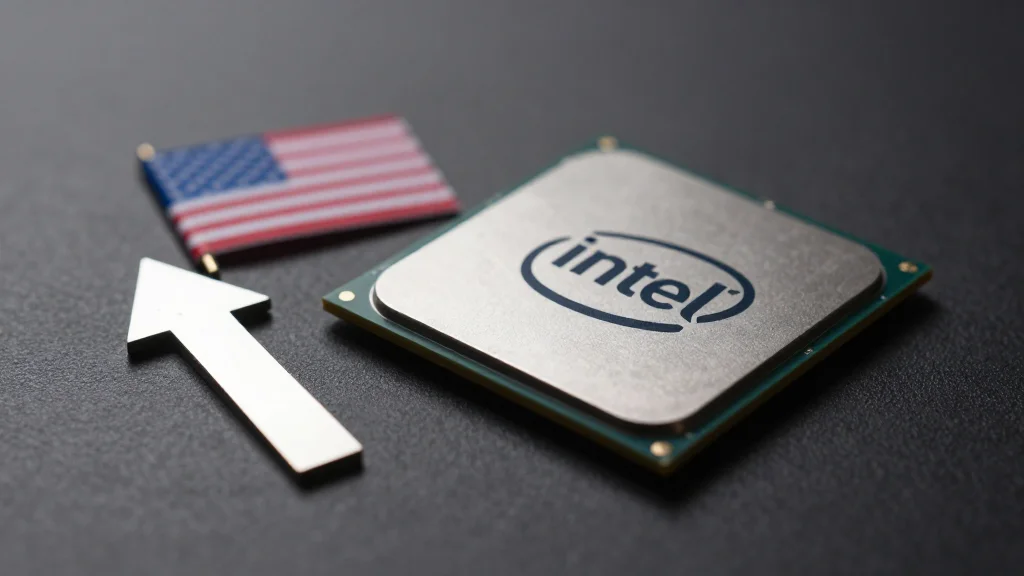
Intel's 260% Stock Surge Tied to New CEO and U.S. Stake

Companies Mentioned
Why It Matters
The Intel case illustrates how a change at the helm can quickly alter market perception, especially when paired with a strategic government investment. For the leadership space, it provides a real‑time example of how CEOs and boards can leverage policy support to accelerate a turnaround, while also highlighting the limits of leadership influence when underlying business economics remain challenging. If Intel’s foundry can move toward profitability, the episode could reinforce the argument that strong leadership combined with public‑private partnerships can reshape legacy industries. Conversely, a continued loss trajectory would underscore that leadership alone cannot overcome structural cost disadvantages, prompting investors to reassess the weight they assign to executive changes in future valuations.
Key Takeaways
- •Intel stock up >260% in 12 months
- •U.S. government holds ~10% equity stake
- •New CEO credited with resetting company narrative
- •Foundry revenue $17.8 bn in 2025 vs $28.1 bn costs
- •Analysts split on foundry’s long‑term viability
Pulse Analysis
Intel’s resurgence underscores a classic leadership lesson: a credible CEO can reset investor expectations even before operational metrics fully catch up. The market’s rapid price appreciation suggests that confidence in execution, not just past performance, drives valuation in technology cycles. Historically, turnarounds at chip firms—such as AMD’s revival under Lisa Su—have hinged on both technical roadmaps and clear strategic messaging. Intel’s situation adds a layer of government involvement, echoing past instances where sovereign capital was deployed to secure supply chain resilience, notably the U.S. Defense Department’s stakes in aerospace suppliers.
The foundry dilemma highlights the tension between strategic ambition and financial reality. While a domestic fab aligns with national security goals, the unit’s current loss profile mirrors the early years of TSMC’s expansion, where heavy capex eventually yielded scale advantages. Analysts who remain bearish are right to flag cash burn, but they may underestimate the multiplier effect of policy‑backed contracts with Nvidia and Apple, which could accelerate customer acquisition. The next earnings season will reveal whether Intel can convert its leadership momentum into a sustainable cost structure.
For CEOs across sectors, Intel’s story offers a cautionary note: leadership credibility can unlock capital and market goodwill, but it must be paired with a clear path to profitability. The interplay between corporate governance, public policy, and operational execution will likely become a template for other legacy manufacturers seeking a comeback in an era where geopolitical risk and supply‑chain security dominate boardroom agendas.
Intel's 260% Stock Surge Tied to New CEO and U.S. Stake
Comments
Want to join the conversation?
Loading comments...