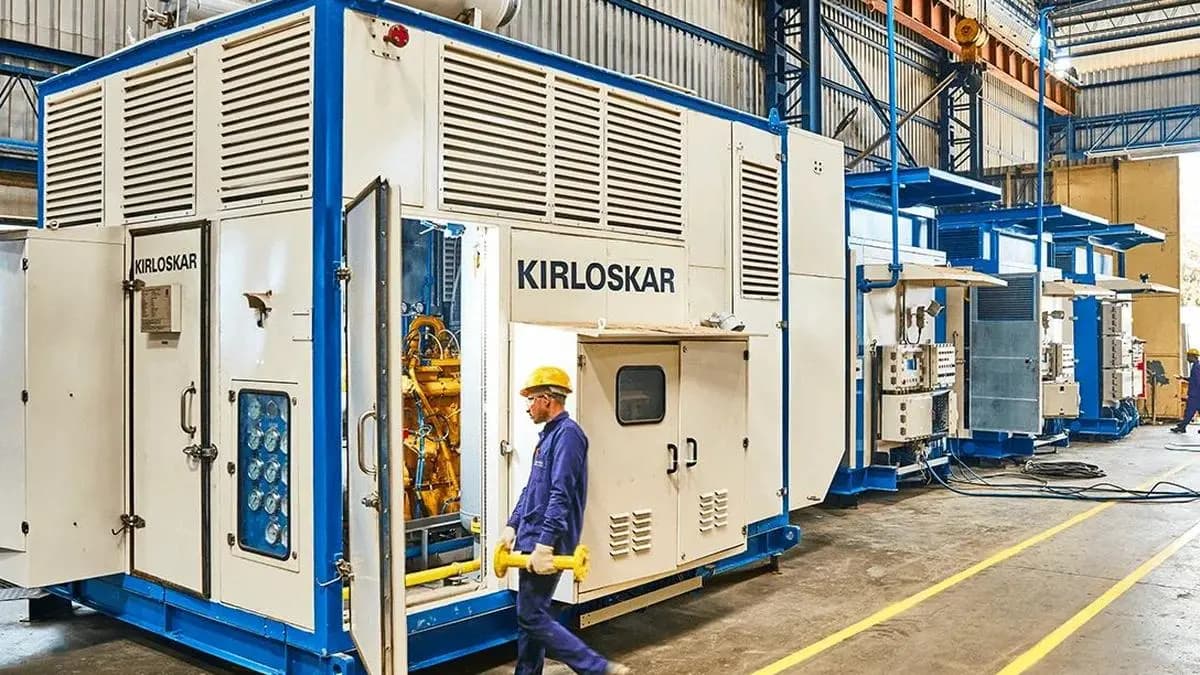
Kirloskar Oil Engines Unveils Succession Plan; Rahul Kirloskar to Chair Board
•March 10, 2026
0
Why It Matters
The handover secures strategic continuity for a key player in India’s engine and genset market, reassuring investors and customers of stable leadership. It also highlights the importance of structured succession in family‑run industrial groups.
Key Takeaways
- •Rahul Kirloskar appointed Chairperson effective April 1, 2026
- •Gauri Kirloskar becomes Vice‑Chairperson alongside Managing Director role
- •Atul Kirloskar retires after over four decades with KOEL
- •Succession plan prepared over two years to ensure smooth transition
- •KOEL supplies gensets, engines to construction, agriculture, power sectors
Pulse Analysis
Family‑owned industrial firms in India often grapple with leadership continuity, especially as founders age. Kirloskar Oil Engines’ two‑year succession planning reflects a proactive approach, mitigating the risk of abrupt governance changes that can unsettle markets and supply chains. By formalizing the transition well before Atul Kirloskar’s mandatory retirement, the board signals disciplined governance, a factor increasingly valued by institutional investors seeking predictable management structures.
Rahul Kirloskar, previously a non‑executive director, inherits a portfolio that spans construction equipment, agriculture, and power generation. His mandate will likely focus on expanding KOEL’s export footprint and accelerating the shift toward cleaner, high‑efficiency engine technologies. Coupled with Gauri Kirloskar’s continued operational oversight, the duo can leverage the group’s engineering heritage while pursuing digitalization and after‑sales service enhancements—critical differentiators in a crowded genset market.
The broader engine and generator set sector is experiencing a resurgence, driven by renewable‑energy integration and demand for reliable backup power in emerging economies. KOEL’s leadership stability positions it to capture market share against rivals such as Cummins and Caterpillar, especially as India’s infrastructure projects ramp up. Analysts may view the smooth succession as a catalyst for a potential earnings upgrade, while customers gain confidence in long‑term product support and innovation pipelines.
Kirloskar Oil Engines unveils succession plan; Rahul Kirloskar to chair board
0
Comments
Want to join the conversation?
Loading comments...