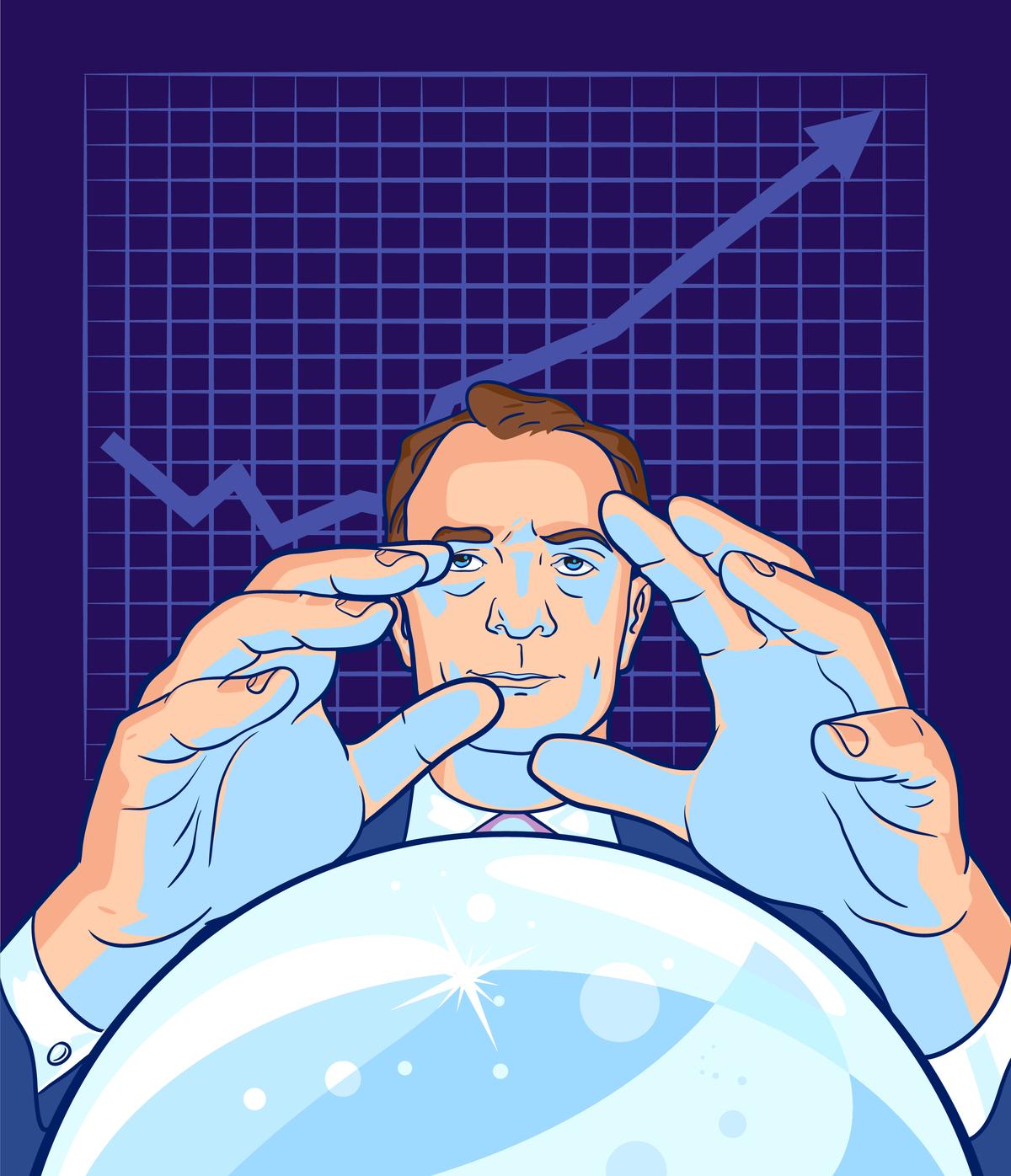
Leaders Need to Stop Pretending They Can Predict the Future
Why It Matters
Recognizing the inherent unreliability of forecasts forces leaders to adopt adaptable strategies, improving decision‑making and stakeholder trust in fast‑changing markets.
Key Takeaways
- •Expert forecasts often miss the mark, akin to random guesses.
- •Studies show humility boosts leader credibility more than certainty.
- •IMF recession predictions succeeded only half the time in October forecasts.
- •Leaders should act like gardeners, enabling adaptability over rigid plans.
- •Acknowledging uncertainty drives better decision‑making in volatile markets.
Pulse Analysis
The track record of expert predictions is sobering. Geoffrey Hinton’s 2016 claim that radiologists would soon be obsolete has not materialized; the U.S. radiology workforce actually grew about 10 percent. Philip Tetlock’s research shows that even top political and economic forecasters perform no better than a dart‑throwing chimpanzee, while the International Monetary Fund’s bi‑annual recession forecasts got it right only half the time in the best‑case October window. These failures stem from overconfidence, model rigidity, and the chaotic nature of social systems, reminding us that forecasting is as much art as science.
A growing body of psychology research links intellectual humility to higher perceived credibility. Leaders who admit knowledge gaps are judged more trustworthy than those who cling to certainty. This shift mirrors a strategic re‑orientation from the "chess master" mindset—controlling every move—to the "gardener" approach, where leaders cultivate conditions for teams to adapt and thrive. Studies in organizational behavior confirm that humility fosters psychological safety, encouraging dissenting views that surface blind spots before they become crises.
For today’s executives, the practical takeaway is clear: replace crystal‑ball forecasts with robust scenario planning and transparent communication. Publish ranges of outcomes, highlight assumptions, and invite external critique. Build flexible operating models that can pivot as new data emerge, and reward teams for surfacing uncertainty rather than masking it. By framing uncertainty as a strategic asset, leaders not only safeguard their organizations against surprise shocks but also strengthen stakeholder confidence in an era where the only constant is change.
Leaders Need to Stop Pretending They Can Predict the Future
Comments
Want to join the conversation?
Loading comments...