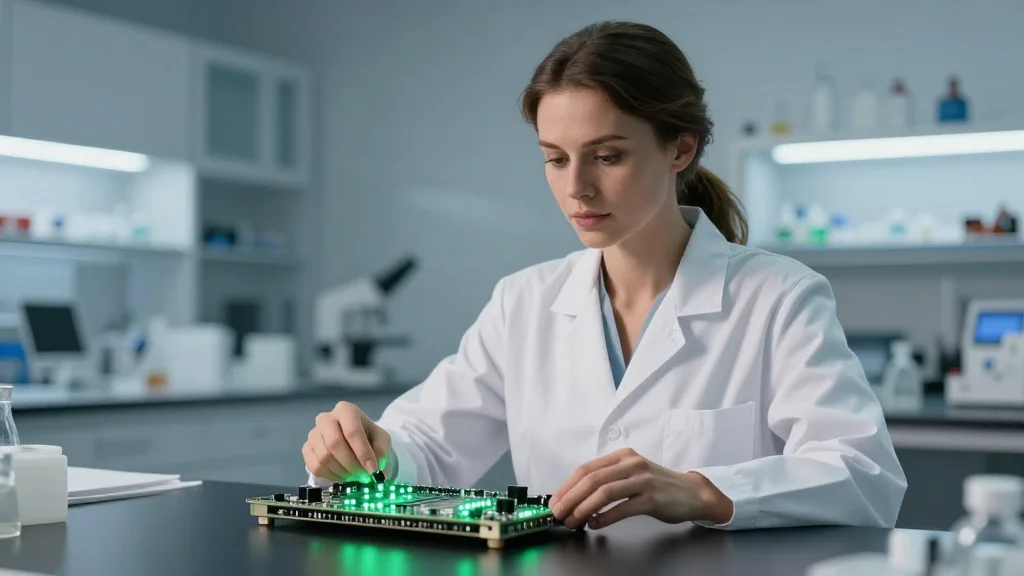
Mateja Lampe Rupnik, CEO of Red Pitaya, on Open Innovation and Europe’s Deep-Tech Future
Companies Mentioned
Why It Matters
Open‑hardware models like Red Pitaya demonstrate a scalable path for European deep‑tech firms to compete globally, while reshaping how engineers are trained for rapid, market‑driven innovation.
Key Takeaways
- •Red Pitaya democratizes high‑speed test equipment via open‑source platform
- •European deep‑tech firms hindered by bureaucracy and risk‑averse capital
- •Open hardware accelerates student projects into early‑stage commercial tools
- •AI and quantum tech reshape engineering leadership toward agility
- •Integrating industry early in curricula boosts engineering entrepreneurship
Pulse Analysis
Red Pitaya’s rise from a crowdfunded prototype to a widely adopted open‑hardware platform illustrates how democratizing sophisticated instrumentation can spur innovation across sectors. By combining high‑speed signal acquisition with FPGA programmability and fully open‑source software, the company enables researchers, educators and hobbyists to iterate faster than with traditional proprietary tools. This model not only lowers entry barriers but also creates a vibrant community that continuously contributes new applications, from low‑cost spectroscopy rigs to quantum‑physics teaching kits, reinforcing the value of shared engineering resources.
Europe boasts world‑class universities and deep‑tech talent, yet scaling hardware startups remains a chronic challenge. Bureaucratic procurement processes, fragmented funding mechanisms and a comparatively cautious venture ecosystem delay product‑to‑market timelines. Rupnik stresses that bridging the gap between academia and industry early in the development cycle is essential; EU research grants must be paired with private‑sector mentorship and market validation. Strengthening cross‑border collaboration hubs—especially in quantum and photonics—could accelerate commercialization and keep Europe competitive against the United States’ more agile capital markets.
The implications for engineering education are profound. Open‑source platforms like Red Pitaya provide hands‑on experience that blends theory with real‑world problem solving, preparing graduates for roles that demand both technical depth and entrepreneurial acumen. As artificial intelligence automates routine design tasks and quantum computing promises disruptive breakthroughs, future technical leaders will need to foster agile, interdisciplinary teams rather than rely on hierarchical R&D silos. Embedding industry‑focused projects and business fundamentals into curricula will cultivate engineers capable of translating breakthroughs into viable products, ensuring Europe’s deep‑tech ecosystem remains vibrant and globally relevant.
Mateja Lampe Rupnik, CEO of Red Pitaya, on Open Innovation and Europe’s Deep-Tech Future
Comments
Want to join the conversation?
Loading comments...