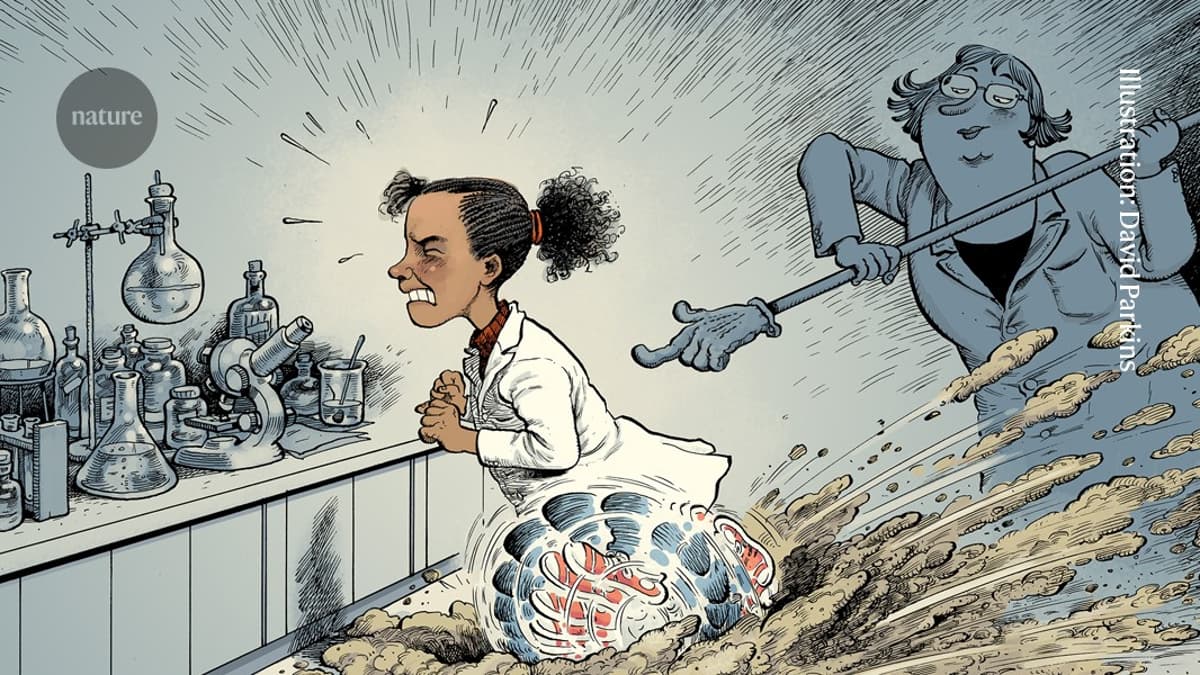
My PhD Student Is Stuck. How Do I Teach Them Perseverance and Problem Solving?
•March 9, 2026
0
Why It Matters
Graduate student resilience directly impacts research productivity and mental health, making effective mentorship essential for institutional success.
Key Takeaways
- •Collaborative labs reduce student isolation and boost problem‑solving
- •Normalizing failure builds resilience and scientific curiosity
- •Realistic project goals prevent burnout and improve outcomes
- •Pairing newcomers with senior members creates safe learning environment
- •Mentors modeling perseverance accelerates student confidence
Pulse Analysis
Graduate students arrive with strong academic records, yet many encounter their first research setbacks without a roadmap for perseverance. Recent surveys reveal that up to 50 % of PhD candidates experience anxiety, depression, or burnout, often triggered by experimental failures and unclear expectations. Institutions therefore face a dual challenge: safeguarding mental health while preserving the innovative drive essential for scientific discovery. Effective mentorship that addresses both emotional resilience and methodological rigor can transform these roadblocks into learning opportunities, strengthening the pipeline of future researchers. By integrating structured mentorship programs, universities can proactively cultivate a growth mindset that endures beyond the doctoral years.
Building a collaborative lab culture provides the first line of defense against isolation. Pairing newcomers with seasoned lab members creates a safe space where repetitive questions are welcomed, and peer‑to‑peer troubleshooting accelerates skill acquisition. Teams that function as sounding boards enable students to surface problems early, reducing the temptation to “go it alone” and fostering collective problem‑solving. Evidence from multiple institutions shows that such peer networks not only boost confidence but also shorten experimental iteration cycles, delivering faster scientific progress.
Equally important is reframing failure as a diagnostic tool rather than a verdict. Mentors who openly discuss their own setbacks model resilience and teach students to distinguish technical glitches from flawed experimental design. Setting realistic project milestones—what some call the “rice and beans” approach—prevents over‑ambitious targets that fuel stress. When expectations are calibrated, students can iterate responsibly, publish at a sustainable pace, and maintain enthusiasm for long‑term inquiry. Institutions that embed these practices see higher graduation rates and more robust, innovative research outputs.
My PhD student is stuck. How do I teach them perseverance and problem solving?
0
Comments
Want to join the conversation?
Loading comments...