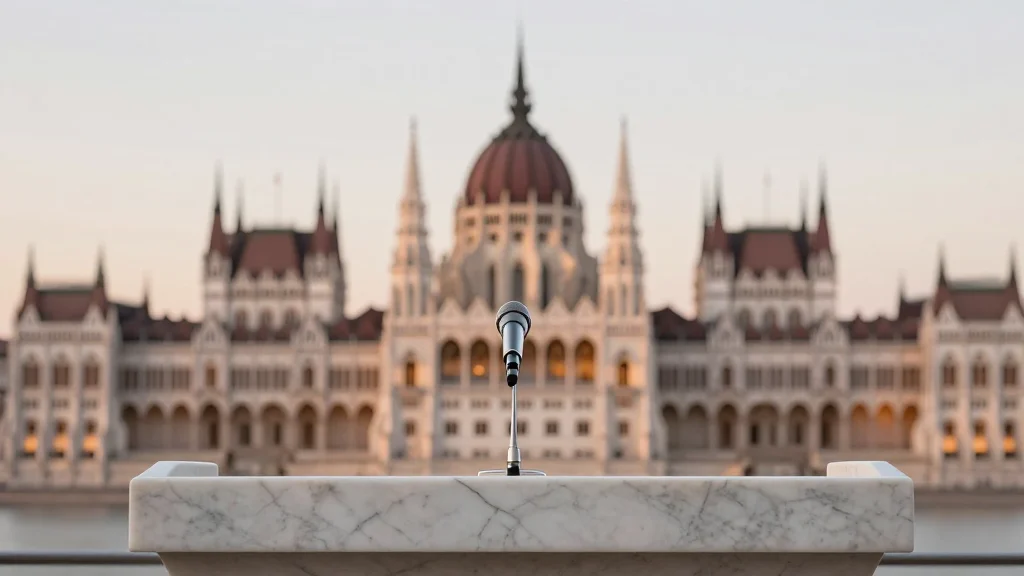
Péter Magyar Sworn In as Hungary’s Prime Minister, Ending Orbán’s 16‑Year Rule

Why It Matters
The transition from Orbán to Magyar reshapes the political calculus of Central Europe, where Hungary has long been a bulwark against EU integration. A government that can unlock $20 billion in frozen funds not only revitalises the domestic economy but also sets a precedent for how the EU enforces rule‑of‑law conditions. Moreover, the two‑thirds parliamentary majority gives Magyar an unprecedented ability to rewrite the legal framework, affecting everything from media independence to judicial oversight. For investors and multinational firms, the change signals a potential reduction in regulatory uncertainty and a more predictable business environment. Companies that had hesitated to enter the Hungarian market due to concerns over state capture may now reassess opportunities, especially in sectors tied to EU recovery funds such as renewable energy, digital infrastructure, and modern manufacturing.
Key Takeaways
- •Péter Magyar sworn in as prime minister, ending Viktor Orbán’s 16‑year rule
- •Tisza party holds 141 of 199 parliamentary seats, a two‑thirds super‑majority
- •New government pledges anti‑corruption office and restoration of democratic checks
- •EU flag raised again on parliament building; first since 2014
- •Goal to unlock €17 billion (~$20 billion) in frozen EU funds
Pulse Analysis
Magyar’s ascent represents a rare instance of a rapid political turnover in a post‑Communist EU member state. Historically, Hungary’s governance has oscillated between liberal reforms and nationalist backsliding; the current shift could mark the beginning of a longer‑term realignment toward European norms. The super‑majority eliminates the need for coalition bargaining, allowing swift legislative action, but also raises the risk of overreach if checks are not reinstated promptly.
From a market perspective, the anticipated release of $20 billion in EU funds could act as a catalyst for a wave of infrastructure and green‑energy projects, aligning Hungary with the EU’s NextGenerationEU recovery plan. This influx may attract foreign direct investment, particularly from firms seeking to capitalize on lower labor costs and a strategic location within the EU’s single market. However, the speed and transparency of fund disbursement will be critical; any perceived delay or politicisation could dampen investor confidence.
Geopolitically, Magyar’s pro‑EU stance may recalibrate the balance of power in the Visegrád Group, where Hungary has often acted as a dissenting voice against Brussels. A more cooperative Hungary could strengthen EU cohesion on security and energy policy, especially in the context of the ongoing Ukraine conflict. Yet, the new administration must navigate domestic expectations for rapid change while managing entrenched interests that benefited from the previous regime’s patronage networks. The coming months will test whether Magyar can translate his electoral mandate into sustainable institutional reform without alienating key constituencies.
Péter Magyar Sworn In as Hungary’s Prime Minister, Ending Orbán’s 16‑Year Rule
Comments
Want to join the conversation?
Loading comments...