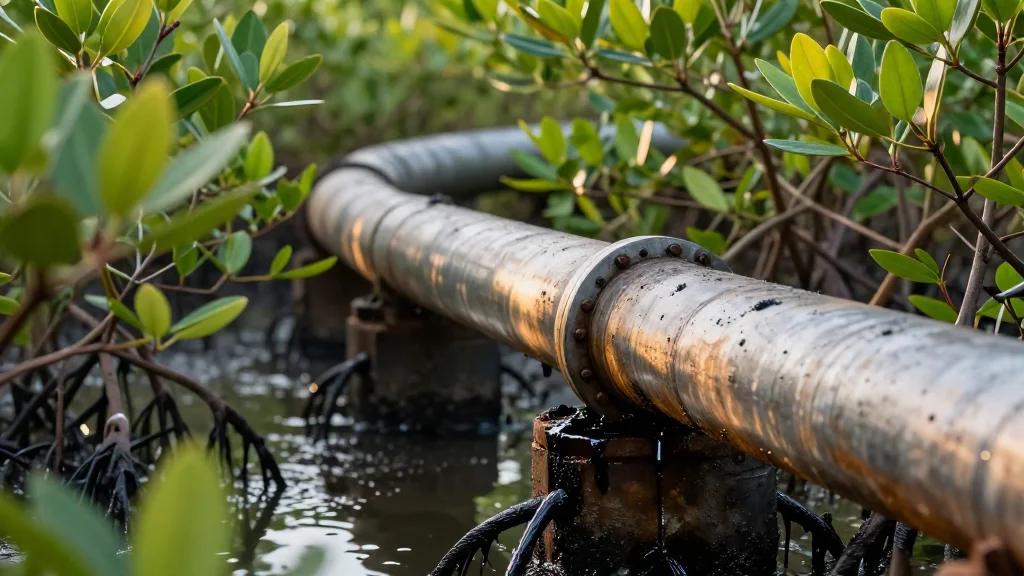
Shell Executives Kept Risky Nigerian Pipeline Running Despite Spill Warnings

Companies Mentioned
Why It Matters
The episode spotlights how leadership decisions in the oil sector can directly shape environmental outcomes and community well‑being. When senior managers prioritize production over safety, the resulting damage can trigger costly legal battles, erode social license, and invite tighter regulatory scrutiny. In Nigeria, where the Petroleum Industry Act is reshaping governance, the Shell case may become a benchmark for enforcing corporate accountability. Beyond the immediate legal exposure, the incident raises questions about how multinational firms embed environmental risk into their strategic planning. Investors and ESG rating agencies are increasingly scrutinizing such governance lapses, meaning that similar decisions could affect access to capital and reputation across the sector.
Key Takeaways
- •Shell kept the 97‑km Nembe Creek Trunk Line operating despite internal “red” warnings in 2013.
- •The pipeline moved roughly 150,000 barrels of oil per day to Bonny Island.
- •Spills destroyed about 2,000 hectares (4,900 acres) of mangrove forest and affected 13,200 hectares (32,600 acres).
- •A 2015 lawsuit alleges senior London executives were responsible for the continued operation.
- •Shell sold the pipeline in 2015, but the legal and reputational fallout continues.
Pulse Analysis
Shell’s decision to keep the Nembe Creek line running reflects a classic trade‑off in extractive industries: short‑term cash flow versus long‑term risk. The pipeline’s capacity made it a revenue engine, yet the internal risk flagging system was effectively overridden. This pattern mirrors past incidents where senior leadership downplayed technical alerts to meet production targets, often resulting in environmental harm and subsequent litigation.
The broader market is watching. ESG‑focused investors have begun to price governance failures into valuation models, and the Nigerian government's new regulatory framework signals a less tolerant stance toward such conduct. Companies that fail to align operational decisions with emerging compliance standards risk not only fines but also capital flight as investors shift toward firms with demonstrable risk‑management rigor.
Looking ahead, the Shell case could catalyze a shift in how multinational oil firms structure oversight of high‑risk assets. Expect tighter internal audit trails, more transparent reporting to host governments, and potentially the emergence of third‑party watchdogs tasked with verifying that “red‑flag” infrastructure is promptly addressed. The outcome of the lawsuit will likely influence the calculus of senior executives worldwide when weighing operational continuity against environmental responsibility.
Shell Executives Kept Risky Nigerian Pipeline Running Despite Spill Warnings
Comments
Want to join the conversation?
Loading comments...