Surf Air Mobility Raises $30M, Cuts 2026 EBITDA Loss Guidance by 40%

Companies Mentioned
Why It Matters
The announcement marks a rare instance of a publicly traded air‑mobility company simultaneously advancing both software and electric‑flight capabilities. By securing low‑dilution financing, Surf Air demonstrates that capital markets still reward bold, technology‑centric strategies in a sector traditionally dominated by legacy manufacturers. The successful integration of AI‑driven operations could set a new efficiency benchmark for regional carriers, while the Hawaii electrification pilot offers a tangible proof point for the viability of electric aircraft on short routes. If Surf Air can deliver on its guidance and translate operational improvements into stronger cash flows, it could accelerate investor confidence in the broader electric aviation ecosystem. Competing firms, from traditional airlines to emerging eVTOL startups, will be forced to reassess their own digital transformation roadmaps, potentially spurring a wave of software‑first, low‑carbon initiatives across the industry.
Key Takeaways
- •Surf Air Mobility raised $30 million in new capital: $15 million credit, $15 million equity led by co‑founders.
- •Adjusted EBITDA loss guidance improved 40% to $30‑$25 million for 2026.
- •Revenue guidance unchanged at $128‑$138 million, a 20‑30% increase over 2025.
- •SurfOS, built with Palantir, now powers scheduling, fuel, maintenance, crew and revenue functions across airline and charter operations.
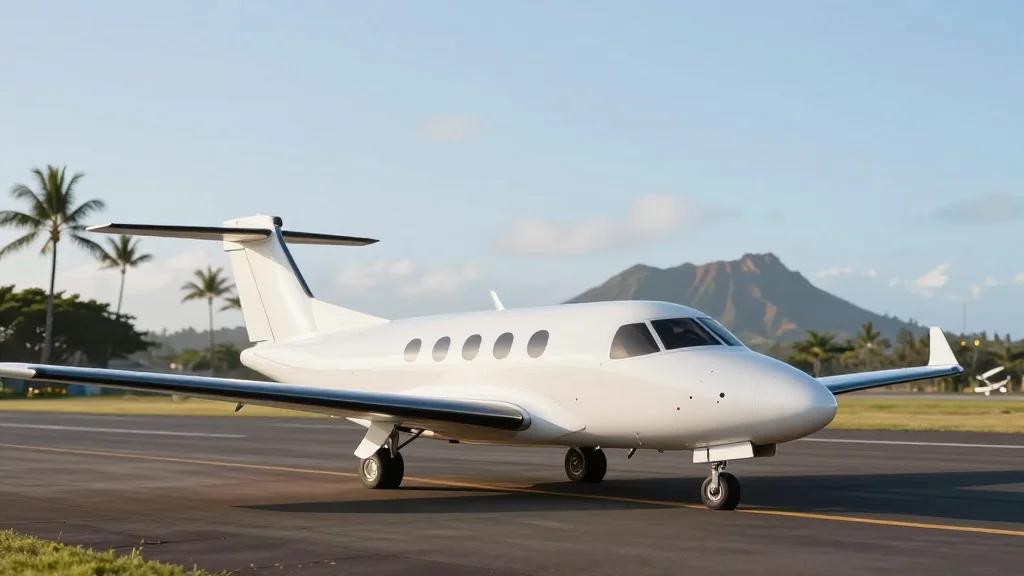
- •Partnership with BETA Technologies enables electric aircraft demos in Hawaii, avoiding up to $100 million in planned electrification spend.
Pulse Analysis
Surf Air Mobility’s dual‑track strategy—software‑first operations paired with electric propulsion—reflects a broader industry shift toward integrated digital‑aircraft ecosystems. Historically, airlines have treated technology as a cost center; Surf Air is flipping that narrative by positioning AI as a revenue‑enhancing engine. The $30 million capital raise, especially the non‑dilutive credit component, underscores a growing appetite among lenders to back asset‑backed aviation financing, a trend that could unlock more flexible funding for other operators seeking to modernize fleets without eroding shareholder value.
The Hawaii electrification pilot is particularly noteworthy. By leveraging BETA’s aircraft, Surf Air sidesteps the massive R&D expenditures that have hamstrung many electric‑aircraft programs. The $100 million cost avoidance not only protects the balance sheet but also creates a scalable template for other regional carriers eyeing island or short‑haul markets. If the cargo demonstrations prove operationally and economically viable, they could catalyze a cascade of similar deployments in other high‑frequency, short‑distance corridors, accelerating the industry’s carbon‑reduction timeline.
Looking ahead, the real test will be whether the projected efficiency gains from SurfOS translate into measurable cash‑flow improvements. The upcoming Q1 2026 earnings will be a litmus test for the company’s ability to convert technology investments into bottom‑line performance. Success could position Surf Air as a bellwether for the next generation of AI‑enabled, electric‑powered airlines, while any shortfall may reinforce skepticism about the pace at which legacy aviation can adopt disruptive technologies.
Surf Air Mobility Raises $30M, Cuts 2026 EBITDA Loss Guidance by 40%
Comments
Want to join the conversation?
Loading comments...