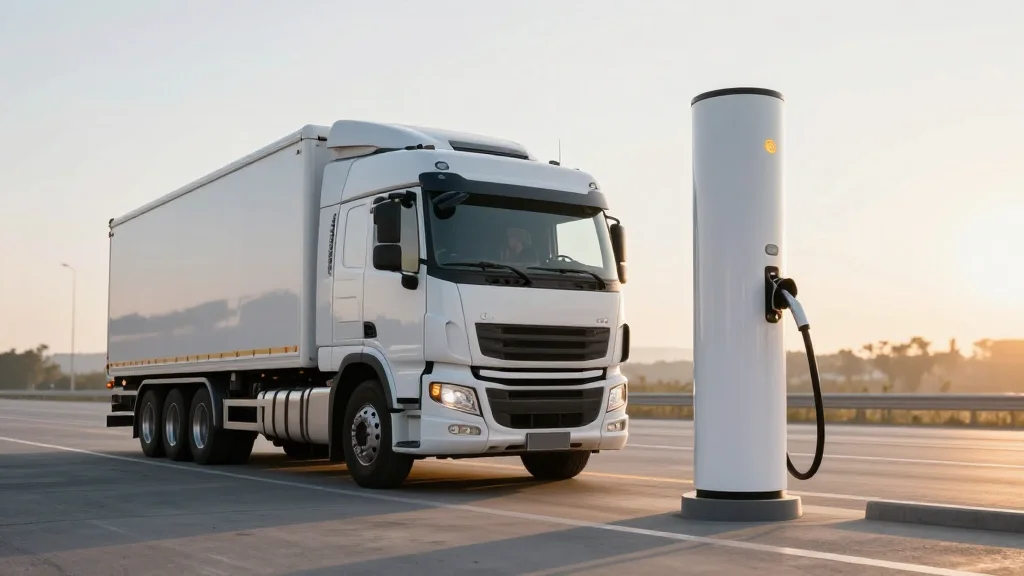
Toyota, Daimler Truck and Volvo Form Cellcentric to Accelerate Hydrogen Trucks

Companies Mentioned
Why It Matters
The Cellcentric alliance illustrates how senior leadership in the automotive sector is reshaping strategic priorities to address climate goals. By uniting around hydrogen, the firms are diversifying the clean‑transport portfolio, reducing reliance on a single technology pathway and mitigating regulatory risk. The venture also highlights the importance of cross‑industry collaboration in building the infrastructure that underpins any new energy system. If Cellcentric can deliver cost‑competitive fuel‑cell trucks and stimulate a viable refueling network, it could set a precedent for future joint ventures tackling other hard‑to‑decarbonize sectors, such as aviation or maritime freight. Conversely, failure to achieve scale would reinforce the dominance of battery‑electric solutions and could redirect investment away from hydrogen research.
Key Takeaways
- •Toyota, Daimler Truck and Volvo create equal‑partner Cellcentric for hydrogen fuel‑cell trucks.
- •Hydrogen trucks can refuel in minutes and maintain payload, addressing long‑haul limitations of batteries.
- •Only ~54 hydrogen stations exist in the U.S., mostly in California; Europe plans major expansion by 2030.
- •Pilot fleet expected by 2026, with production scaling thereafter.
- •Alliance reflects leadership’s strategy to hedge across clean‑transport technologies.
Pulse Analysis
Cellcentric arrives at a moment when automakers are under pressure to deliver tangible emissions reductions while navigating divergent regulatory landscapes. Historically, hydrogen has been viewed as a niche technology, hampered by high costs and a chicken‑and‑egg infrastructure dilemma. By forming a joint venture, Toyota, Daimler Truck and Volvo are effectively pooling risk and signaling to policymakers that the industry is ready to co‑invest in the necessary refueling ecosystem. This collective approach could accelerate public funding allocations, similar to how battery‑electric charging networks grew after coordinated industry lobbying.
From a competitive standpoint, the alliance positions the three firms to challenge emerging pure‑hydrogen players such as Nikola and Hyzon, which have struggled to secure large‑scale OEM backing. The partnership also forces battery‑electric manufacturers to confront the reality that a single‑technology solution may not satisfy all freight use cases. In the long run, the success of Cellcentric could redefine the value chain for heavy‑duty vehicles, creating new supplier relationships for electrolyzers, storage tanks and hydrogen logistics.
However, the venture’s success hinges on more than engineering. Leadership must navigate complex regulatory approvals, secure long‑term hydrogen supply contracts, and convince fleet operators that total cost of ownership will be competitive. If these hurdles are cleared, Cellcentric could become a template for future multi‑partner clean‑energy initiatives, reinforcing the notion that leadership in the automotive sector now extends beyond product design to ecosystem orchestration.
Toyota, Daimler Truck and Volvo Form Cellcentric to Accelerate Hydrogen Trucks
Comments
Want to join the conversation?
Loading comments...