Trump's 2.0 Cabinet Welcomed Women, but They've Been the First to Leave
Why It Matters
The rapid loss of high‑profile women highlights the challenges of sustaining gender diversity in a partisan environment and signals potential reputational risk for the Trump administration’s diversity narrative.
Key Takeaways
- •Three female cabinet members resigned within two months of Trump's second term
- •Departures linked to bipartisan pressure over misconduct scandals
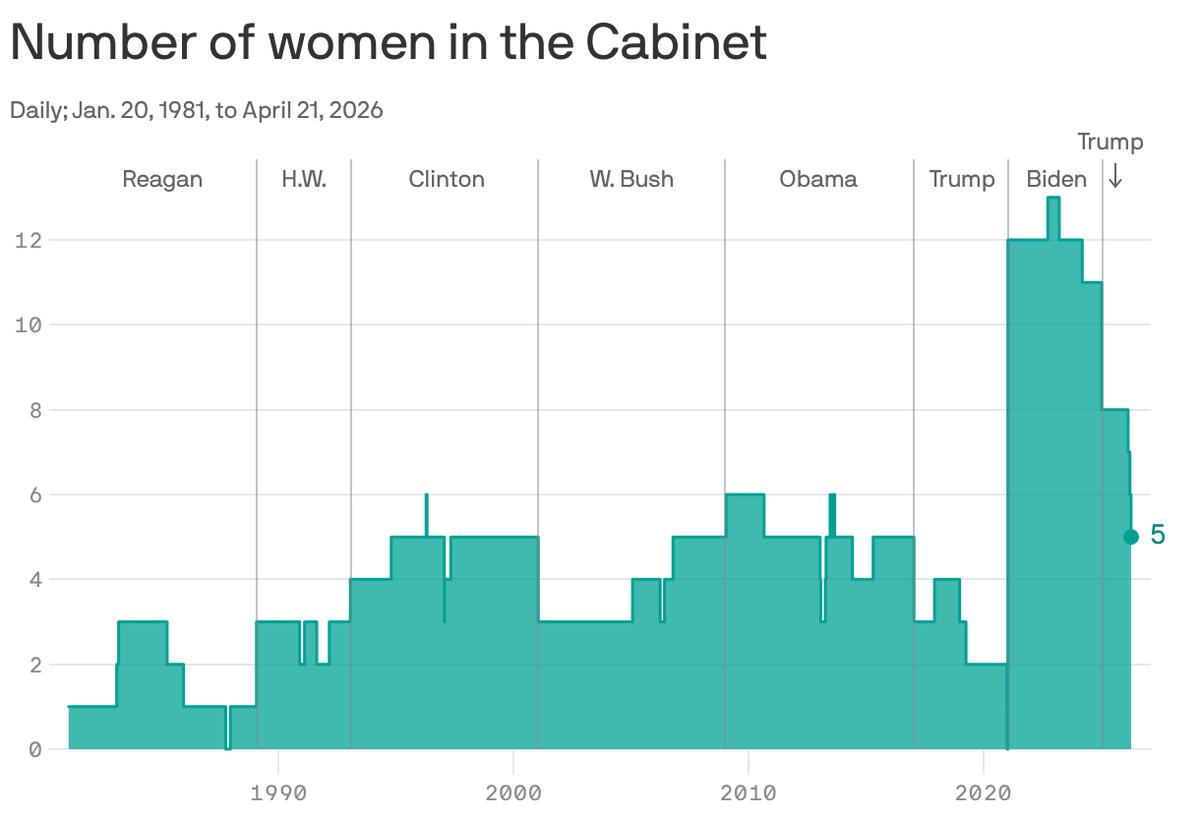
- •Five women still hold cabinet-level posts, including first female chief of staff
- •Male officials under controversy stay, highlighting a gender double standard
- •Trump's female cabinet count beats his first term but lags Biden
Pulse Analysis
Trump’s second‑term Cabinet marks a modest step forward for women’s representation in a historically male‑dominated executive branch. By appointing a record number of female secretaries and naming Susie Wiles as the first female chief of staff, the administration surpassed its own prior record and outpaced previous Republican presidents. However, the overall count still trails President Biden’s cabinet, which holds the current high‑water mark for female representation, illustrating the competitive nature of gender parity in Washington’s top echelons.
The abrupt exits of Labor Secretary Lori Chavez‑DeRemer, Attorney General Pam Bondi and DHS Secretary Kristi Noem have drawn intense media scrutiny. Each resignation followed a wave of bipartisan calls for accountability tied to alleged misconduct, ranging from workplace culture issues to personal scandals. While the women cited personal reasons or private‑sector opportunities, analysts note that the timing aligns with mounting pressure that did not similarly affect male counterparts such as Commerce Secretary Howard Lutnick or FBI Director Kash Patel. This disparity fuels a perception of a double standard, where women are more vulnerable to political fallout.
Beyond individual careers, the turnover reflects a broader retreat from diversity, equity and inclusion (DEI) initiatives that have become a hallmark of recent federal workforce policies. Critics argue that the administration’s focus on an "America First" agenda has deprioritized efforts to broaden representation, potentially reversing gains made over the past decade. For businesses and advocacy groups monitoring federal policy, the pattern signals a need to reassess engagement strategies, as the composition of the cabinet can influence regulatory priorities, procurement decisions, and the overall climate for gender equity in the public sector.
Trump's 2.0 Cabinet welcomed women, but they've been the first to leave
Comments
Want to join the conversation?
Loading comments...