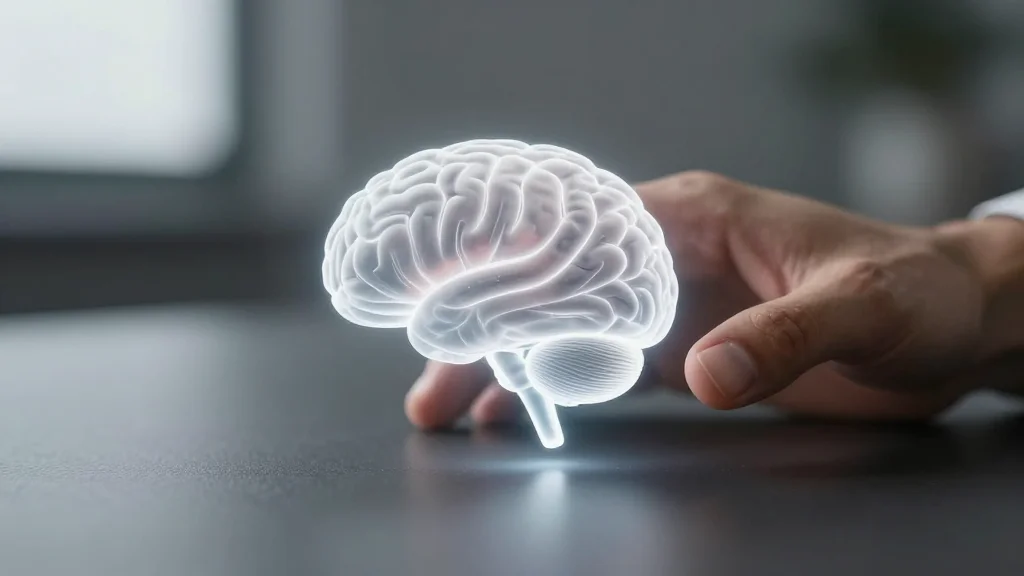
WethosAI CEO Stuart McClure Charts a ‘Meeting‑Light’ Future with Cognitive Twins

Why It Matters
If WethosAI’s cognitive twins deliver on their promise, organizations could slash the hours employees spend in low‑value meetings, freeing talent for higher‑impact work. The model also raises new governance challenges: firms must define oversight protocols, data‑privacy safeguards, and liability frameworks for AI‑mediated decisions. Success could accelerate a broader shift toward AI‑augmented leadership, where executives rely on algorithmic partners to surface insights, while failure would reinforce skepticism about delegating judgment to machines. Beyond productivity, the technology touches the future of work culture. By quantifying individual reasoning styles, cognitive twins could make bias more visible, enabling more equitable decision‑making. Conversely, if misused, they risk entrenching surveillance‑style management. The balance struck by early adopters will set precedents for how AI integrates into the leadership stack.
Key Takeaways
- •WethosAI’s cognitive twins let employees send AI agents to meetings to listen, synthesize, and flag key points.
- •Agents are built on Artificial Individual Intelligence (Aii), a high‑fidelity model of each employee’s reasoning and communication style.
- •McClure stresses that ultimate decision‑making and accountability remain with humans, not the AI.
- •The company plans a Q4 2026 pilot with Fortune 500 firms to measure meeting‑time reduction and decision accuracy.
- •Success could reshape governance, performance management, and the cultural role of meetings in large enterprises.
Pulse Analysis
WethosAI is betting on a paradigm shift that mirrors the earlier wave of meeting‑assistant tools like Otter.ai and Fireflies, but it adds a layer of personal cognition that has not yet been mainstream. The key differentiator is the claim of high‑fidelity individual modeling, which, if validated, could give executives a new kind of decision‑support system that is both personalized and scalable. Historically, AI adoption in the workplace stalls at the trust barrier; McClure’s emphasis on “genuine cognitive partners” is a strategic attempt to pre‑empt that resistance by positioning the technology as an extension rather than a replacement.
From a market perspective, the meeting‑light promise aligns with a broader corporate push to cut operational waste post‑pandemic. Companies are already investing heavily in collaboration platforms, and a successful cognitive‑twin layer could become a premium add‑on, driving a new revenue stream for enterprise AI vendors. However, the regulatory environment is still catching up. Liability for AI‑generated errors remains a gray area, and firms will likely demand robust audit trails and clear contractual language before delegating any decision authority to an autonomous agent.
Looking ahead, the real test will be adoption at scale. Early pilots must demonstrate not only time savings but also measurable improvements in decision quality and employee satisfaction. If WethosAI can prove that its twins reduce “alignment theater” without eroding trust, it could set a template for AI‑augmented leadership that other vendors will scramble to emulate. Conversely, a high‑profile failure could reinforce the cautionary stance of skeptics who argue that human judgment cannot be reliably encoded.
WethosAI CEO Stuart McClure Charts a ‘Meeting‑Light’ Future with Cognitive Twins
Comments
Want to join the conversation?
Loading comments...