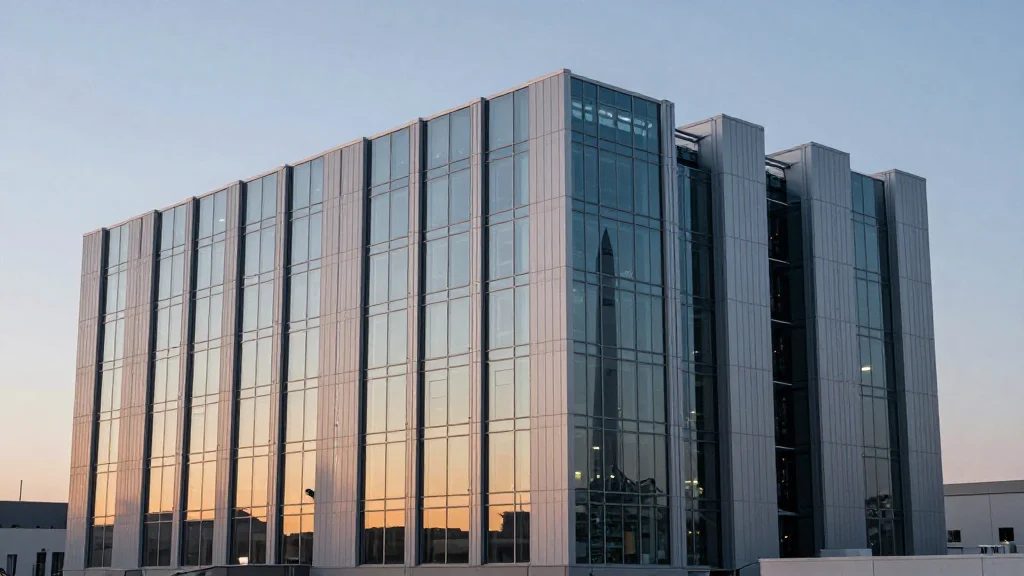
SpaceX’s X‑AI Subsidiary Buys Memphis Data‑Center Campus for $185 Million

Companies Mentioned

Why It Matters
The deal marks a rare instance of a space‑launch company expanding directly into data‑center ownership, highlighting the convergence of aerospace and AI infrastructure. By securing a large‑scale compute site, X‑AI not only diversifies SpaceX’s revenue base but also positions itself to capture a share of the burgeoning AI‑hardware market, which analysts estimate will exceed $1 trillion in annual spend within the next five years. The acquisition also provides a concrete asset that can be leveraged in the upcoming IPO, potentially reducing investor concerns about the capital intensity of AI development. For the broader M&A landscape, the transaction underscores a growing trend of technology firms acquiring physical infrastructure to lock in capacity and control costs. As AI models become more compute‑hungry, ownership of power‑rich data‑centers may become a competitive differentiator, prompting further consolidation among AI‑focused companies and traditional data‑center operators.
Key Takeaways
- •SpaceX subsidiary X‑AI purchases the 217‑acre Colossus I data‑center in Memphis for $185 million.
- •The facility spans 785,000 sq ft and is capable of delivering up to 300 MW of power for AI workloads.
- •Acquisition aligns with X‑AI’s $1.25 billion‑per‑month compute contract with Anthropic, securing capacity for external customers.
- •Deal funded partly by cash reserves and anticipated proceeds from SpaceX’s planned near‑$2 trillion IPO.
- •Ownership gives SpaceX a tangible asset in the AI‑hardware market, potentially influencing future M&A activity in the sector.
Pulse Analysis
SpaceX’s foray into data‑center ownership reflects a strategic pivot from pure launch services to a diversified technology conglomerate. By integrating Colossus I into X‑AI’s portfolio, the company gains direct control over a critical bottleneck—compute capacity—allowing it to monetize idle GPU farms while supporting internal AI initiatives. This dual‑use model mirrors the approach of hyperscalers that have long blended internal workloads with external cloud services.
Historically, aerospace firms have shied away from heavy‑asset IT investments, focusing instead on launch cadence and satellite constellations. SpaceX’s move signals a recognition that future revenue growth may increasingly stem from AI services rather than rockets, especially as Starlink’s subscriber revenue per user declines. Owning a data‑center also provides a hedge against the volatility of launch contracts, offering a steadier cash flow through compute leasing.
Looking forward, the acquisition could trigger a wave of similar purchases as AI startups scramble for guaranteed power and cooling. Competitors may respond by forming joint ventures with existing data‑center operators or by building their own facilities, intensifying capital competition in the sector. For investors, the transaction adds a concrete asset to SpaceX’s balance sheet, potentially smoothing the path to a high‑valuation IPO, but it also raises questions about execution risk—particularly the ability to integrate the campus quickly and maintain high utilization rates amid fluctuating demand.
SpaceX’s X‑AI Subsidiary Buys Memphis Data‑Center Campus for $185 Million
Comments
Want to join the conversation?
Loading comments...