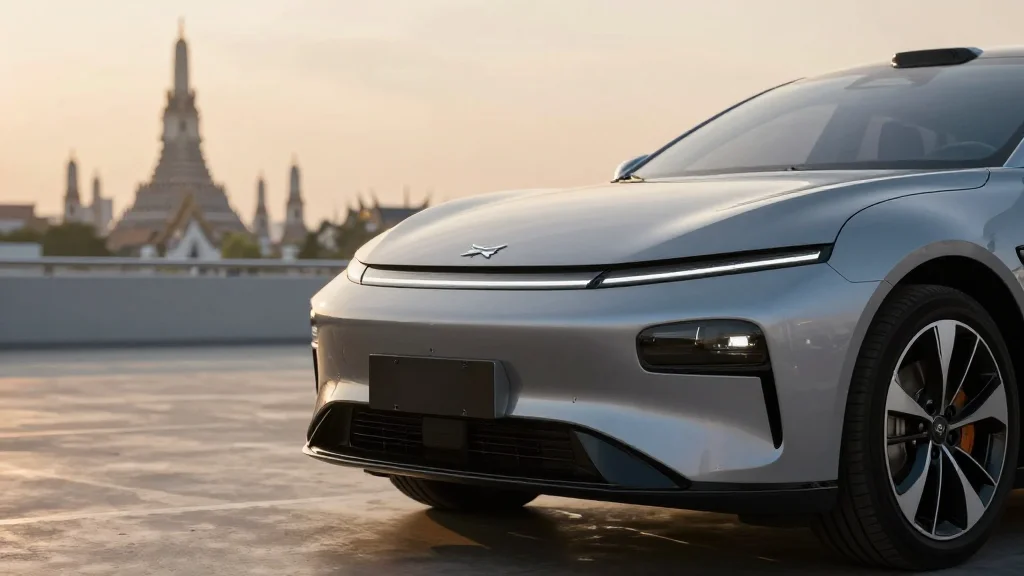
Chinese EV Makers Capture 8 of Top 10 Slots at Bangkok Motor Show, Marking Thailand's Shift

Companies Mentioned
Why It Matters
The dominance of Chinese electric vehicles at Thailand's premier auto exhibition signals a rapid reorientation of the country's manufacturing base toward EV production. With the government scaling back tax incentives, manufacturers are forced to innovate on price and technology, accelerating the shift from internal‑combustion to electric powertrains. This transition will affect supply‑chain contracts, labor skill requirements, and Thailand's export profile, potentially reshaping the Southeast Asian automotive landscape. Moreover, the influx of Chinese brands introduces new competitive pressures that could drive local firms to adopt faster R&D cycles, forge joint ventures, or seek policy support to remain viable. The outcome will influence investment decisions, job creation, and Thailand's long‑term positioning as a regional manufacturing hub.
Key Takeaways
- •Chinese automakers secured eight of the top ten bookings at Bangkok Motor Show, with BYD leading.
- •Number of Chinese brands at the show rose from six in 2023 to over fifteen in 2026.
- •Thai government halved NEV purchase tax break for 2026, prompting price cuts of up to 30%.
- •Entry‑level EVs priced between 399,000‑650,000 Baht ($10,930‑$17,800) target tax‑efficient brackets.
- •Legacy Japanese manufacturers fell to the lower half of the top ten, highlighting a market shift.
Pulse Analysis
The Bangkok Motor Show has become a litmus test for Thailand's automotive future. The sheer volume of Chinese EV introductions underscores a strategic play to capture market share through aggressive pricing and localized product development. By offering sub‑700,000 Baht models that align with the reduced tax incentive, these firms are effectively rewriting the cost calculus for Thai consumers, making electric mobility more accessible than ever before.
For Thailand's manufacturing sector, the implications are twofold. First, the supply chain must pivot quickly to accommodate battery modules, power electronics, and software integration—areas where Chinese firms already have entrenched capabilities. This could spur partnerships with local component makers, but it also threatens existing suppliers tied to ICE (internal combustion engine) parts. Second, the competitive pressure may force legacy Japanese players to accelerate their own EV rollouts or consider joint ventures with Chinese firms to leverage shared technology platforms.
Policy will play a decisive role. While the halved tax break aims to curb fiscal strain, it also raises the bar for manufacturers to deliver value without heavy subsidies. If the government pairs this with incentives for local battery production or workforce upskilling, Thailand could transform into a regional EV manufacturing hub. Conversely, a lack of supportive measures may see the country lose its manufacturing edge to neighboring nations that attract Chinese investment more readily. The next year will be critical in determining whether Thailand can harness this EV wave to revitalize its industrial base or watch it be reshaped by external forces.
Chinese EV Makers Capture 8 of Top 10 Slots at Bangkok Motor Show, Marking Thailand's Shift
Comments
Want to join the conversation?
Loading comments...