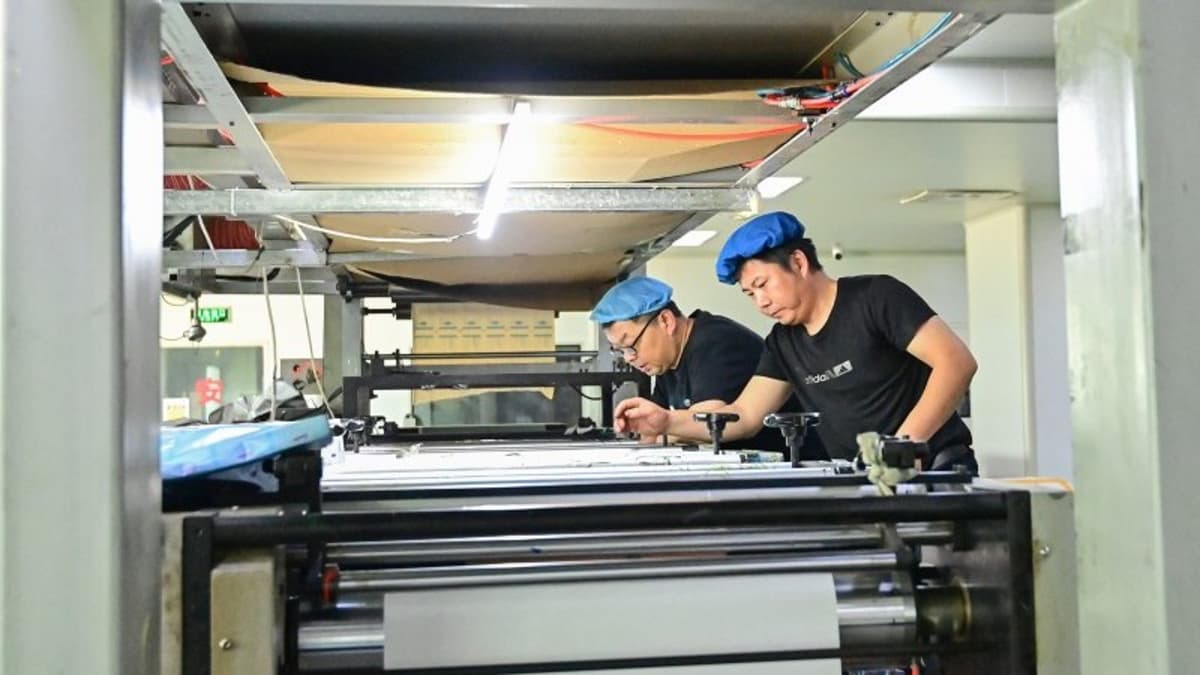
Divergent Chinese PMIs Suggest Resilient External Demand, but Soft Domestic Environment
•March 4, 2026
0
Why It Matters
The divergence signals that China’s core economy may stay in contraction, pressuring global supply chains and commodity markets, while underscoring the need for policy stimulus to revive domestic consumption.
Key Takeaways
- •Official PMI hits 49.0, 33‑month low.
- •RatingDog PMI climbs to 52.1, export‑oriented strength.
- •New orders fall to 48.6, export orders 45.0.
- •Services PMI split: NBS 49.5, RatingDog 56.7.
- •Domestic demand weak; policy support still lacking.
Pulse Analysis
The latest PMI data underscores a growing rift between China’s export‑oriented manufacturers and firms that serve the domestic market. The National Bureau of Statistics’ official index, which samples a broad cross‑section of state‑owned and large private firms, fell to 49.0, confirming a contraction that has persisted for most of the past year. By contrast, the RatingDog survey—weighted toward smaller, export‑focused companies—registered a robust 52.1, suggesting that overseas orders remain a key growth engine even as home‑grown demand stalls.
For global investors and commodity traders, this split has concrete ramifications. A contracting domestic manufacturing base dampens demand for raw materials such as steel, copper and petrochemicals, while resilient export activity sustains appetite for finished goods destined for Europe and the United States. The services sector follows a similar pattern: the official non‑manufacturing PMI lingered below 50, but the private RatingDog reading surged to 56.7, indicating that tourism, childcare and elder‑care niches could offset some of the broader slowdown. These dynamics feed into supply‑chain planning, inventory strategies, and currency forecasts tied to China’s trade balance.
Policymakers now face a delicate balancing act. The persistent weakness in domestic orders and employment points to insufficient consumer confidence and under‑investment, prompting calls for fiscal stimulus, credit easing, and targeted support for sectors like housing and retail. At the same time, the government must avoid overheating export‑driven growth that could exacerbate trade tensions. How Beijing calibrates its response will shape China’s growth trajectory through 2026 and influence the outlook for multinational firms reliant on Chinese demand.
Divergent Chinese PMIs suggest resilient external demand, but soft domestic environment
0
Comments
Want to join the conversation?
Loading comments...