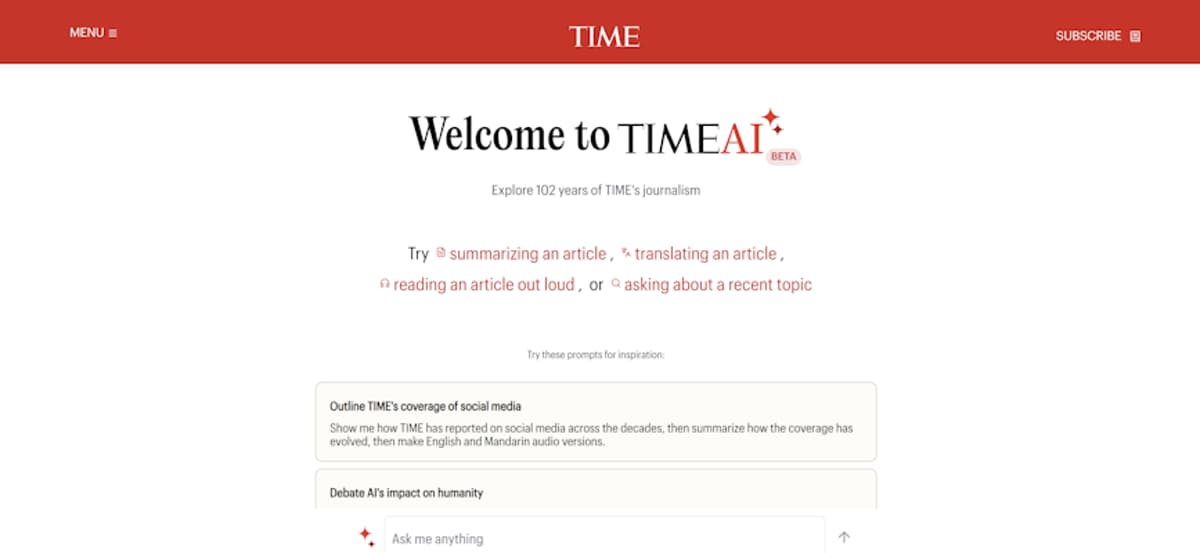
Inside TIME’s Rollout of Its TIMEAI Interactive Agent
Key Takeaways
- •TIMEAI trained on over 750,000 archive pieces
- •Users engaging with TIMEAI are 139% more likely to return
- •AI tool doubles average time spent on TIME site
- •Multi‑language voice, summary, and debate features differentiate TIMEAI
- •TIME frames AI as trust‑focused, not direct revenue driver
Pulse Analysis
Publishers are racing to embed artificial intelligence into their digital properties, but many struggle to balance brand integrity with the lure of quick traffic gains. TIME’s strategy sidesteps the typical licensing‑only model by building its own agent, TIMEAI, that draws exclusively from its historic reporting. By partnering with OpenAI and Perplexity for licensing while retaining a proprietary front‑end, TIME safeguards attribution and creates a closed‑loop ecosystem where its content remains the primary source of AI‑generated answers.
The rollout of TIMEAI illustrates the tangible upside of such an approach. Since November 2025 the agent has been embedded on nearly every article, automatically indexing new pieces in near real‑time. Its feature set—text summarization, multilingual voice output, and preset debate prompts—offers a richer, more interactive experience than standard search snippets. The metrics speak loudly: engaged users are 139% more likely to revisit the site and spend twice as long per session, signaling deeper brand interaction and higher ad‑inventory value.
Looking ahead, TIMEAI positions the magazine as a trusted AI interlocutor, leveraging its century‑long reputation to differentiate from generic large‑language‑model answers that mix sources of varying credibility. While the tool is not yet a direct revenue engine, every interaction creates a monetization surface, from premium subscriptions to targeted sponsorships. TIME’s cautious, brand‑centric rollout may serve as a blueprint for other legacy publishers seeking to harness AI without eroding editorial trust, ultimately reshaping how quality journalism is consumed in the AI era.
Inside TIME’s rollout of its TIMEAI interactive agent
Comments
Want to join the conversation?