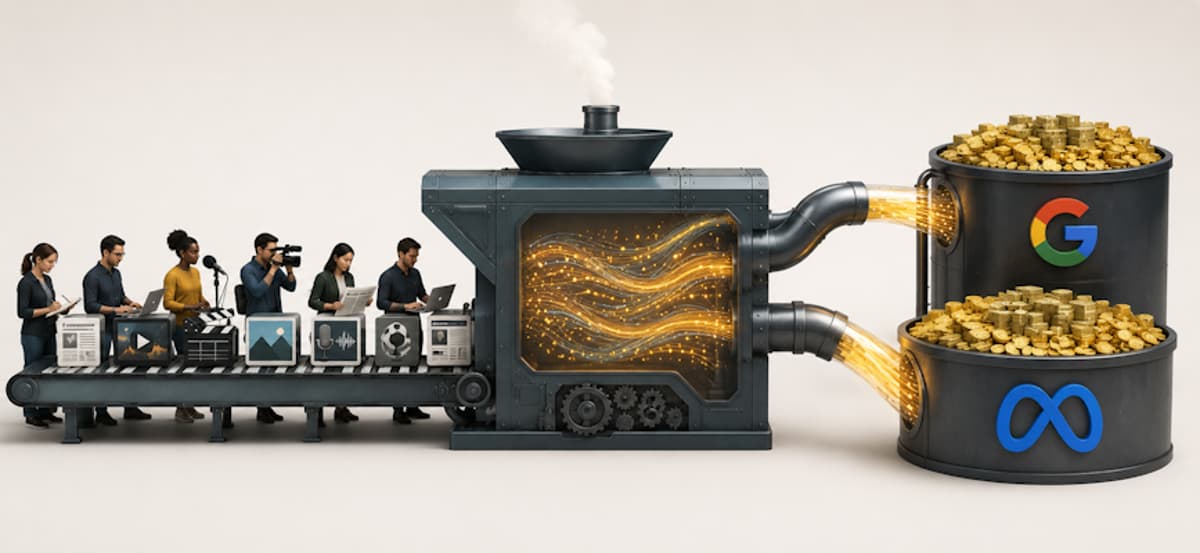
A $500 Billion Reminder of How the Duopoly Wins the Internet
Key Takeaways
- •Google and Meta hit $500 billion annual ad revenue run rate.
- •Antitrust cases against both firms remain unresolved, with limited impact.
- •Platforms monetize audience data, not the content creators’ investments.
- •AI training increasingly harvests copyrighted web content without compensation.
- •DCN sued Common Crawl over unauthorized use of publisher material.
Pulse Analysis
The $500 billion advertising milestone underscores how a duopoly can command half of the world’s ad spend, dwarfing all other competitors. Google and Meta’s combined market share exceeds 90% of digital ad growth, giving them unparalleled leverage over pricing, data collection, and distribution. While regulators have launched antitrust suits and congressional hearings, the legal process moves slowly, leaving the underlying economics of the internet largely untouched. For advertisers and brands, the concentration means fewer choices and higher costs, while publishers see a shrinking slice of the revenue pie despite investing heavily in content creation.
At the heart of this imbalance is the extraction of audience intelligence. Platforms track every click, search, and view, converting human behavior into a commodity that fuels hyper‑targeted ads. This data‑centric model rewards the ability to observe and monetize attention, not the creation of trusted journalism or entertainment. The rise of generative AI amplifies the problem: large language models are trained on massive web crawls that include copyrighted articles, videos, and images, effectively repurposing the very content publishers produce without compensation. The result is a new revenue stream for tech giants that further erodes the financial viability of the original creators.
The recent legal notice to Common Crawl signals a growing pushback from the publishing ecosystem. By challenging the unlicensed aggregation of web content for AI training, Digital Content Next aims to set a precedent that could force the industry to recognize and remunerate the value of original work. Policymakers may need to revisit copyright frameworks, data‑ownership rules, and antitrust enforcement to rebalance the digital economy. As AI tools become mainstream, the pressure to address these structural distortions will intensify, making the $500 billion figure not just a metric of scale but a warning of an unsustainable concentration of power.
A $500 billion reminder of how the duopoly wins the internet
Comments
Want to join the conversation?