Companies Mentioned
Why It Matters
Eliminating ATSC 1.0 would free valuable spectrum for advanced wireless networks while allowing broadcasters to monetize ATSC 3.0 capabilities, reshaping the revenue landscape for both sectors.
Key Takeaways
- •Landover Saturn 5 seeks FCC rulemaking to repurpose UHF 28‑36.
- •Proposal promises $15 billion revenue, double FCC Auction 1001 proceeds.
- •ATSC 1.0 shutdown needed to unlock full NextGen TV spectrum value.
- •Channel‑sharing below 28 lets broadcasters retain market presence.
- •Debate pits 5G/6G spectrum demand against broadcasters' revenue potential.
Pulse Analysis
The broadcast industry faces a crossroads as the aging ATSC 1.0 standard limits the potential of NextGen TV. While ATSC 3.0 offers higher resolution, immersive audio, and robust data services, its benefits are constrained when both standards coexist on the same spectrum. Industry leaders argue that maintaining dual transmission creates inefficiencies, forcing broadcasters to split bandwidth and viewers to experience inconsistent quality. By retiring ATSC 1.0, stations could consolidate their signal into a single, more efficient ATSC 3.0 stream, unlocking capacity for innovative services such as targeted advertising, emergency alerts, and interactive content.
Landover Saturn 5 LLC’s recent FCC petition adds a new dimension to the debate. The company proposes to act as a neutral sponsor, coordinating a nationwide repack of broadcasters below channel 28 and converting the freed UHF 28‑36 block (554‑608 MHz) into a 50 MHz slice for flexible 5G and future 6G deployments. The petition estimates that this reallocation could generate more than $15 billion for the federal government—roughly twice the revenue expected from the FCC’s upcoming Auction 1001. By positioning itself as a revenue‑sharing intermediary, Landover aims to align broadcaster interests with the lucrative wireless market, potentially smoothing the transition for stations wary of losing spectrum.
The stakes are high for both broadcasters and wireless providers. A swift sunset of ATSC 1.0 would give broadcasters immediate enterprise value through ATSC 3.0’s data‑rich capabilities while preserving local programming obligations. Simultaneously, the cleared spectrum would accelerate the rollout of high‑capacity 5G and lay groundwork for 6G, addressing growing consumer demand for mobile data. The FCC’s decision on Landover’s proposal could set a precedent for how spectrum is repurposed in the United States, influencing future policy on the balance between public‑interest broadcasting and commercial wireless innovation.
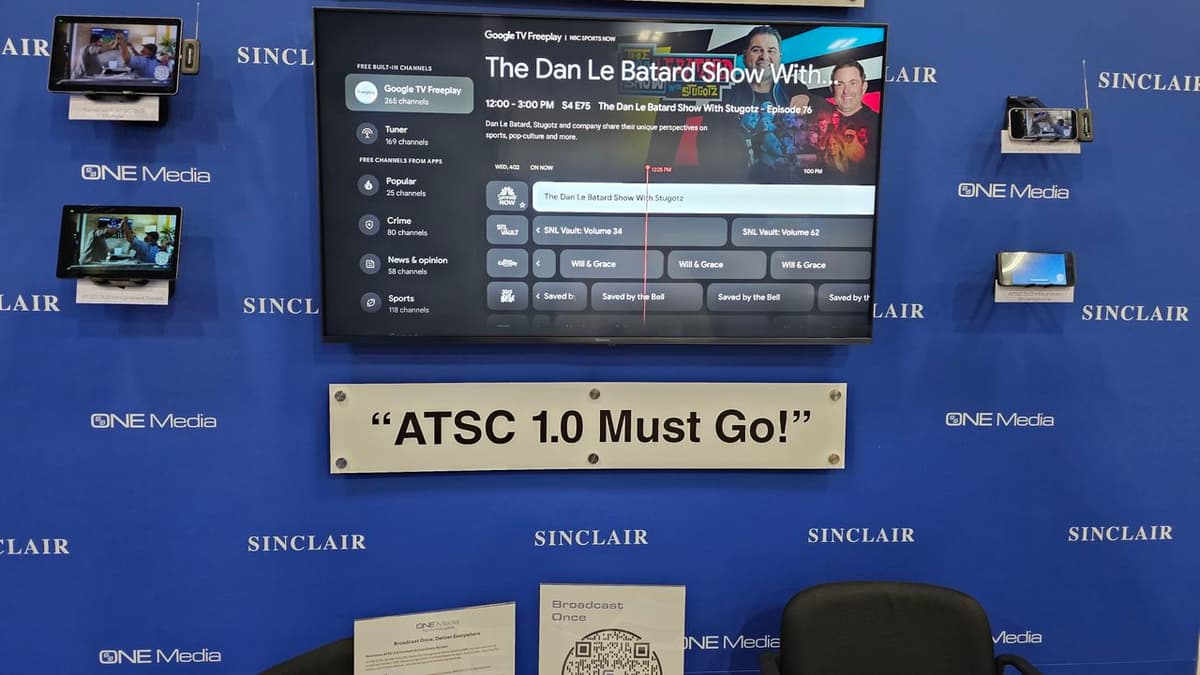
‘ATSC 1.0 Must Go’
Comments
Want to join the conversation?
Loading comments...