Why It Matters
Brands risk losing purchase intent as AI‑driven negative sentiment reaches consumers at critical decision moments, demanding a dual‑engine SEO strategy.
Key Takeaways
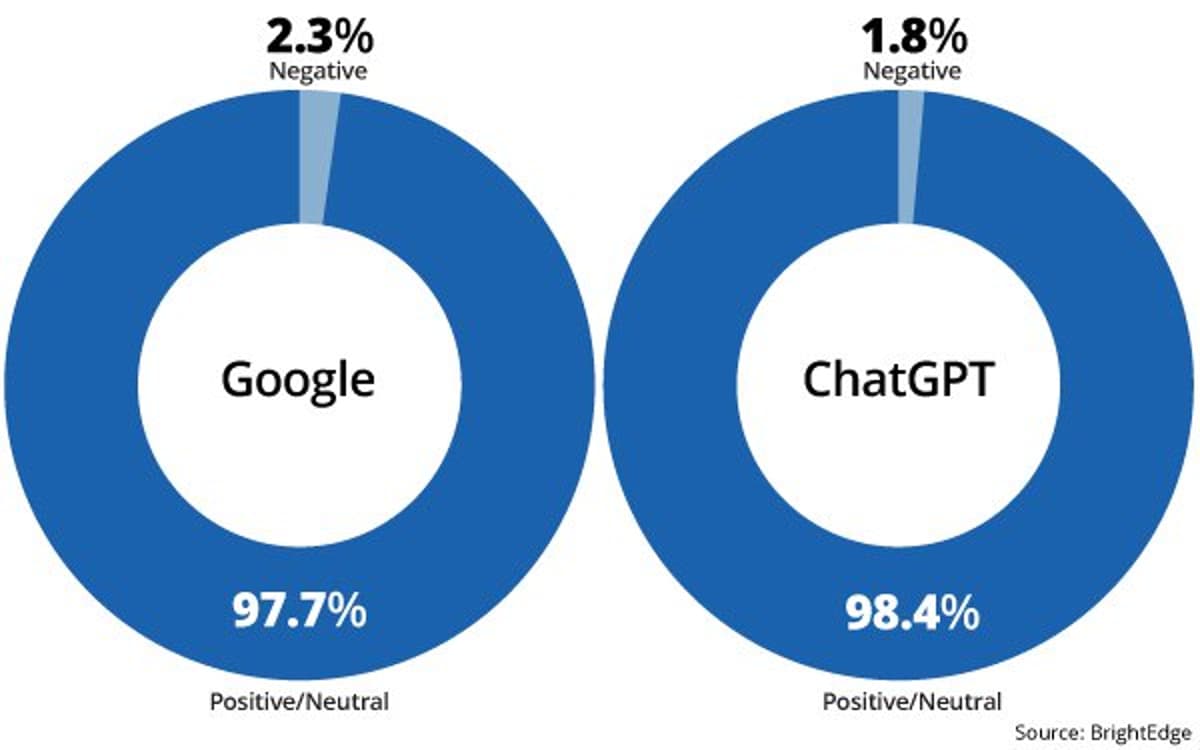
- •AI Overviews show 44% higher overall negativity than ChatGPT.
- •ChatGPT criticism spikes 13× at purchase stage.
- •Negative mentions affect millions monthly despite low percentages.
- •Google leans on news controversies; ChatGPT on product reviews.
- •Optimizing for one AI engine misses 73% of negatives.
Pulse Analysis
The rise of conversational AI as a front‑line research tool reshapes how brands are evaluated. Unlike traditional search, AI engines synthesize a brand’s entire digital footprint—news articles, reviews, forum threads—into concise answers. Google’s AI Overviews prioritize news sources, surfacing legal disputes, regulatory actions, and other controversy‑laden content, while ChatGPT aggregates consumer‑generated reviews and social chatter, highlighting product‑specific shortcomings. This divergence creates two distinct sentiment lenses that can appear simultaneously for the same brand, amplifying the importance of understanding each model’s data provenance.
For marketers, the key challenge lies in the timing of negative sentiment. The BrightEdge study shows that while overall negativity is modest, ChatGPT’s criticism intensifies dramatically at the purchase juncture, a moment when consumers are most impressionable. A single adverse AI response can be replicated across every similar query, effectively broadcasting a negative endorsement at scale. Consequently, brands must monitor AI‑generated mentions with the same rigor applied to social listening, employing real‑time dashboards that track sentiment spikes across both Google and OpenAI platforms.
Strategically, businesses should adopt a multi‑engine optimization framework. This involves tailoring content to satisfy Google’s news‑centric algorithms—by proactively managing press releases, legal disclosures, and crisis communications—while simultaneously curating product‑review ecosystems that feed ChatGPT’s answer generation. Structured data, FAQ schemas, and robust review acquisition can mitigate product‑evaluation criticism. As AI continues to embed itself in the consumer journey, brands that anticipate and address sentiment across both engines will preserve purchase intent and protect their digital reputation.
ChatGPT More Likely To Criticize Brands Near Purchase
0
Comments
Want to join the conversation?
Loading comments...