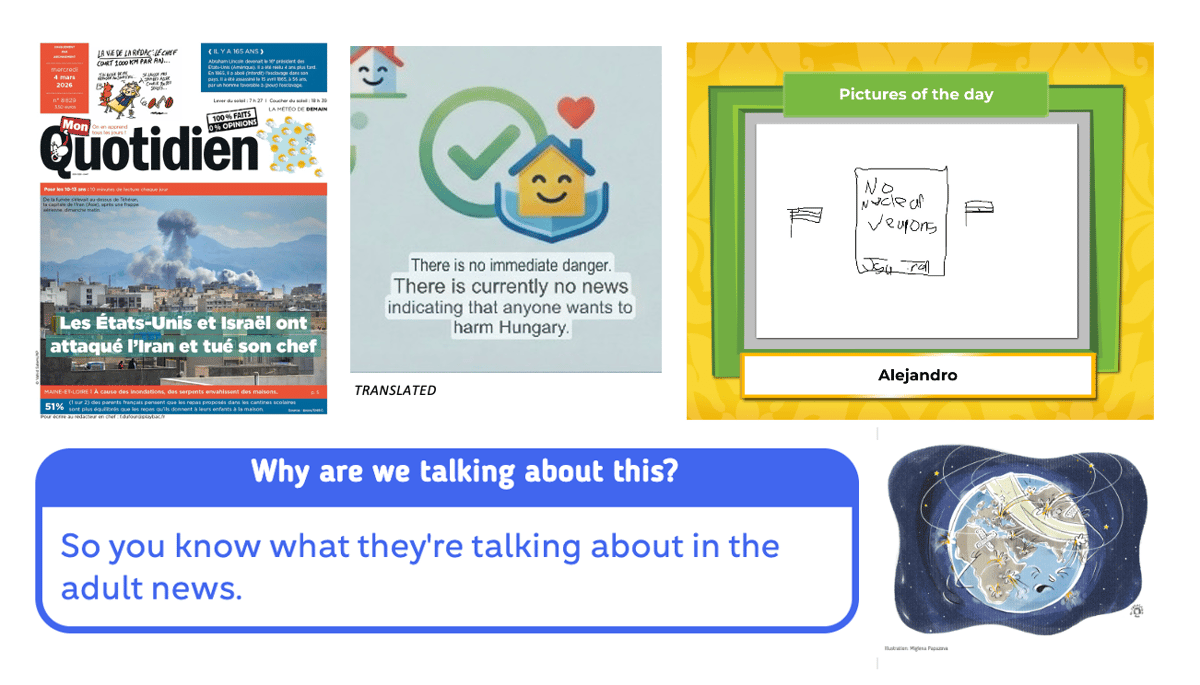
Children Get Help to Cope with the News of Latest Middle East Bombings
•March 2, 2026
0
Why It Matters
Age‑appropriate crisis reporting builds media literacy and protects children’s mental well‑being, setting a new standard for the news industry.
Key Takeaways
- •Child-focused outlets add context, not just headlines
- •Transparent source selection taught to young readers
- •Interactive tools turn facts into games
- •Hope messages reassure safety distance
- •Editors encourage discussion and creative response
Pulse Analysis
The surge of child‑centric news platforms reflects a broader shift toward responsible journalism in an era of constant conflict coverage. By translating complex geopolitical events into digestible narratives, outlets like Vijte and KidsWeek help children understand the "what" and "why" without sensationalism. This strategy aligns with growing expectations from parents and educators for media that balances accuracy with emotional safety, positioning these publishers as trusted intermediaries between adult newsrooms and younger audiences.
Key to this model is the deliberate teaching of source evaluation and fact‑checking. Articles explicitly ask readers to consider which outlets are reliable, often providing side‑by‑side comparisons of images and captions, as seen in News‑O‑Matic’s dual‑photo feature. Gamified quizzes, point systems, and multilingual apps turn learning into an interactive experience, reinforcing retention while keeping engagement high. By embedding definitions of unfamiliar terms and offering downloadable graphics for classroom discussion, these platforms embed media‑literacy skills directly into the news consumption process.
Beyond education, the approach delivers measurable mental‑health benefits. By emphasizing that bombings are geographically distant and pairing stories with hopeful messages—such as expert interviews dispelling local threat fears—children receive reassurance that mitigates anxiety. The inclusion of creative outlets, like drawing apps encouraging anti‑nuclear sentiment, empowers young readers to process emotions constructively. As the industry watches these pilots succeed, we can expect wider adoption of child‑friendly crisis reporting, reshaping how newsrooms think about audience segmentation and long‑term brand trust.
Children get help to cope with the news of latest Middle East bombings
0
Comments
Want to join the conversation?
Loading comments...