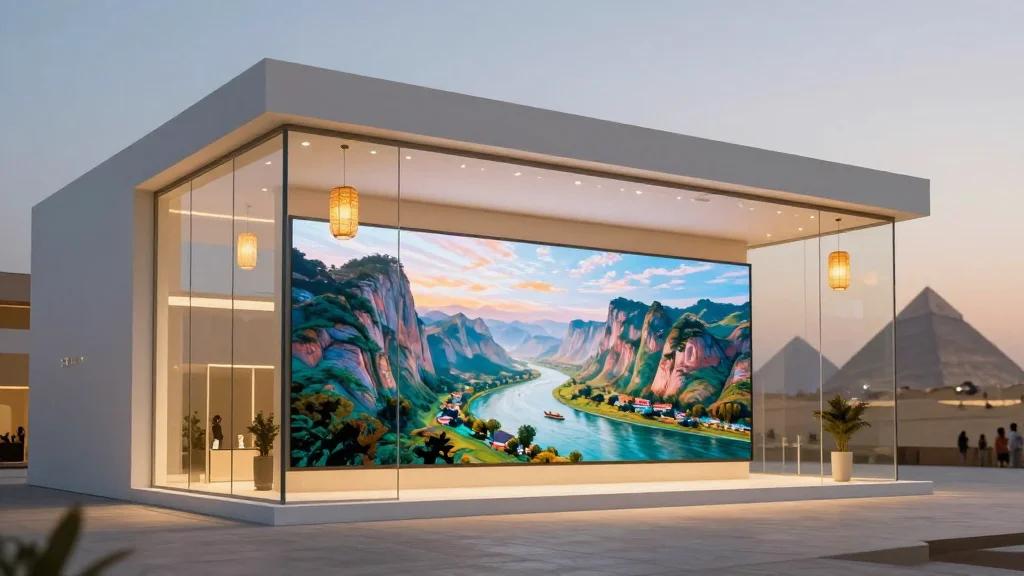
China's Shandong Radio and Television Opens 'Oriental Screening Room' In Egypt

Why It Matters
The Cairo launch illustrates how Chinese state media are using cultural venues to embed themselves in foreign media landscapes, a tactic that could shift soft‑power dynamics in regions traditionally dominated by Western content providers. By controlling both the production and distribution of programming, China can shape narratives about its history, development model and values, influencing public opinion and fostering goodwill that may translate into broader economic and diplomatic ties. For the global media industry, the expansion of the "Oriental Screening Room" network raises competitive pressures on streaming platforms and local broadcasters, which may need to respond with their own culturally tailored offerings or partnerships to retain audience share. The initiative also highlights the growing intersection of media, geopolitics and cultural diplomacy, prompting regulators and media watchdogs to reassess the role of state‑funded content in foreign markets.
Key Takeaways
- •Shandong Radio and Television inaugurated the "Oriental Screening Room" in Cairo on April 14, 2026.
- •The venue will screen Chinese documentaries and short videos, including the Arabic version of "Shining Treasures of China."
- •Similar screening rooms already operate in Greece, Uzbekistan, Australia and other countries.
- •Emad Zabady, Secretary General of the Egypt‑China Cultural Exchange Association, praised the initiative and called for deeper media cooperation.
- •China plans to open additional screening rooms in the Middle East and Africa by 2028.
Pulse Analysis
China's media expansion via the "Oriental Screening Room" reflects a strategic pivot from purely digital outreach to tangible cultural infrastructure. Historically, Chinese soft power relied on Confucius Institutes and state‑run news agencies; this new model adds a brick‑and‑mortar dimension that can anchor content in local communities. By curating a library of documentaries and short-form videos, Shandong Radio and Television sidesteps the algorithmic gatekeepers of global streaming giants, offering curated narratives that align with state objectives.
The initiative also dovetails with Beijing's broader Belt and Road cultural diplomacy, where media projects are bundled with infrastructure and trade deals. Egypt, a key node in the Belt and Road, benefits from cultural programming that may enhance tourism and educational exchanges, while China gains a foothold in a market where Arabic-language content is in high demand. However, the approach risks backlash if audiences perceive the content as overt propaganda, potentially prompting regulatory scrutiny or pushback from competing media firms.
For industry observers, the key takeaway is the emergence of a hybrid soft‑power model that blends cultural programming with physical venues. This could inspire other state actors to replicate the format, intensifying competition for audience attention in emerging markets. Media companies will need to balance partnerships with state‑backed entities against the imperative to maintain editorial independence and audience trust, a tension that will shape the next wave of cross‑border media ventures.
China's Shandong Radio and Television Opens 'Oriental Screening Room' in Egypt
Comments
Want to join the conversation?
Loading comments...