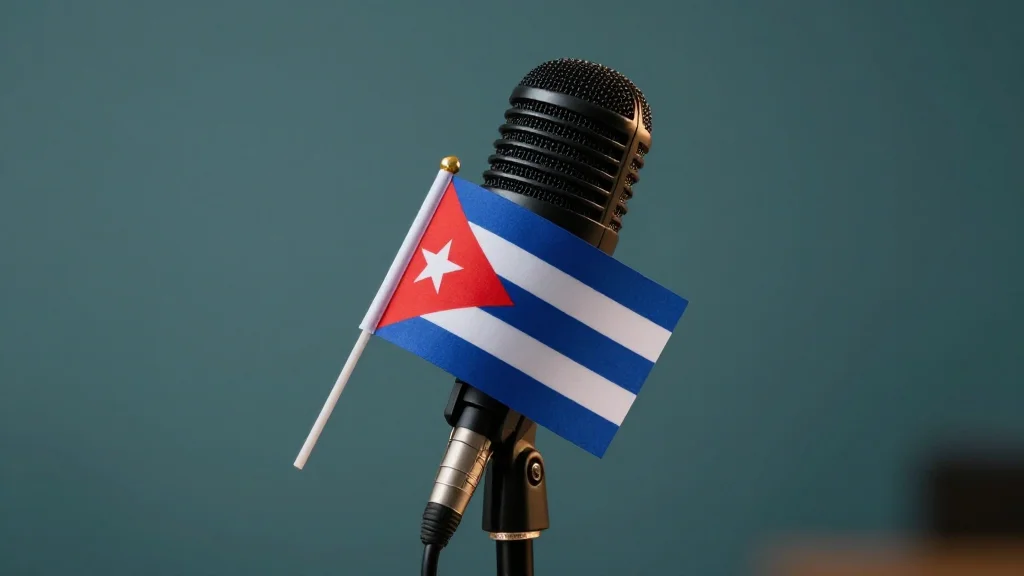
Cuban President Rejects NBC's Step‑Down Question, Citing Sovereignty Amid U.S. Pressure

Companies Mentioned
Why It Matters
Díaz‑Canel’s refusal to entertain a step‑down request underscores the resilience of Cuba’s one‑party system even as the island grapples with its worst energy crisis in decades. The interview puts a human face on a geopolitical tug‑of‑war: the United States is leveraging sanctions and public rhetoric to pressure a regime it deems illegitimate, while Russia and China are deepening economic ties to preserve a strategic foothold in the Western Hemisphere. For U.S. policymakers, the president’s defiant language signals that any diplomatic breakthrough will require concessions that respect Cuban sovereignty, a delicate balance that could reshape migration flows, regional security, and the future of the long‑standing embargo. Beyond bilateral relations, the episode highlights the growing role of media in diplomatic signaling. By granting NBC a platform, Havana seeks to counter U.S. narratives and rally domestic and international support. The interview’s timing—amid Russian oil deliveries and Chinese solar investments—suggests a coordinated effort to showcase alternative partnerships, potentially encouraging other sanctioned states to look eastward for lifelines. The outcome will influence not only Cuba’s economic recovery but also the broader contest for influence in Latin America.
Key Takeaways
- •Cuban President Miguel Díaz‑Canel told NBC’s Kristen Welker he will not step down, calling the question a U.S. interference tactic.
- •U.S. officials label Cuba a "failing nation" and have threatened tariffs on countries shipping oil to the island.
- •Russia delivered 730,000 barrels of Urals crude, enough for roughly 180,000 barrels of diesel—about ten days of Cuban demand.
- •China approved an $80 million aid package and exported $117 million in solar panels in 2025, adding over 1,000 MW of capacity.
- •The interview marks the first U.S. broadcast network appearance by a Cuban leader since Fidel Castro’s 1959 interview.
Pulse Analysis
The televised exchange is less a policy briefing than a strategic performance. By confronting a U.S. journalist on a global platform, Díaz‑Canel is attempting to reframe Cuba’s narrative from a besieged regime to a sovereign actor defending its legitimacy. This mirrors a broader trend where authoritarian leaders use Western media to legitimize their positions, as seen in recent Russian and Chinese outreach.
From a market perspective, the interview could have immediate ripple effects on energy and commodities linked to Cuba. Russian oil shipments, already a lifeline, may see heightened demand if the U.S. tightens its embargo, potentially driving up regional crude spreads. Meanwhile, Chinese solar equipment orders could accelerate, bolstering firms that supply the island’s renewable push. Investors watching the U.S.–Cuba dynamic will likely reassess risk premiums on any entities operating in the Caribbean, especially those with exposure to sanctions.
Politically, the dialogue underscores a shifting calculus in Washington. While Trump’s rhetoric pushes for a “friendly takeover,” the administration’s back‑channel talks suggest a willingness to negotiate, albeit on terms that preserve U.S. leverage. The presence of Russian and Chinese support complicates any straightforward resolution, turning Cuba into a proxy arena for great‑power competition. The upcoming full NBC interview will be a litmus test: if Díaz‑Canel can coax a concession from Washington without appearing to capitulate, it may open a narrow path toward limited economic normalization, but the underlying ideological divide remains stark. The next diplomatic moves—whether a formal agreement, a renewed sanctions wave, or a quiet continuation of status quo—will hinge on how both sides interpret the symbolic weight of this televised defiance.
Cuban President Rejects NBC's Step‑Down Question, Citing Sovereignty Amid U.S. Pressure
Comments
Want to join the conversation?
Loading comments...