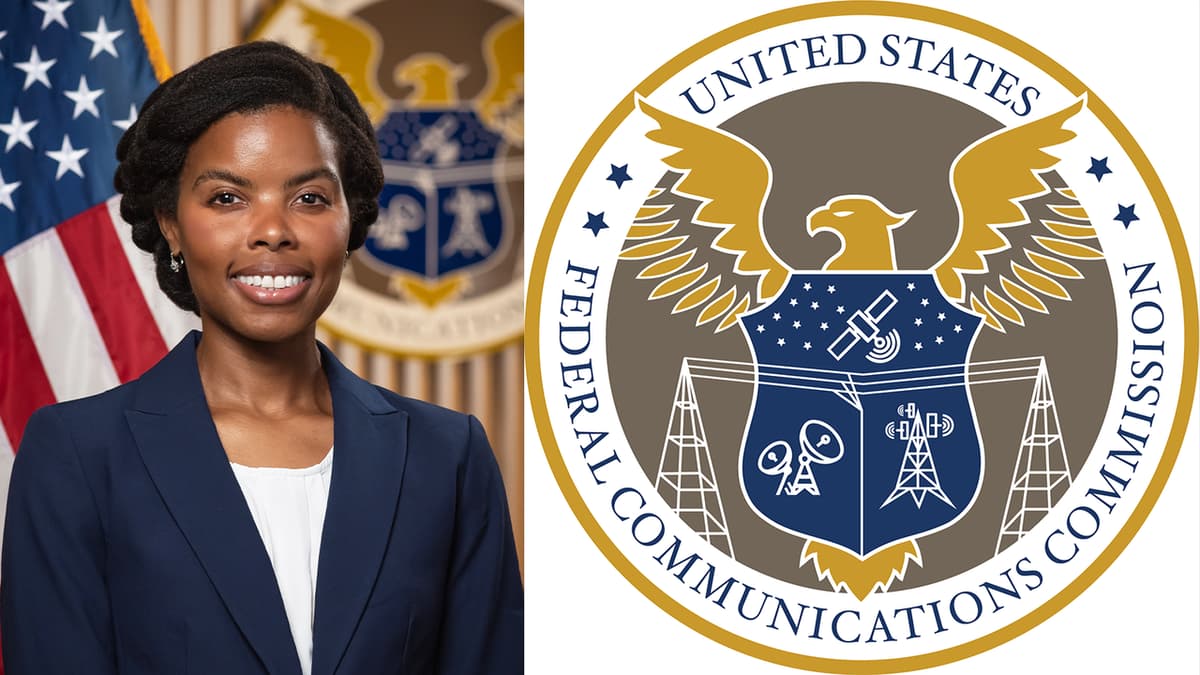
FCC Commissioner Trusty Explores `That Elusive Angel of the Public Interest’
Why It Matters
The FCC’s policy direction will determine whether traditional broadcasters can stay financially viable and continue serving local communities amid mounting competition from digital platforms.
Key Takeaways
- •Trusty urges FCC to modernize broadcast ownership rules
- •Broadcasters face unique public‑interest duties absent for streaming services
- •ATSC 3.0 can enhance emergency alerts via Broadcast Positioning System
- •Localism and political‑candidate airtime remain core FCC obligations
Pulse Analysis
The debate over the FCC’s public‑interest standard has intensified under a politically charged environment, with former President Trump and current Chair Brendan Carr threatening license revocations for perceived bias. Commissioner Olivia Trusty’s recent remarks at the NAB Show provide a rare, policy‑focused counterpoint, emphasizing that broadcasters, unlike cable or streaming platforms, operate under a license that carries explicit obligations to serve their communities. By revisiting the historical framework set by the 1998 Michael Powell speech, Trusty reminds stakeholders that the public‑interest doctrine is rooted in localism, emergency information, and equitable political access, all of which are essential for a healthy democratic discourse.
Trusty’s speech outlined concrete regulatory priorities. She called for a revision of the station‑ownership rule to reflect modern market realities, arguing that outdated caps hinder investment and innovation. She also championed the rollout of ATSC 3.0, noting its potential to deliver a Broadcast Positioning System that could supplement GPS for emergency alerts, thereby strengthening public‑safety capabilities. Additionally, Trusty supported giving local stations greater control over network programming and re‑examining antitrust exemptions for professional sports leagues, which threaten the financial lifeline that sports rights provide to local news operations.
For the broadcast industry, Trusty’s agenda offers a roadmap to remain competitive while preserving the public‑interest mission. Aligning ownership rules and advanced transmission standards could improve profitability for stations whose newsrooms are often unprofitable on a stand‑alone basis. Moreover, reinforcing localism and transparent political‑airtime rules may bolster public trust, a metric where broadcasters still outperform digital rivals. As the FCC shapes these policies, the balance between regulation and market freedom will dictate the future relevance of over‑the‑air TV in an increasingly streaming‑centric media landscape.
FCC Commissioner Trusty Explores `That Elusive Angel of the Public Interest’
Comments
Want to join the conversation?
Loading comments...