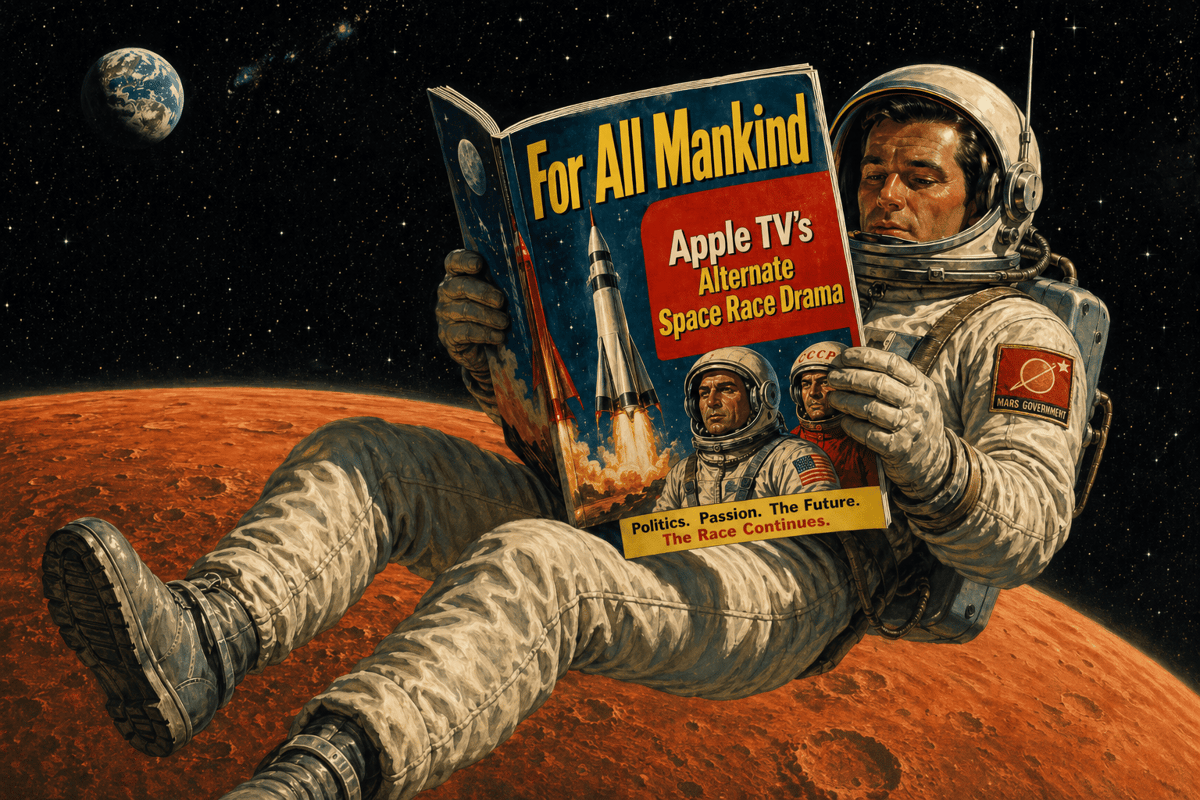
For All Mankind Review: Apple TV’s Alternate Space Race Drama
Companies Mentioned
Why It Matters
The series offers a speculative lens on how prolonged space competition could reshape economies, labor markets and geopolitical power, giving policymakers and industry leaders a narrative framework for real‑world space commercialization.
Key Takeaways
- •Season 5 shifts focus from Moon missions to Mars sovereignty and politics
- •Apple TV+ announced final Season 6 and Soviet‑focused spinoff Star City
- •Series uses alternate history to explore how space tech reshapes labor
- •Long‑term character arcs reward viewers who follow the five‑season narrative
- •Production design blends realistic NASA hardware with plausible future technology
Pulse Analysis
The premise of “For All Mankind” – a Soviet Moon landing that forces the United States into an endless space race – resonates with today’s renewed geopolitical competition over lunar and Martian assets. By anchoring its divergence in Cold‑War logic, the series creates a believable cascade of policy decisions, funding spikes, and technological breakthroughs that mirror current discussions about Artemis, lunar mining, and the role of national prestige in space exploration. Apple TV+ leverages this alternate timeline to attract viewers who crave both high‑production sci‑fi and a thoughtful examination of how history could have unfolded differently.
Season 5’s shift to Mars autonomy brings the show into the heart of contemporary space‑policy debates. The depiction of Happy Valley as a thriving off‑world settlement raises questions about jurisdiction, labor rights, and resource ownership that echo real‑world concerns from the United Nations’ Outer Space Treaty to private companies’ plans for Martian habitats. By dramatizing corporate entities like Helios Aerospace alongside government agencies, the series illustrates the complex public‑private partnerships that are already shaping satellite constellations, lunar lander contracts, and future Mars ventures. Viewers see how supply chains, wage negotiations, and policing could evolve when humanity lives beyond Earth, offering a narrative sandbox for economists and regulators alike.
Culturally, “For All Mankind” has become a benchmark for streaming‑era science‑fiction, proving that long‑form, character‑driven storytelling can coexist with rigorous world‑building. The announcement of a final sixth season gives the narrative a clear endpoint, while the upcoming spinoff “Star City” promises to broaden the perspective by exploring the Soviet side of the alternate race. This expansion not only deepens the franchise’s mythos but also reinforces Apple TV+’s commitment to ambitious, high‑budget original content that can influence public perception of the space economy and inspire the next generation of engineers, policymakers, and storytellers.
For All Mankind Review: Apple TV’s Alternate Space Race Drama
Comments
Want to join the conversation?
Loading comments...