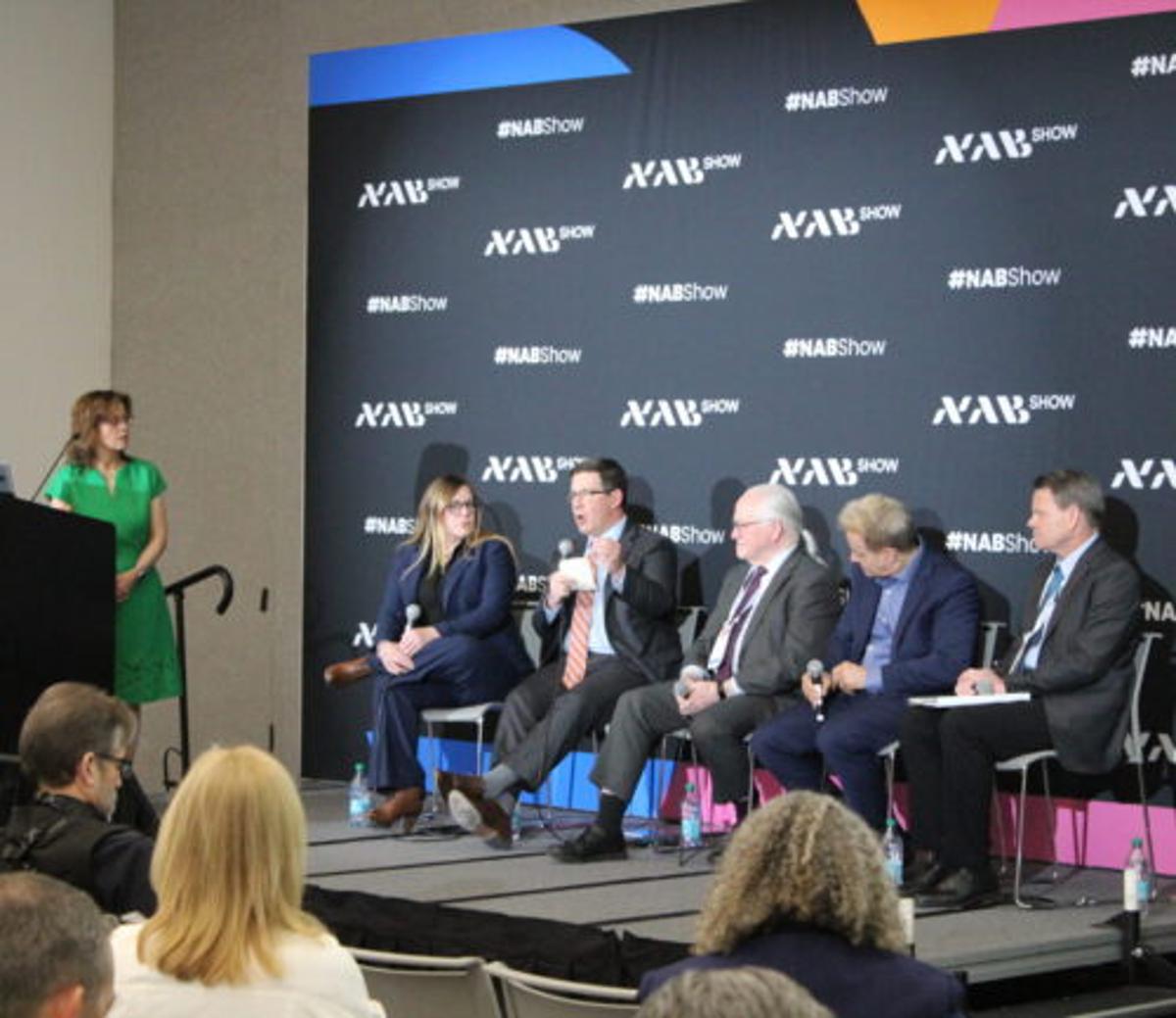
Gomez Panel At NAB Insists Carr’s Broadcast Threats Won’t Hold
Why It Matters
The debate spotlights a potential legal showdown that could reshape broadcast regulation and protect media outlets from politically motivated licensing actions, affecting the entire U.S. broadcasting industry.
Key Takeaways
- •FCC Chair Carr threatens revoking broadcast licenses over news coverage
- •Panel argues Carr's use of news distortion rule lacks legal basis
- •Supreme Court decisions limit FCC authority over programming content
- •Judges treat administration statements as circumstantial evidence of viewpoint targeting
- •Scarcity rationale for broadcast regulation deemed outdated in streaming era
Pulse Analysis
The panel at NAB 2026 highlighted a mounting clash between the FCC’s leadership and First Amendment protections. Commissioner Brendan Carr has repeatedly warned broadcasters that license revocation could follow perceived bias, invoking the dormant news‑distortion and hoax rules that survived the Fairness Doctrine’s repeal. Legal experts on the panel, including attorneys from the Reporters Committee and the Foundation for Individual Rights and Expression, contended that these threats lack statutory footing and run afoul of Supreme Court precedents that have steadily narrowed the agency’s power over speech. Their analysis underscored that the FCC’s historical reliance on content‑based regulation is increasingly untenable in a media landscape dominated by digital platforms.
Recent case law was central to the discussion. The panel cited *Moody v. NetChoice* and *NRA v. Vullo*, decisions that reaffirm the principle that the government cannot leverage regulatory authority to coerce private speakers into altering their message. Moreover, the Supreme Court’s articulation in *Moody*—that the state has no right to decide the balance of private expression—directly counters Carr’s rationale for bias‑based proceedings. Judges have already begun treating the administration’s public statements as circumstantial evidence of viewpoint discrimination, a trend that could pave the way for successful challenges by broadcasters and public‑interest media.
For broadcasters, the implications are both strategic and operational. Legal counsel is urging stations to document any government pressure, building a factual record that could support a “jawboning” lawsuit. Simultaneously, the industry is reassessing the relevance of the scarcity doctrine, a justification rooted in a 1969 era of limited spectrum that no longer reflects the abundance of streaming, satellite, and on‑demand services. As courts continue to erode the constitutional basis for broadcast‑specific content rules, media companies may increasingly rely on broader First Amendment protections, reshaping how they navigate regulatory risk and defend editorial independence.
Gomez Panel At NAB Insists Carr’s Broadcast Threats Won’t Hold
Comments
Want to join the conversation?
Loading comments...