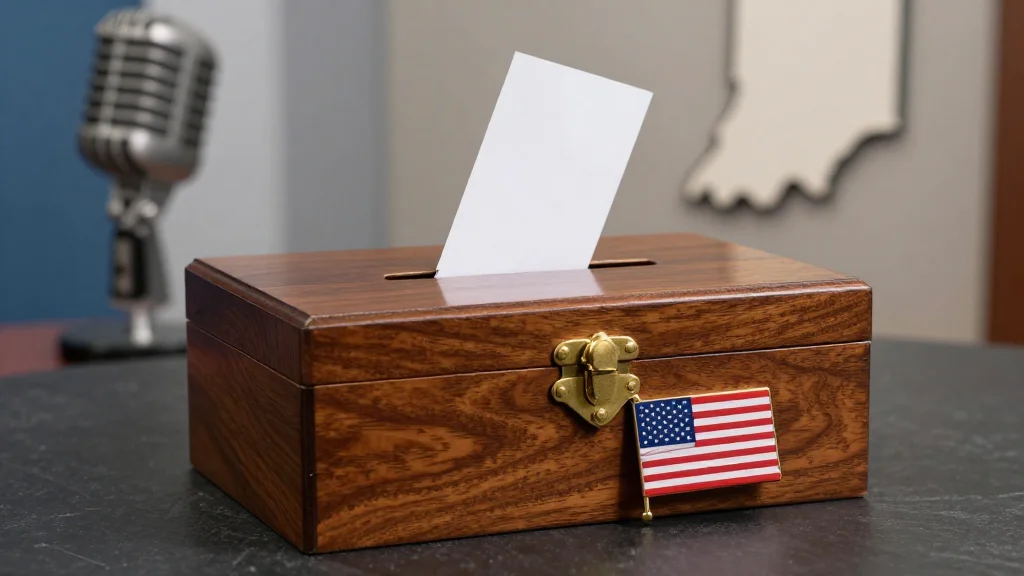
Indiana’s Got a Voting Problem. News Outlets Can only Do so Much to Fix It
Why It Matters
Improving voter education could raise turnout, weakening gerrymandered advantages and strengthening Indiana’s democratic legitimacy. Coordinated action also relieves newsrooms from redundant work and pressures officials to meet their civic duty.
Key Takeaways
- •Indiana's 2024 presidential turnout 59%, far below Washington's 70%.
- •Newsrooms like WFYI, IndyStar, Mirror Indy produce overlapping voter guides.
- •Experts cite gerrymandering and early‑registration cuts as turnout drivers.
- •Collaboration among outlets could reduce duplication and expand voter reach.
- •State should provide consistent, non‑partisan voter education to all registrants.
Pulse Analysis
Indiana’s voter participation lag—59% in the 2024 presidential race—places the state near the bottom of national rankings. High registration rates mask deeper structural issues: partisan gerrymandering creates uncompetitive districts, and recent legislative moves have slashed early‑registration windows, discouraging marginal voters. These factors combine to foster apathy, as citizens perceive little influence over outcomes, reinforcing a cycle of low turnout that erodes democratic accountability.
In the absence of a robust state‑run education program, local newsrooms have stepped in. WFYI’s Election School, the Indiana Capital Chronicle’s detailed guide, Mirror Indy’s printable zine, and IndyStar’s candidate‑profile videos each aim to demystify the ballot. However, their efforts often overlap, flooding voters with similar information across multiple platforms. While these resources improve awareness, studies suggest that information alone rarely translates into higher turnout, especially when structural barriers remain.
Experts and civic groups argue that a coordinated, non‑partisan approach could amplify impact. By pooling resources, Indiana’s media could produce a single, comprehensive guide, reducing redundancy and reaching a broader audience. Simultaneously, the Secretary of State and county clerks should assume responsibility for consistent voter outreach—mailing printed handbooks, maintaining up‑to‑date digital portals, and promoting early‑voting options. Such collaboration would not only streamline education but also signal institutional commitment, potentially motivating more Hoosiers to vote and weakening the strategic advantage of gerrymandered districts.
Indiana’s got a voting problem. News outlets can only do so much to fix it
Comments
Want to join the conversation?
Loading comments...