Is It Time For A Multimodal Media Rep?
Companies Mentioned

Why It Matters
The deal gives Google a dedicated partner to capture and grow YouTube’s audio ad revenue, while SiriusXM gains access to Google’s massive inventory, accelerating convergence of video and audio advertising markets.
Key Takeaways
- •Google partners SiriusXM Media as exclusive audio rep for YouTube ads
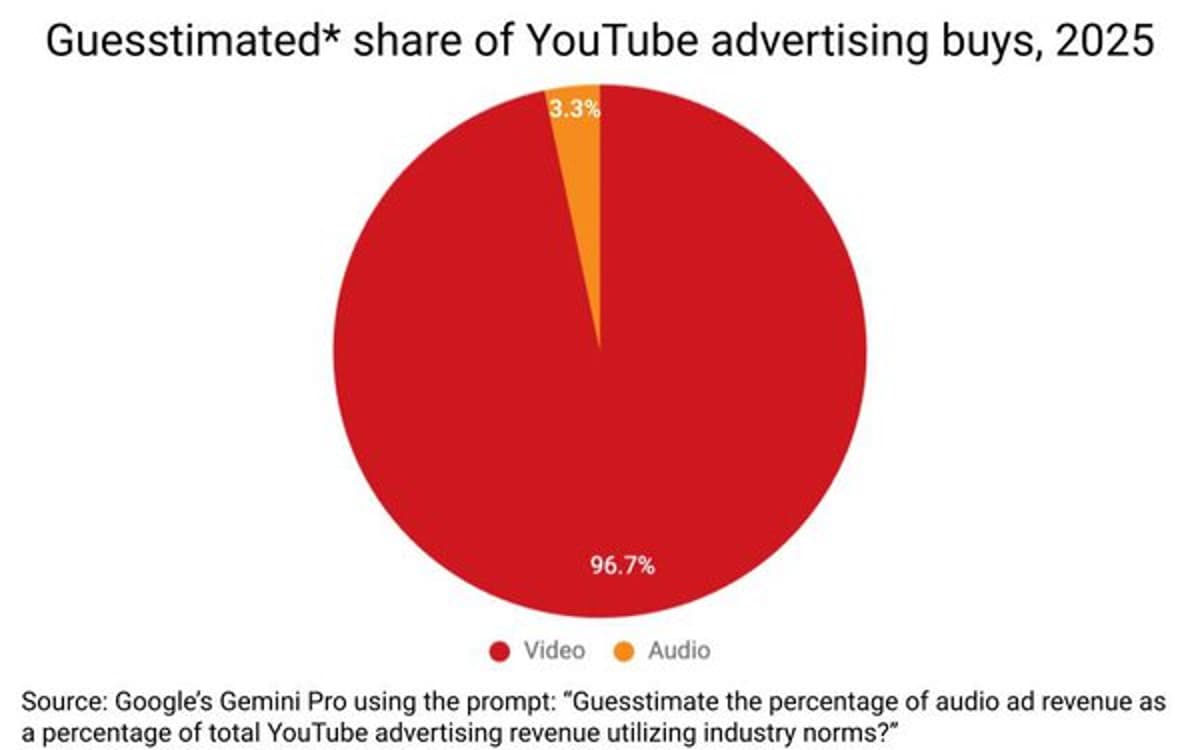
- •YouTube audio ads represent ~3.3% of its $40.4B ad revenue
- •Estimated $1.4B audio ad revenue on YouTube in 2025
- •SiriusXM will sell YouTube audio alongside Pandora, podcasts, SoundCloud inventory
- •Deal highlights growing convergence of video and audio advertising formats
Pulse Analysis
The advertising ecosystem is increasingly multimodal, with platforms that originated as video or audio now straddling both formats. YouTube, long‑dominant in video, has quietly amassed a sizable audio inventory through music videos, podcasts, and background listening. According to Google’s 2025 financials, YouTube generated $40.4 billion in total ad revenue, with industry benchmarks placing audio‑only buys at roughly 3.3 percent—about $1.4 billion. While that slice is modest compared with the broader $40 billion audio market, it signals that advertisers are treating sound as a distinct, measurable channel within a video‑centric environment.
To monetize this emerging slice, Google signed an exclusive representation agreement with SiriusXM Media, the company that already sells audio inventory for Pandora, a large podcast network, and third‑party partners such as SoundCloud. By delegating YouTube’s audio sales to a specialist, Google can leverage SiriusXM’s salesforce, data analytics, and established relationships with brands that prefer pure‑audio placements. The move also frees Google’s video sales teams to focus on high‑margin video formats while ensuring that audio advertisers receive dedicated attention and pricing structures tailored to the medium.
The partnership underscores a broader industry trend: advertisers are fragmenting budgets across modalities to reach listeners wherever they are, whether on a smartphone, smart speaker, or connected TV. As audio consumption continues to rise—driven by podcasts and streaming music—platforms that can bundle video and sound inventory will command premium rates. For SiriusXM, the deal expands its reach into Google’s massive ecosystem, potentially boosting its revenue base. For Google, the arrangement mitigates the risk of under‑servicing a growing audio demand and positions the company to capture a larger share of the $40 billion‑plus audio ad market.
Is It Time For A Multimodal Media Rep?
Comments
Want to join the conversation?
Loading comments...