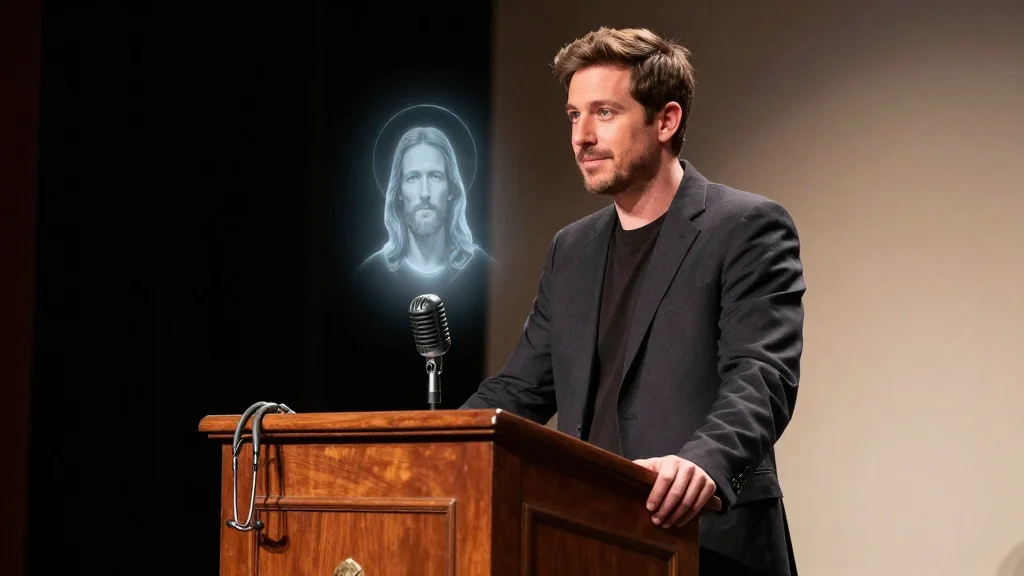
Jon Stewart Slams Trump for Claiming Jesus Photo Is Him as a Doctor: ‘We Expect Better Lies, Sir’
Why It Matters
The exchange underscores how AI‑generated deepfakes can amplify political misinformation and how high‑profile satire can shape public scrutiny of a leader’s credibility.
Key Takeaways
- •Jon Stewart mocked Trump's AI-generated Jesus image claim
- •Trump insisted the picture depicted him as a doctor
- •Stewart tied Trump's lies to attacks on the Catholic Church
- •The monologue referenced Pope's Easter peace message and global fatigue
- •Stewart warned AI deepfakes could amplify political misinformation
Pulse Analysis
Artificial intelligence tools now let anyone create hyper‑realistic images with a few clicks, a fact that former President Donald Trump exploited by sharing a picture of himself as a Christ‑like healer. When the image went viral, Trump quickly re‑characterized it as a depiction of himself as a doctor, a claim that drew immediate ridicule. The incident highlights a growing vulnerability: deepfakes can be weaponized to craft false narratives that blur the line between satire, propaganda, and outright deception, challenging both platforms and regulators to keep pace.
Late‑night hosts like Jon Stewart have long served as cultural barometers, using humor to dissect political absurdities. Stewart’s blistering monologue not only mocked Trump’s AI stunt but also connected it to a broader pattern of misinformation, from baseless election claims to attacks on religious leaders. By framing the episode within the context of Trump’s ongoing attacks on the Pope and his “weaker” image, Stewart amplified public awareness of how easily AI can be co‑opted to reinforce a leader’s mythos, while also reminding viewers that satire remains a potent check on power.
The fallout from this episode signals a shift in how political communication is consumed and contested. As AI‑generated content becomes more accessible, the responsibility falls on media outlets, fact‑checkers, and the public to discern authenticity. Meanwhile, the episode fuels calls for clearer policy guidance on synthetic media, especially when high‑profile figures use it to manipulate perception. For businesses and investors, the trend warns of reputational risks tied to deepfake exposure, prompting a need for robust digital‑integrity strategies in an era where a single fabricated image can spark nationwide debate.
Jon Stewart Slams Trump for Claiming Jesus Photo Is Him as a Doctor: ‘We Expect Better Lies, Sir’
Comments
Want to join the conversation?
Loading comments...