Companies Mentioned
Why It Matters
The erosion of local journalism weakens democratic engagement and raises fiscal pressures on municipalities, signaling urgent need for sustainable news models.
Key Takeaways
- •Local Journalist Equivalents fell 81% since 2002
- •Only 7.8 journalists per 100k residents nationwide
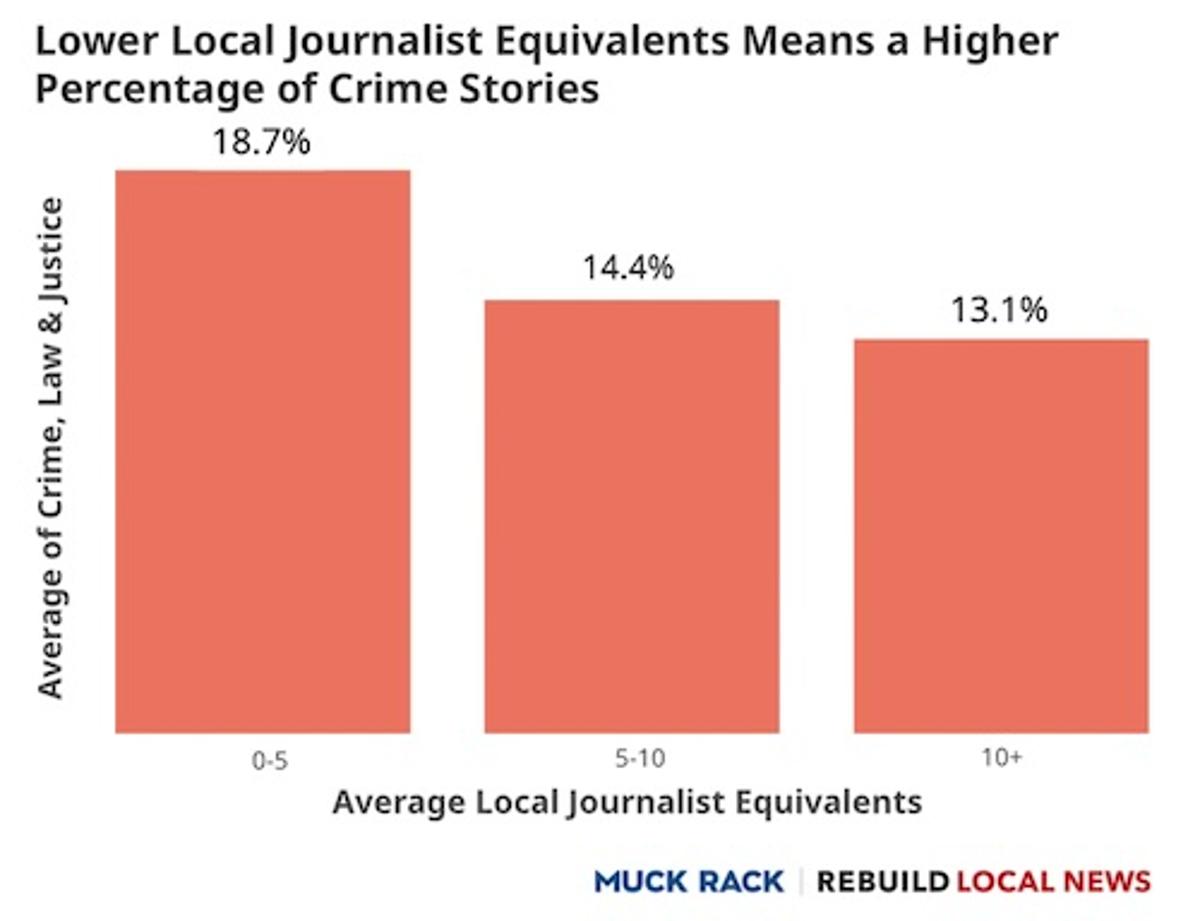
- •Crime coverage rises 50% in news‑desert counties
- •Health, education, environment reporting missing in 75%+ counties
- •Municipal borrowing costs increase in news deserts
Pulse Analysis
The Local Journalist Index 2026 paints a stark picture of America’s shrinking news ecosystem. By tracking 52,000 outlets, the study reveals an 81% drop in "Local Journalist Equivalents" since 2002, slashing the workforce from 40 to just 7.8 reporters per 100,000 residents. This contraction is uneven, with Nevada at 5.2 JLEs and Modoc County, California, barely reaching 0.8. The scarcity of local voices translates into fewer stories, especially on issues that matter to everyday citizens, such as education, health, and the environment.
With newsroom resources dwindling, the remaining coverage skews toward sensational topics, notably crime. Counties with fewer than five JLEs devote almost 20% of their articles to crime, a 50% increase over better‑served areas. Meanwhile, more than three‑quarters of counties lack any local reporting on education, health, environmental concerns, or transportation. This content vacuum erodes civic engagement; residents in low‑JLE counties score 40 on the Civic Participation Index versus 58 in higher‑JLE regions, and loneliness rates climb as community ties weaken.
The fallout extends to municipal finance. Research cited in the report indicates that local governments in news deserts face higher borrowing costs on municipal bonds, reflecting investor concerns over transparency and accountability. Yet the Index also highlights hopeful experiments, such as Baltimore’s nonprofit The Banner, which has attracted 82,000 paid subscribers and employs 100 journalists. Scaling such models, alongside policy incentives for local reporting, could restore the informational backbone essential for vibrant democracy and fiscal health.
Local News Collapse Triggers Loneliness
Comments
Want to join the conversation?
Loading comments...